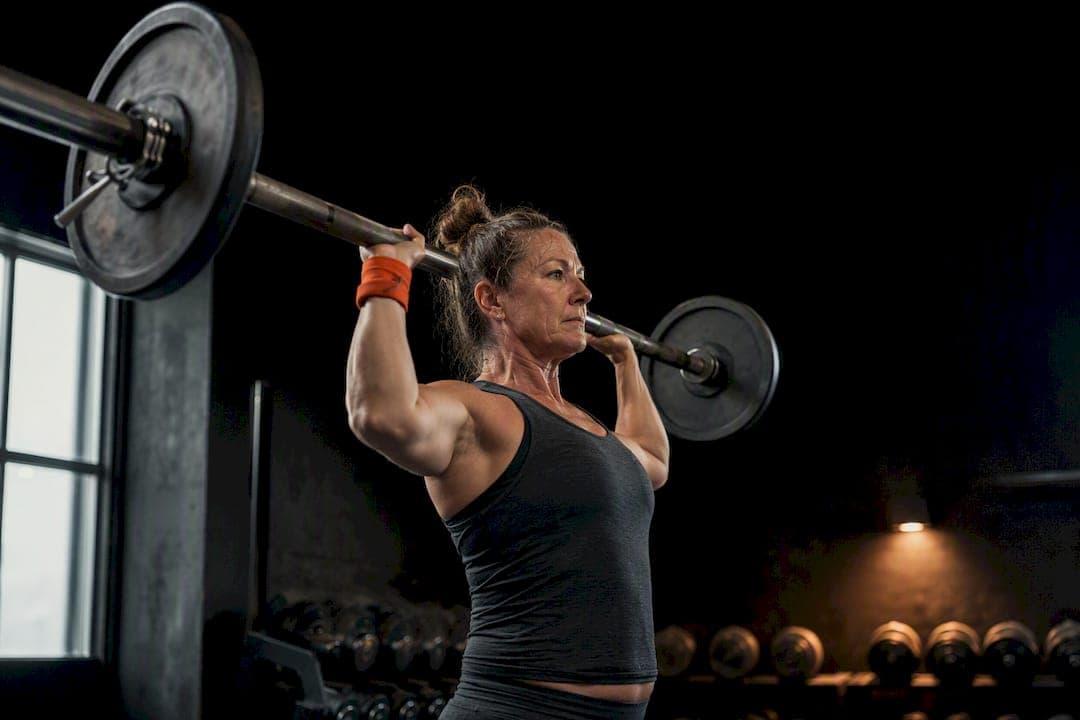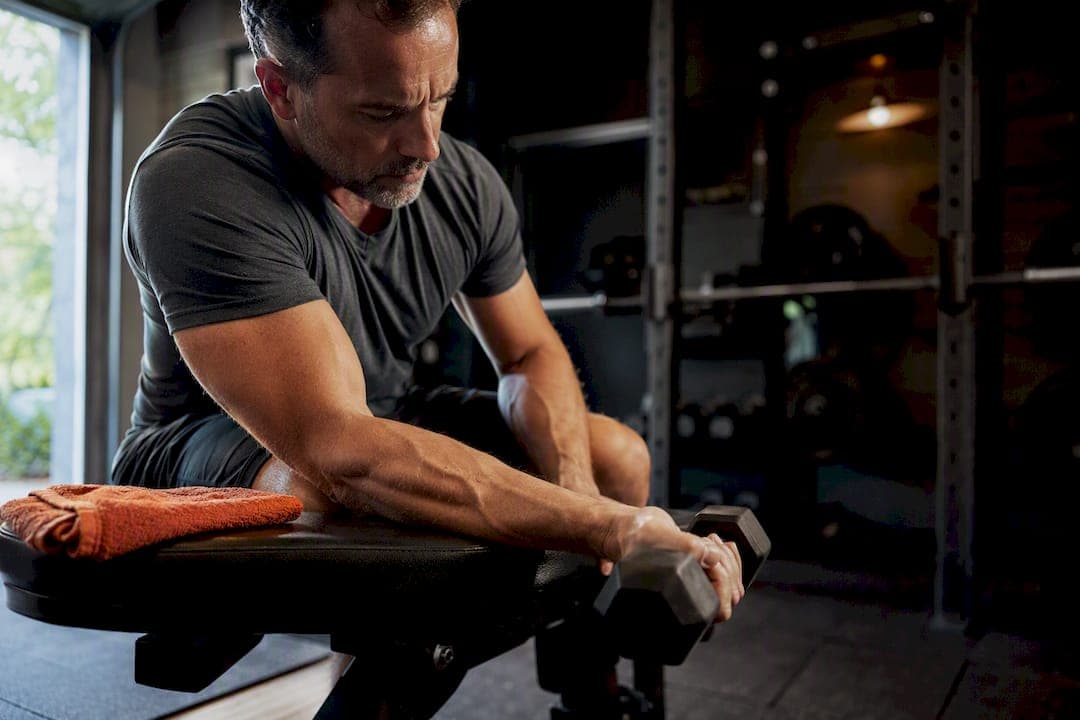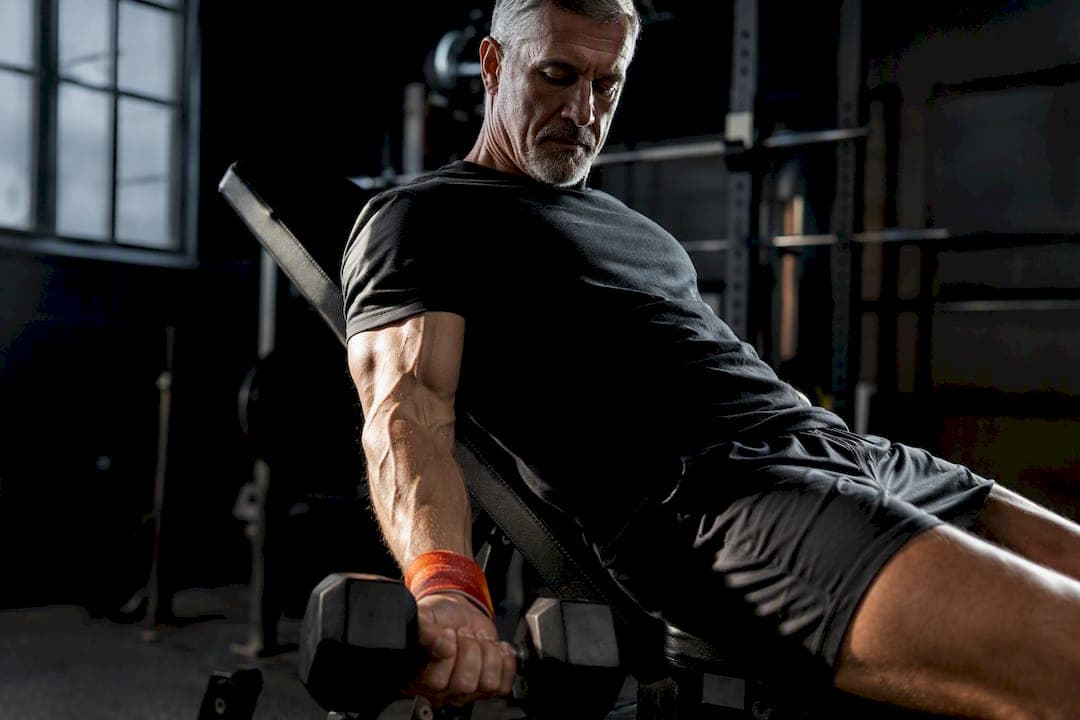
Full range of motion is your default for hypertrophy. It's the safer bet across most muscles, especially your quads and glutes. But lengthened partials, working the stretched end of a movement, can match or beat full ROM for specific muscles like your biceps and triceps. Systematic reviews back this up with effect sizes that vary by muscle, not a blanket rule. Train full ROM as your baseline, then add lengthened partials where the evidence points to a real edge.
TL;DR:
- Full range of motion generally promotes greater hypertrophy in lower-body muscles like quads and glutes, with effect sizes indicating a meaningful advantage over partials.
- Lengthened partials can match or surpass full ROM results for upper-body muscles such as biceps, triceps, and hamstrings by emphasizing stretched positions during training.
- Training at a muscle's longest length may trigger stretch-mediated hypertrophy, involving distinct signaling pathways and regional growth effects.
- Over-40 lifters should prioritize gradual progression, longer warmups, and conservative load increases at end ranges to accommodate slower tissue adaptation and joint health.
- Combining full ROM with targeted lengthened partials, tracked over 6 to 12 weeks, offers an evidence-based approach to optimizing hypertrophy without risking joint stress or injury.
Table of Contents
- What Does the Research Say About Range of Motion Hypertrophy?
- Why Does Range of Motion Change How Muscle Grows?
- Which Range of Motion Works Best for Each Muscle Group?
- How Should You Program Full ROM and Partials Together?
- How Long Does It Take to See Hypertrophy From ROM Changes?
- What Are the Limits of the Current Research?
- How Should Lifters Over 40 Apply This Evidence?
- Does Your Own Joint Anatomy Change What "Full ROM" Means?
- Is Training Through a Deep Range Actually Riskier?
- How Do Load, Tempo, and Range Work Together?
- Our Take on Range of Motion and Muscle Growth
- Put This Into Practice With Ironatforty's Training Tools
- Sources
- FAQ
What Does the Research Say About Range of Motion Hypertrophy?
Here's the part most lifting forums skip: the range of motion hypertrophy debate isn't a single verdict. It's a muscle-by-muscle answer, and pretending otherwise is how you end up chasing a "rule" that doesn't apply to the exercise you're actually doing.
The most cited systematic review on this topic found that full ROM training produces a small-to-trivial overall advantage in muscle growth, but that advantage isn't evenly distributed. For lower-body muscles, the effects of range of motion on muscle development showed a much clearer benefit, with pooled effect sizes favoring full ROM for lower-limb hypertrophy. That's not a small number in strength-training research. It suggests your squat depth and lunge range genuinely matter for leg growth in a way that isn't true everywhere else.
Upper-body results tell a messier story. Several trials comparing full range against partial range training at long muscle lengths, so called lengthened partials, found comparable or even superior growth from the partial protocol in muscles like the biceps and triceps. A systematic review examining this directly reported between-groups effect sizes favoring stretched-position partials over contracted-position partials, with magnitudes that vary by muscle and exercise studied, depending on the muscle and exercise studied.
Key findings from the current body of research:
- Full ROM training carries a directional advantage overall, but the magnitude is often trivial to small once you account for study variance.
- Lower-body muscles show the strongest and most consistent full-ROM benefit.
- Lengthened partials, training the stretched half of a lift, can rival or exceed full ROM results for muscles like the biceps, triceps, and hamstrings.
- A meta-analysis pooling partial versus full ROM training found overall standardized mean differences around 0.08 to 0.12 in favor of full ROM, technically real but practically small when volume is equated.
- Study durations typically run 6 to 12 weeks, with hypertrophy measured through ultrasound or MRI-based cross-sectional area (CSA).
By the numbers: Between-groups effect sizes comparing lengthened partials to full ROM range from 0.20 to 0.90 depending on the muscle, according to a systematic review of ROM's effects on hypertrophy. That's a wide spread, and it's the whole point. There is no single "best" ROM. There's a best ROM per muscle.
Most of these studies use trained or recreationally active lifters, sample sizes in the dozens rather than hundreds, and measure outcomes with ultrasound-based muscle thickness or CSA imaging. That's a reasonably rigorous approach, but it also means you're looking at aggregated signals from modest-sized trials, not a definitive physiology textbook entry. Treat the numbers as a strong lean, not gospel.
Why Does Range of Motion Change How Muscle Grows?
The mechanism behind these numbers comes down to something called the length-tension relationship. Every muscle produces different amounts of force depending on how stretched or shortened it is at the moment of contraction. Some muscles, like the hamstrings and triceps, sit on what's called the descending limb of that curve when stretched, meaning they can still generate substantial tension at long muscle lengths. That's exactly where lengthened partials do their work.
Training a muscle at its longest usable length appears to trigger what researchers call stretch-mediated hypertrophy. The working theory is that loading a muscle while it's stretched creates a distinct mechanical and metabolic stimulus, separate from simple time under tension. One line of evidence comes from studies showing greater muscle damage markers with full ROM training in free-weight elbow flexion work, while partial ROM protocols performed at long muscle lengths produced sustained intramuscular hypoxia instead. Different stimulus, potentially different growth pathway.
There's also a regional component. Growth from lengthened partials doesn't always distribute evenly along a muscle. Some evidence points to more pronounced changes near the distal (far) end of a muscle, closer to where it stretches most, while full ROM work tends to build more uniformly. Coaches who understand this use targeted partials to bias growth toward specific regions or to work around a joint that doesn't tolerate full flexion or extension well.
What's actually driving the difference:
- Muscles on the descending limb of the length-tension curve (biceps, triceps, hamstrings) respond well to stretched-position loading.
- Stretch-mediated hypertrophy may involve a distinct signaling pathway from standard mechanical tension.
- Regional hypertrophy, growth concentrated in one part of a muscle, appears more common with targeted partial-ROM work.
- Full ROM tends to generate more total muscle damage per session, which cuts both ways: more stimulus, but also more recovery demand.
Pro Tip: If an exercise makes a joint ache at full stretch, don't force it. Swap in a lengthened partial for that specific muscle instead of grinding through pain at end range. You'll often get comparable growth with less joint stress.
Which Range of Motion Works Best for Each Muscle Group?
Generic hypertrophy advice treats every muscle the same. The research doesn't support that, and neither should your programming.
Lower body. Quads and glutes consistently show a stronger response to full ROM training. Deep squats, split squats through a full range, and leg press work that takes the knee through a genuine stretch all line up with the effect sizes favoring full ROM in lower-limb hypertrophy. If you've been half-squatting to move more weight, you're likely leaving growth on the table for these muscles specifically. That said, if knee pain limits your depth, a lengthened partial squat variation, going as deep as comfortable and stopping there, still beats avoiding lower-body training altogether.
Upper body. This is where the "always go full range" advice breaks down. Biceps and triceps show some of the strongest evidence for lengthened partials matching or beating full ROM work. For biceps, that means training the bottom portion of a curl, arm fully extended, rather than cutting the range short at the top. For triceps, it means loading the deep stretch position of an overhead extension or skull crusher rather than only locking out at the top.
Hamstrings deserve their own mention. Because they cross both the hip and knee, exercises that stretch them at long muscle length, like Romanian deadlifts (RDLs) taken to a real stretch rather than a shallow hip hinge, tend to outperform shorter-range alternatives.
Here's a practical way to choose ROM exercise by exercise:
- Identify where the muscle is stretched hardest in the lift, usually the bottom of a squat, the bottom of a curl, or the stretched position of a fly or extension.
- Ask whether that stretched position is also painful or unstable. If yes, reduce range slightly and rebuild tolerance over weeks rather than avoiding the movement entirely.
- Match the muscle's known response pattern. Lower-body muscles get more benefit from staying full range; biceps, triceps, and hamstrings tolerate and often benefit from partial-ROM, stretched-position work.
- Rotate, don't replace. Use lengthened partials as an addition to full-ROM lifts, not a wholesale swap, unless a joint issue demands it.
- Reassess every 6 to 8 weeks as mobility and joint tolerance improve, since your available ROM at 45 isn't fixed forever.
If you're managing joint discomfort at deeper ranges, a prehabilitation approach can help you rebuild tolerance for full ROM work over time instead of permanently avoiding it.
How Should You Program Full ROM and Partials Together?
Volume and progressive overload still do most of the heavy lifting here, ROM is a modulator, not a replacement for showing up and adding weight or reps over time. But once your volume and progression are dialed in, ROM choice becomes the next lever worth pulling.
The default rule: build your program around full ROM compound lifts, then layer in 1 to 2 lengthened-partial exercises per muscle group each week for the muscles where the evidence favors it, biceps, triceps, and hamstrings especially.
Rep ranges and volume. Hypertrophy responds across a wide window, generally 6 to 20 reps per set depending on load, as long as sets are taken close to failure. Aim for roughly 10 to 20 hard sets per muscle group per week, adjusted for recovery capacity. If you're over 40, the lower half of that range paired with better recovery tends to beat cramming in extra volume you can't recover from.
Adjustments for lifters over 40: slightly longer warmups before end-range work, more gradual loading progression into lengthened-partial positions, and a willingness to trade a small amount of range for consistency if a joint is cranky that week. Training volume matters more than chasing perfect range on every single set.
Sample Template 1: Full-ROM Primary + Partial Finisher
- Squat (full ROM), 4 sets of 6 to 8 reps
- Romanian deadlift (full stretch), 3 sets of 8 to 10 reps
- Barbell curl (full ROM), 3 sets of 10 reps
- Lengthened-partial curl finisher (bottom half only), 2 sets of 12 to 15 reps
- Triceps pushdown (full ROM), 3 sets of 10 reps
- Lengthened-partial skull crusher (stretch position focus), 2 sets of 12 to 15 reps
Sample Template 2: Weekly Split Mixing Both Approaches
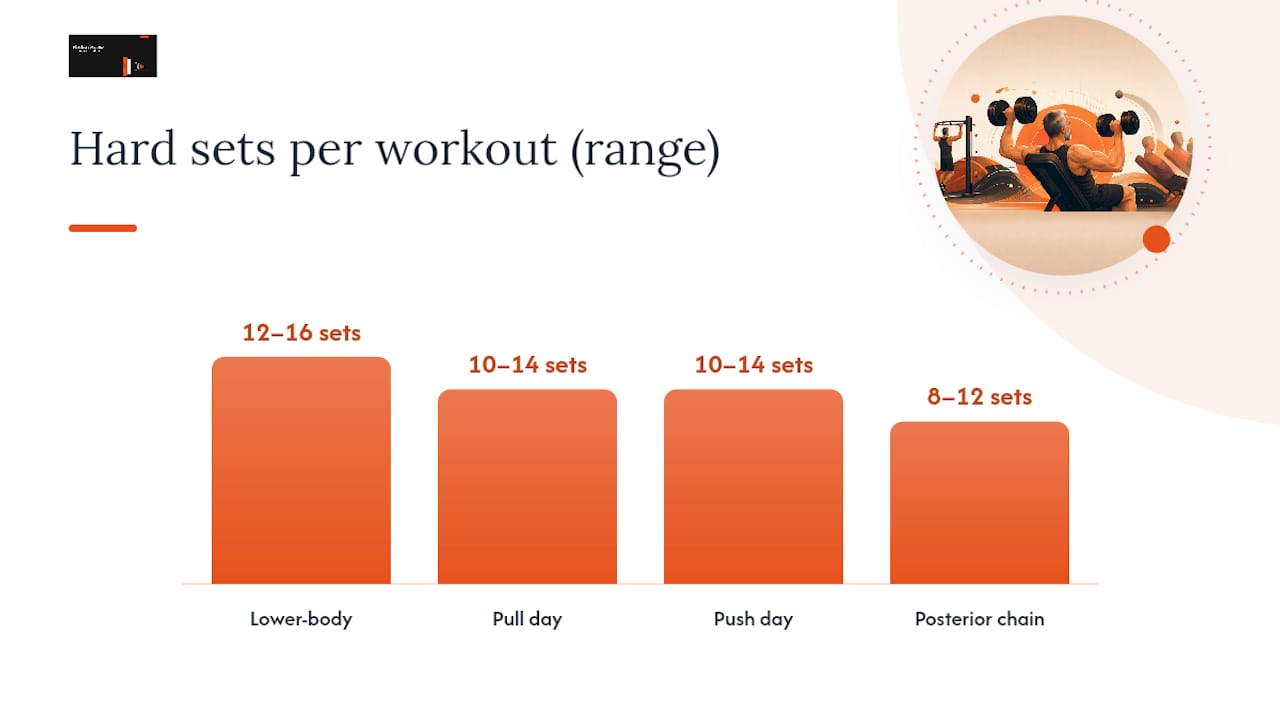
- Lower-body day: full ROM squats, lunges, and leg press, 12 to 16 total hard sets across quads and glutes.
- Pull day: full ROM rows and pulldowns, plus 2 lengthened-partial curl variations for biceps, 10 to 14 hard sets.
- Push day: full ROM pressing movements, plus 2 lengthened-partial extension variations for triceps, 10 to 14 hard sets.
- Posterior chain day: deep-stretch RDLs and hamstring curls emphasizing the lengthened position, 8 to 12 hard sets.
Pro Tip: Don't add lengthened partials and increase your full-ROM working weight in the same week. Introduce one new variable at a time so you can actually tell what's driving your progress.
How Long Does It Take to See Hypertrophy From ROM Changes?
Give any ROM strategy at least 6 to 12 weeks before judging it. That's the window most trials use to detect measurable changes in muscle size, and it's realistic for you too. Shorter than that, and you're mostly measuring water retention, glycogen shifts, and normal strength adaptation, not new tissue.
Practical ways to track progress:
- Tape measurements at consistent times of day, same muscle landmark, every 2 to 4 weeks.
- Progress photos under consistent lighting and pump state, monthly.
- Strength changes in the specific ROM you trained, since strength gains tend to be specific to the range you practiced.
- Ultrasound measurement, if you have access to a coach or lab that offers it, remains the most objective option for tracking actual muscle thickness changes.
The honest effect size here is modest. You're not going to see a dramatic transformation from switching ROM alone within two months. What you can expect, based on the effect sizes reported across these reviews, is a meaningful edge over a training cycle of several months, not an overnight change.
One caveat worth repeating: isolate your variables before crediting ROM for a result. If you also increased protein intake, added volume, or improved sleep during the same stretch, you can't cleanly attribute growth to the ROM change alone. Keep your nutrition and total training volume stable while you test a new ROM approach, so the signal you're measuring is actually the one you're testing.
What Are the Limits of the Current Research?
The evidence supporting range of motion hypertrophy strategies is genuinely useful, but it's not airtight, and pretending otherwise does you no favors.
Sample sizes are small. Many of the underlying comparisons pool data from studies with combined sample sizes totaling over 100 participants, which is workable for detecting moderate effects but not enough to nail down precise numbers for every muscle and exercise combination.
Study populations skew young and male. Most of this research comes from male-dominant samples, often college-aged or recreationally trained lifters. Data specific to women and to lifters over 40 remains thin, which means some of these recommendations are reasonable extrapolations rather than direct evidence for your exact situation.
ROM definitions aren't standardized. One study's "partial ROM" might be another's "moderate ROM." That inconsistency makes cross-study comparison harder than the clean effect-size numbers suggest.
Underexplored areas:
- Trunk and core musculature response to ROM manipulation is barely studied.
- Long-term chronic adaptation, beyond the typical 6 to 12 week trial window, is largely unknown.
- Older-adult-specific and female-specific hypertrophy responses to ROM changes need dedicated research.
Given these gaps, the conservative move is to treat full ROM as your foundation and lengthened partials as a targeted addition, backed by real evidence, but not a wholesale system overhaul based on numbers from 8 week trials in 24 year olds.
How Should Lifters Over 40 Apply This Evidence?
Age changes how you should apply all of this, not the underlying physiology, but your margin for error.
Tendons adapt slower than muscle tissue does. That mismatch means your muscle can often handle more load or range before your tendon is genuinely ready for it. Ironatforty has covered this in depth: tendons adapt more slowly than muscles do, which is exactly why pushing into new end-range positions too fast is where a lot of over-40 lifters get hurt, not from lifting heavy, but from lifting deep before the tissue caught up.
Joint load tolerance needs a longer runway. If you're adding a lengthened-partial exercise for the first time, spend 2 to 3 weeks at lighter loads in that new range before pushing intensity. This isn't caution for caution's sake, it's how you actually get to use full ranges consistently for years instead of tweaking something and losing training time.
A conservative sample microcycle for lifters over 40:
- 3 to 4 full-ROM compound lifts per week (squat, hinge, press, pull) at moderate to hard effort.
- 1 lengthened-partial accessory exercise per muscle group, biceps, triceps, or hamstrings, introduced at reduced load for the first 2 weeks.
- 1 full recovery day between sessions targeting the same muscle group at long ranges.
- Reassessment of joint comfort and range every 4 weeks before increasing partial-ROM loading.
Pair this with a structured program built for lifters over 40, and you've got a framework that respects both the research and your actual recovery capacity.
Does Your Own Joint Anatomy Change What "Full ROM" Means?
"Full range of motion" isn't a fixed number you copy from a study. It's whatever your joint structure and current mobility actually allow, and that varies more between individuals than most training articles admit.
Hip socket depth, femur length relative to torso, and natural ankle dorsiflexion all affect how deep you can squat with good mechanics. Two lifters doing the "same" squat can be working genuinely different ranges relative to their own anatomy, even at identical bar depth. That's not a flaw in your technique. It's skeletal variation, and no amount of mobility work erases a shallow hip socket.
This matters for interpreting the research, too. Studies define full ROM using averages across their participant pool. Your version of full ROM might be shallower or deeper than the study's, simply because your joints are built differently. The practical fix isn't chasing someone else's depth standard. It's training through your own genuine full range, wherever that lands, and treating any range beyond what your joints comfortably allow as an active mobility project, not a strength-training goal.
Flexibility matters here too, separate from joint structure. Tight hip flexors or a stiff thoracic spine can shrink your usable range independent of your skeleton. That's fixable with consistent mobility work over months. A hip socket's shape isn't. Knowing which limitation you're dealing with changes whether you should chase more range or simply train well within what you've got.
Is Training Through a Deep Range Actually Riskier?
Deeper range isn't automatically more dangerous, but it does demand more from tissues that haven't been prepared for it, and that distinction matters for how you introduce it.
Loading a muscle at its longest position generally requires lighter weight than the same exercise trained through a shorter range, since force production naturally drops at long muscle lengths for many movements. That's part of why lengthened-partial protocols in the research typically use reduced loads compared to full-ROM training, not because the position is inherently dangerous, but because your body simply can't produce as much force there yet.
The real risk shows up when lifters skip that load adjustment. Loading a stretched position with the same weight you'd use for a shorter range is a common way people strain a muscle, particularly in the hamstrings and adductors, which are already prone to strain injuries during forceful stretch-position work.
Safety guidelines that apply regardless of which range you're training:
- Reduce load by roughly 10 to 20% when first introducing a new stretched-position exercise, then rebuild over 2 to 3 weeks.
- Warm up the specific end range you'll be training, not just a general warmup, before loading it.
- Stop short of pain, not just discomfort, at any range, deep or shallow.
- If a joint has a history of instability, prioritize control at end range before adding load, regardless of whether you're training full ROM or partials.
None of this means deep ranges should be avoided. It means they're loaded like the higher-demand movements they are.
How Do Load, Tempo, and Range Work Together?
Range of motion doesn't operate in isolation. It interacts with load and tempo in ways that change what you're actually training.
Heavier loads paired with full ROM increase total mechanical tension across the whole movement, which is part of why full ROM shows such a clear advantage for lower-body hypertrophy, you're moving real weight through real distance. Lighter loads paired with a lengthened partial shift the emphasis toward time spent under tension at a single, demanding joint angle instead.
Tempo changes the equation again. Slowing down the eccentric, the lowering phase, of a full-ROM lift extends time under tension without changing the range itself, and this pairs particularly well with muscles that respond to stretch-mediated stimulus. A slow 3 to 4 second lowering phase into a deep squat or a stretched curl position combines two proven levers, range and tempo, rather than making you choose one.
The practical takeaway: don't treat ROM as the only dial worth adjusting. A lifter stuck at a plateau might get more from slowing their tempo at the same range than from chasing a deeper stretch they're not ready to load safely. Match the tool to the actual limitation, not to whichever variable is trending in your feed this month.
Our Take on Range of Motion and Muscle Growth
The "always train full ROM" crowd and the "partials are secretly superior" crowd are both selling you a simplified story. The real answer, based on what the research actually shows, is that your muscle determines the answer more than any universal rule does. Full range of motion earns its place as your default, especially for quads, glutes, and anything trained through the lower body. But if you're chasing biceps, triceps, or hamstring growth and you're only training the contracted portion of those lifts, you're skipping the range where some of the best evidence says growth happens.
Our stance at Ironatforty: build your program on full-ROM compound lifts, add lengthened partials deliberately for the muscles where the data supports it, track your results honestly over a real 6 to 12 week window, and never sacrifice joint health chasing an extra inch of range you haven't earned yet. Try the sample templates above, lean on the site's training resources, and adjust based on what your own joints tell you, not what a single study's average participant could do.
— Iron@40 Staff
Put This Into Practice With Ironatforty's Training Tools
Reading the research is one thing. Building it into a week you can actually stick to is another, and that's where most lifters stall out, not from lack of information, but from lack of a plan that fits their joints, their schedule, and their recovery capacity at their current age.
Ironatforty's Training hub breaks down full-ROM and lengthened-partial programming into templates built specifically for lifters over 40, not repurposed advice from a 22 year old's Instagram. If you're not sure whether your recovery can support added lengthened-partial volume this week, the free training and nutrition tools can help you check whether your calorie and protein intake actually match what new training volume demands. Start with the TDEE calculator to confirm you're eating enough to support the growth you're training for, then head to the Training hub to build your next 8 week block around the ROM strategy that fits your specific muscles and joints.
Sources
The recommendations above draw on a small set of core studies rather than a scattered pile of blog posts repeating each other. For readers who want to check the primary literature directly:
- Effects of range of motion on muscle development during resistancetraining interventions: A systematic review
- Which ROMs lead to Rome? A systematic review of the effects of range of motion on muscle hypertrophy
- Partial Vs Full Range of Motion Resistance Training: A Systematic Review and Meta-Analysis
FAQ
What Is the 3-3-3 Rule in the Gym?
The 3-3-3 rule isn't a standardized concept in the ROM and hypertrophy research covered here, definitions vary widely depending on which coach or program you're reading. Rather than repeat an unverified claim, focus on what the evidence actually supports: full ROM as your baseline, with lengthened partials added deliberately for specific muscles.
What Is a Good Set Range for Hypertrophy?
Most research supports roughly 10 to 20 hard sets per muscle group per week for hypertrophy, with reps in the 6 to 20 range depending on load and effort. Lifters over 40 often do better sticking toward the lower half of that volume range while prioritizing recovery.
Is Hypertrophy Good or Bad?
Hypertrophy, muscle growth, is generally a positive outcome for strength, metabolic health, and injury resilience, particularly as you age and naturally lose muscle mass. It becomes a concern only in extreme, performance-enhanced contexts that fall outside typical recreational training.
Is 20 Reps Bad for Hypertrophy?
No. Research shows hypertrophy occurs across a wide rep range, generally 6 to 20 reps or more, as long as sets are taken close to failure. Twenty rep sets can be particularly useful for lengthened-partial work, where loads are naturally lighter due to reduced force production at long muscle lengths.
Does Range of Motion Affect Muscle Size?
Yes, but the effect depends heavily on which muscle you're training. Full ROM shows a clearer advantage for lower-body muscles like the quads and glutes, while lengthened partials can match or exceed full ROM results for muscles like the biceps, triceps, and hamstrings.