You can usually keep lifting with tennis elbow if you manage the load instead of shutting everything down. Drop or swap the movements that spike your pain past 4 out of 10, start a wrist extensor rehab plan, and check the next morning: if pain isn't worse, keep going. If it is, back off and adjust before your next session.
TL;DR:
- Avoid pronated grips and heavy loads on exercises like curls, rows, and deadlifts if pain exceeds 4 out of 10 during the movement.
- Focus on a gradual rehab program that includes isometric, isotonic, and eccentric wrist extension exercises over 6 to 12 weeks for better tendon capacity.
- Use grip modifications such as neutral grips or lifting straps to reduce strain during training and prevent aggravating tennis elbow flare-ups.
- Log pain levels alongside load progression to make informed decisions about when to increase intensity or modify exercises safely.
- Supportive gear like straps or sleeves offers short-term symptom relief but does not replace load management and tendon strengthening exercises.
Table of Contents
- Which Lifts Make Tennis Elbow Worse?
- What Does a Tennis Elbow Rehab Program Actually Look Like?
- How Do You Keep Training While Rehabbing Your Elbow?
- When Should You Use a Brace, Ice, or See a Doctor?
- What Does the Evidence Actually Support?
- Why Most Tennis Elbow Advice Gets This Wrong
- Sources
- FAQ
Which Lifts Make Tennis Elbow Worse?
Tennis elbow, medically called lateral epicondylitis, is an overuse injury to the wrist extensor tendons where they attach near the outside of the elbow. Certain lifts hammer that tendon harder than others, and it usually comes down to grip and wrist position, not the muscle group you're targeting.
The worst offenders load the extensor carpi radialis brevis (ECRB) tendon in a pronated, gripped, or end-range position under real tension. That's why lifters with this injury often feel it worst on:
- Pronated (palms-down) curls and reverse curls
- Heavy barbell rows and deadlifts where grip strain is high
- Narrow-grip or mixed-grip pull-ups and chin-ups
- Any heavy carry or farmer's walk with a death grip
- Skull crushers and triceps extensions with a pronated hand position
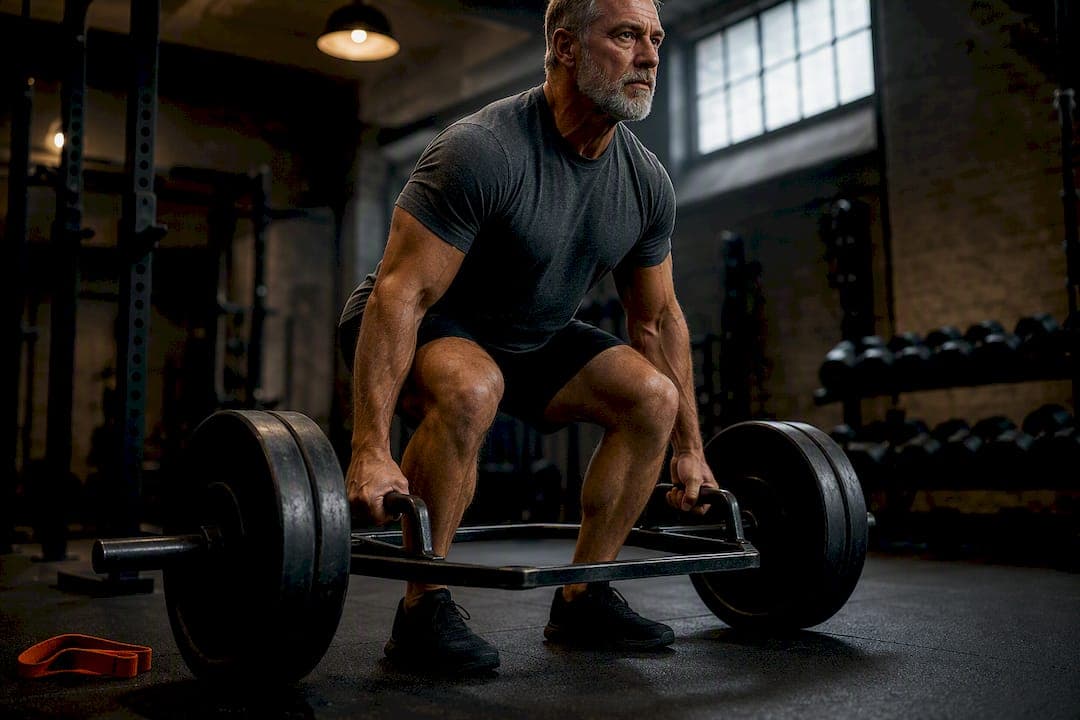
None of that means you need to avoid pulling or gripping forever. Switch to neutral grips (think hammer curls, neutral-grip pulldowns), use lifting straps to cut grip demand on rows and deadlifts, or try thicker "fat grip" attachments, which paradoxically can reduce strain for some lifters by changing wrist angle. Good substitutes include chest-supported rows, neutral-grip lat pulldowns, trap-bar deadlifts instead of straight-bar pulls, and machine rows where your wrist stays in a more neutral position throughout the set.
The rule that overrides all of this: if a lift pushes pain past 4 out of 10 during the set, or you wake up sorer the next day than you were before you lifted, that lift comes out of rotation until your tendon capacity improves.
Pro Tip: Test a suspect movement with an empty bar or the lightest dumbbell in the rack first. If that alone provokes real elbow pain, the issue isn't the weight, it's the grip position, and no amount of load reduction will fix that until you change the angle.
What Does a Tennis Elbow Rehab Program Actually Look Like?
Most lateral epicondylitis is a loading problem, not simple inflammation. That distinction matters for how you train through it. The tendon has lost capacity to handle stress, and progressive eccentric and concentric wrist extensor work rebuilds that capacity far more reliably than rest alone.
The progression runs in three phases:
- Isometrics, for a tendon that's angry at everything. If your elbow hurts with basic wrist movement or light gripping, start with isometric wrist extension holds, pushing against resistance without moving the joint, for 30 to 45 seconds, several times a day. This calms an irritable tendon without adding the shear stress that isotonic movement does.
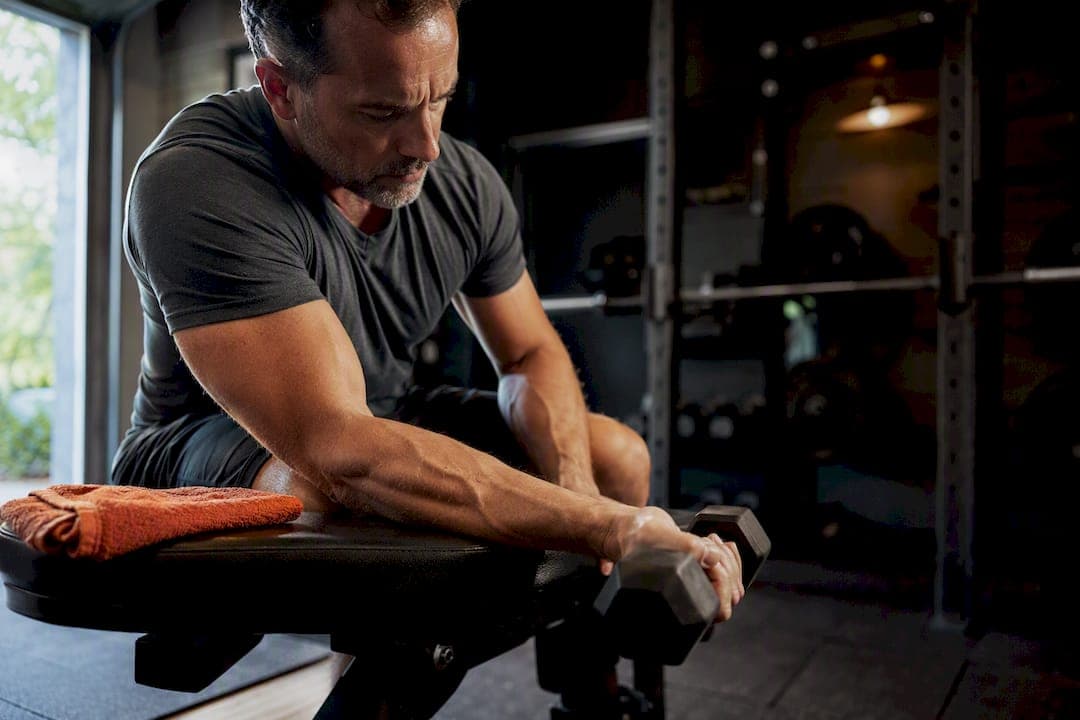
- Isotonic wrist extension work. Once isometrics feel manageable, move to controlled wrist curls and extensions with a slow eccentric phase (3 to 5 seconds lowering). Standard rehab dosing runs 3 sets of 15 reps, starting with 1 to 3 pound dumbbells. That's not a typo. Tendon rehab starts absurdly light on purpose.
- Eccentric-focused and tempo-paced progression. As reps and pain tolerance improve, add eccentric-only wrist extensor work and consider tempo-controlled tendon neuroplastic training, using a metronome to pace 3-second concentric and 3-second eccentric phases with progressive loads. Early trial data on this method shows real improvements in pain and function when layered on top of standard progressive loading. Add shoulder and scapular accessory work here too, since a weak shoulder often forces the forearm to compensate during pressing and pulling.
A full rehab cycle typically runs 6 to 12 weeks, and early trial protocols report noticeable improvement by weeks 4 to 6. If you're at week six with zero trend in the right direction, that's your signal to get a professional assessment rather than keep guessing.
How Do You Keep Training While Rehabbing Your Elbow?
The goal isn't to stop training. It's to stop overloading one tendon while everything else in your program keeps moving forward. Barbell Medicine's review of lateral elbow pain in lifters points to the usual suspects behind flare-ups: a jump in training intensity near your one-rep max, a sudden volume increase, or adding training days without adjusting recovery.
Practical tactics that let you keep lifting heavy elsewhere:
- Use straps on pulling movements so your forearm isn't the limiting factor on a deadlift or row
- Swap barbell curls for neutral-grip dumbbell work while your tendon rebuilds capacity
- Lean on unilateral leg and core work to keep training volume up without touching your elbow at all
- Do your rehab sets as a warm-up before pulling work, or slot them between heavy sets, so they precondition the tendon instead of adding extra fatigue on top of your session
Log pain and load together, even in a basic notes app: what you lifted, how it felt during the set, and how it felt the next morning. That log becomes your evidence for when to add weight, grip work, or speed back in. A simple week might look like: heavy squats and unilateral leg work Monday, rehab sets plus neutral-grip pressing Wednesday, and moderate pulling with straps Friday. Full load management principles apply here the same way they would to any overuse injury.
When Should You Use a Brace, Ice, or See a Doctor?
Counterforce straps and elbow sleeves can take the edge off during a lifting session, but they're symptom control, not treatment. Supportive gear reduces discomfort short-term and doesn't replace the strengthening work that actually rebuilds tendon capacity.
For short-term flare-ups, rest, ice, and NSAIDs are reasonable first steps, and physical therapy is the logical next move if symptoms don't settle. Injections and surgery exist for cases that fail conservative care, but they're a later option, not a starting point. Talk to your doctor before starting any new medication, and never stop a prescribed medication on the strength of an article you read online.
Get assessed promptly if you notice any of the following:
- Pain that's severe or getting worse week over week instead of trending down
- Numbness, tingling, or weakness that suggests a nerve is involved, not just a tendon
- Noticeable grip weakness that isn't improving
- No progress at all after 6 to 8 weeks of a consistent rehab program
What Does the Evidence Actually Support?
Tendon loading, not rest, is the core treatment target for tennis elbow. The research is fairly consistent on this: progressive resistance work, run at low loads and high reps over 6 to 12 weeks, outperforms passive-only care for restoring function. OrthoInfo's staged exercise progressions back the same conservative, gradual approach: supported wrist work first, full range and heavier resistance later.
Joint health coverage for lifters over 40 is built around this exact principle: tendons don't heal on a shortcut, and neither does your training plan around them. Manual therapy early on can speed up comfort while you build capacity, but it's an adjunct, not the fix. Prioritizing shoulder and scapular strength alongside your elbow rehab also cuts down on recurrence, since a weak upper back tends to push more stress into the forearm during heavy pressing and pulling.
Why Most Tennis Elbow Advice Gets This Wrong
Most of what gets repeated about tennis elbow treats it like an injury you wait out. Rest until it stops hurting, then go back to normal. That advice ignores what the tendon actually needs: progressive load to rebuild capacity, not an extended vacation from stress.
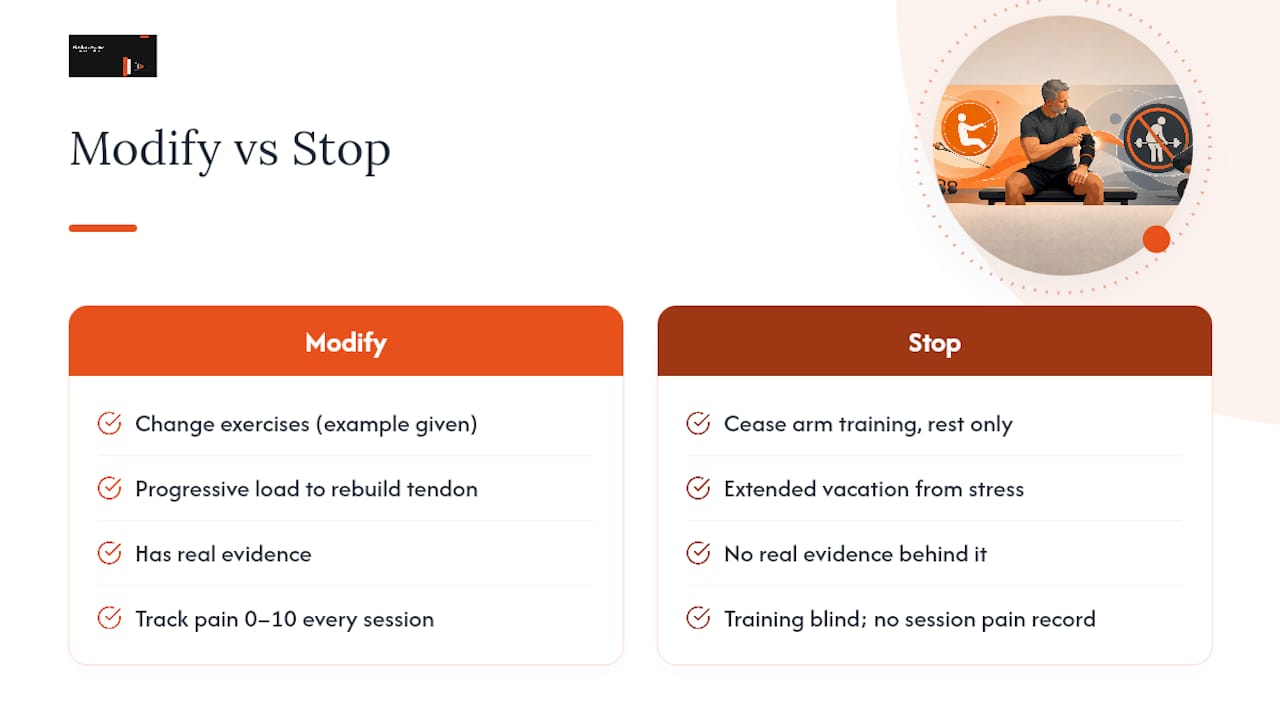
The bigger failure in mainstream advice is treating "modify" and "stop" as the same instruction. They're not. A 52 year old lifter who drops barbell curls for neutral-grip dumbbell work and starts a wrist extensor protocol is doing something completely different than one who just stops training their arms and hopes six weeks off fixes a loading problem. Only one of those approaches has real evidence behind it.
If you take one thing from this: track pain on a 0 to 10 scale, every session, for every lift you're worried about. Most lifters who get stuck with a nagging elbow for months aren't training too hard. They're training blind, with no record of what actually provoked the flare-up three days ago. Fix the tracking, and the programming decisions get a lot easier.
— Iron@40 Staff
This article is general information, not a substitute for advice from a qualified doctor. Consult a qualified healthcare professional about your own circumstances before acting on anything here.
Sources
- Tennis elbow no more: Practical eccentric and concentric exercises to heal the pain - PMC (original program)
- Tennis elbow - Diagnosis and treatment - Mayo Clinic
- Therapeutic Exercise Program for Epicondylitis (Tennis Elbow / Golfer’s Elbow) - AAOS/OrthoInfo PDF
FAQ
Is It Okay to Lift With Tennis Elbow?
Yes, in most cases, as long as you modify the movements that provoke pain past 4 out of 10 and avoid anything that leaves you worse the next morning. Complete rest isn't usually necessary and can deprive the tendon of the loading it needs to rebuild capacity.
How Do You Fix Elbow Tendonitis From Lifting?
Progressive resistance training, starting with isometric holds if the tendon is highly irritable, then moving to isotonic wrist extensor work at 3 sets of 15 reps with 1 to 3 pound weights, is the best-supported approach. Programs typically run 6 to 12 weeks, with many people noticing improvement by weeks 4 to 6.
Can I Do Bicep Curls With Tennis Elbow?
Pronated (palms-down) curls tend to aggravate the extensor tendon and are worth avoiding during a flare-up. Neutral-grip or hammer curl variations put less strain on the affected tendon and are a reasonable substitute while you rehab.
Does Tennis Elbow Go Away on Its Own?
It can improve with time, but recovery is faster and more reliable with a structured loading program than with rest alone. Most rehab protocols expect meaningful progress within 6 to 12 weeks; if you see no improvement by week 6 to 8, it's worth getting a professional assessment rather than waiting longer.