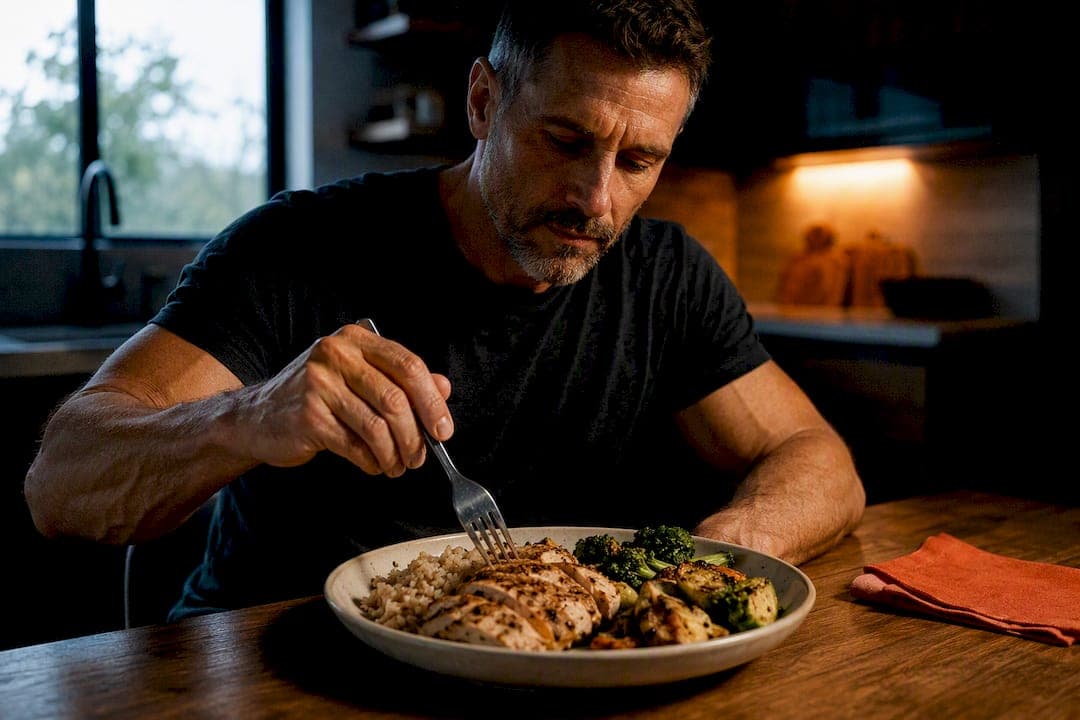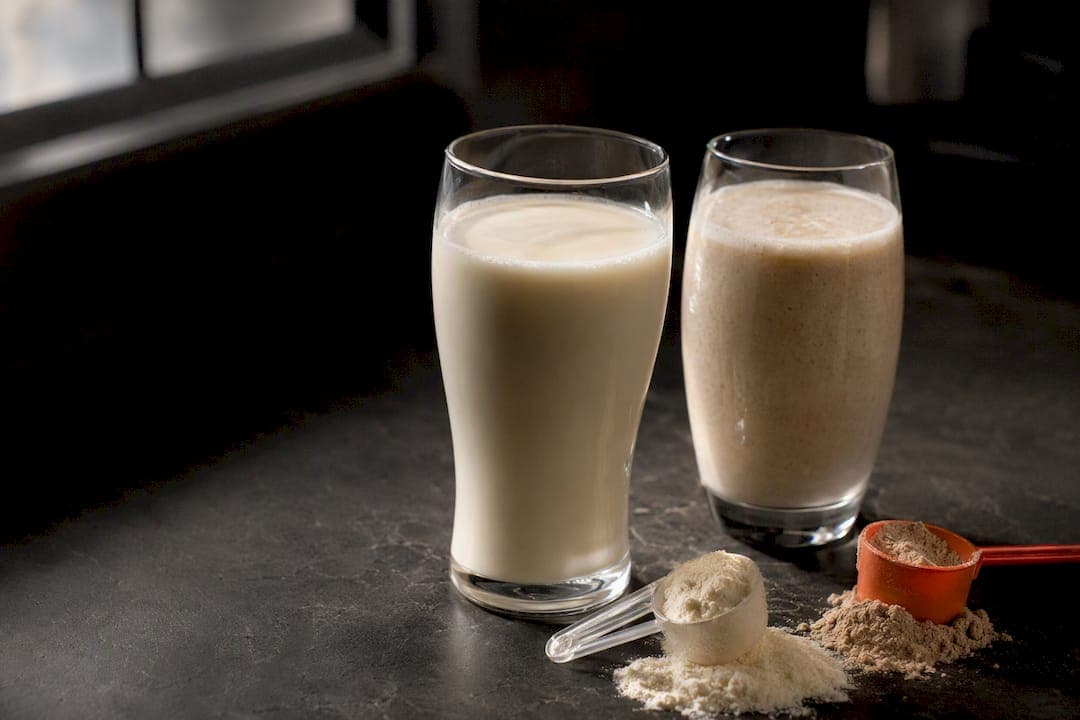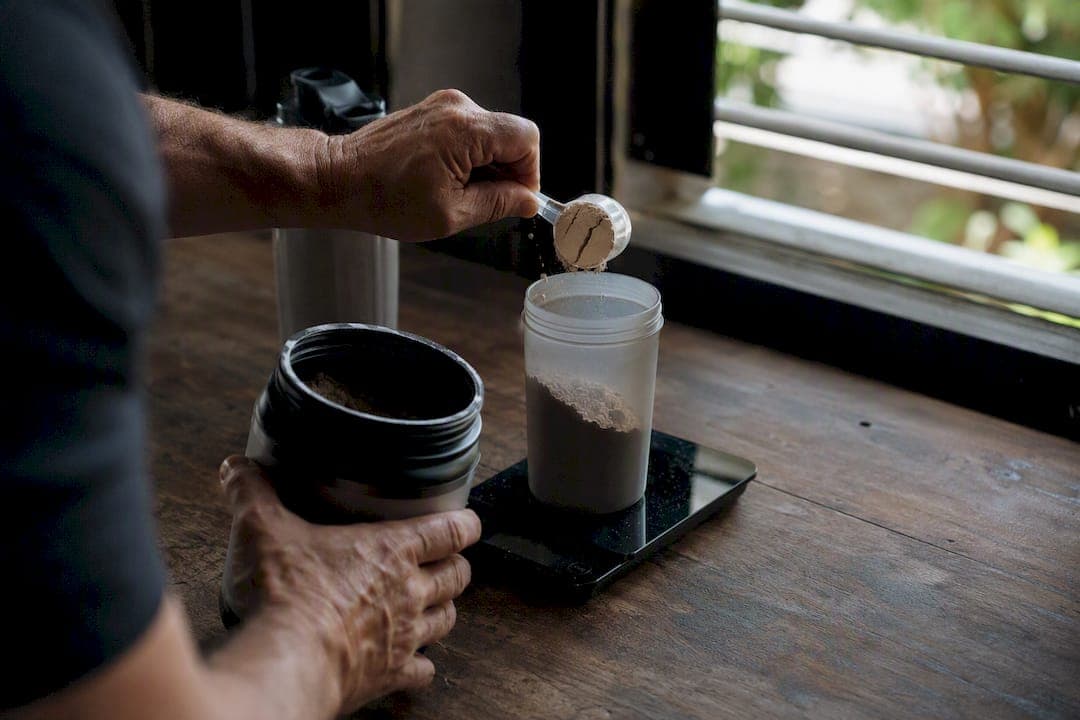
The verdict is simple: protein timing over 40 is a secondary lever, not the main one. Hit 1.2 to 1.6 grams per kilogram of body weight daily, anchor each meal with 30 to 40 grams of protein, and space meals roughly every three to four hours. Do that consistently and pair it with hard training, and precise timing windows stop mattering much. Skip ahead to the meal templates if you just want the numbers.
TL;DR:
- Total daily protein intake, ranging from 1.2 to 1.6 grams per kilogram of body weight, is vastly more important than precise timing protocols.
- Consuming about 30 to 40 grams of protein in each meal, containing roughly 3 grams of leucine, optimizes muscle protein synthesis, especially for older adults.
- The muscle full effect means muscle sensitivity to protein peaks within 60 to 90 minutes and recovers after three to four hours, supporting meal spacing.
- Resistance training consistency and hitting daily protein targets have a greater impact on muscle gains than post-workout snack timing or perfect meal windows.
- For those over 40, larger per-meal doses are necessary due to anabolic resistance, making meal size and frequency more critical than timing windows.
Table of Contents
- Does Protein Timing Over 40 Actually Matter?
- How Much Protein Do You Need Per Day and Per Meal?
- When Should You Eat Protein Around Your Workout?
- What Should a Day of Eating Look Like?
- Why Training Consistency Beats Perfect Timing
- Common Protein Timing Myths That Waste Your Effort
- Where to Go From Here
- The Real Priority Order After 40
- Sources
- FAQ
Does Protein Timing Over 40 Actually Matter?
Not the way the supplement industry wants you to believe. The research on protein timing over 40 tells a consistent story once you strip out the marketing: total daily intake predicts your results far more than when you eat it.
The foundational work here is a meta-analysis by Schoenfeld and colleagues that pooled results across dozens of trials on protein timing and resistance training. When researchers controlled for total daily protein intake, timing showed no significant independent effect on strength or hypertrophy. Small pooled effects that looked meaningful in raw data disappeared once total protein was accounted for. That single finding undercuts most of what gym culture has preached about the "anabolic window" for over a decade.
Newer trials in older adults specifically back this up, and they matter more to you than studies on 22 year old college athletes. A 2025 randomized controlled trial tested whether 40 grams of protein consumed right after training or right before bed improved muscle thickness or strength in older lifters. The answer: no extra benefit when baseline daily protein intake was already adequate, defined as roughly 1.0 grams per kilogram or higher. Twelve weeks of resistance training produced the same gains whether or not that timed dose was added.
The number that matters more than any clock: researchers estimate that a single meal's stimulation of muscle protein synthesis peaks and fades within roughly 60 to 90 minutes, and your muscle regains full sensitivity to a new protein stimulus after about three to four hours. This is the so-called muscle full effect, and it explains why cramming 100 grams of protein into one sitting wastes some of that dose, while spacing meals lets you stimulate muscle protein synthesis multiple times a day.
Here's where age changes the equation and why generic advice built for younger lifters falls short for you:
- Older muscle shows anabolic resistance, meaning it needs a bigger protein dose per meal to trigger the same synthesis response a younger person gets from less.
- A Frontiers review on aging and protein nutrition puts the per-meal threshold for older adults at roughly 30 to 35 grams of protein, containing about 3 grams of leucine.
- A 2024 trial comparing protein timed at breakfast versus dinner in resistance trained adults found mixed, context-dependent outcomes rather than a clear universal winner, reinforcing that individual schedules matter more than a fixed rule.
- A Nutrients 2020 crossover trial found that older adults given 70 grams of protein in a single meal showed a greater whole-body anabolic response than those given 35 grams, suggesting your ceiling for a useful per-meal dose may sit higher than younger lifters need.
Put those pieces together and you get a clear practical takeaway. Timing does not build muscle by itself. But because you're over 40 and dealing with anabolic resistance, the size and consistency of each protein dose carries more weight than it did in your 20s. The old advice to "just eat protein sometime during the day" undersells how much a too small, too infrequent approach can blunt your results.
How Much Protein Do You Need Per Day and Per Meal?
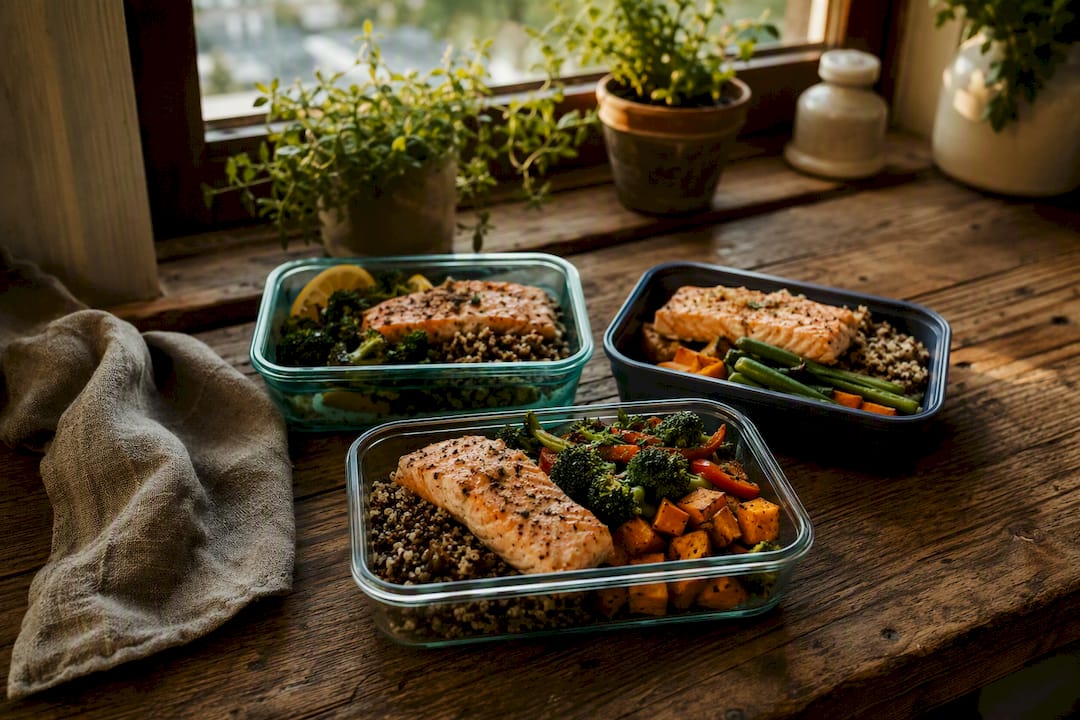
Start with your daily number, then break it into per-meal doses that actually clear the anabolic resistance threshold.
Daily target: 1.2 to 1.6 grams of protein per kilogram of body weight. Multiple reviews on protein quantity and body composition converge on this range for older adults who train with resistance exercise and want to preserve or build muscle. Where you land in that range depends on your situation:
- Use the lower end (1.2 g/kg) if you're maintaining muscle, eating at maintenance calories, and training consistently but not chasing aggressive hypertrophy goals.
- Use the middle to upper end (1.4 to 1.6 g/kg) if you're actively trying to build muscle, you're newer to structured resistance training, or your current diet has been protein-light for years.
- Push toward the top of the range or slightly above if you're in a calorie deficit for fat loss. Cutting calories increases the protein needed to protect lean mass, so a 1.6 g/kg target during a cut acts as insurance against muscle loss.
Once you know your daily number, split it into per-meal doses of 30 to 40 grams, each containing roughly 3 grams of leucine, the amino acid that triggers the strongest muscle protein synthesis response. That leucine threshold is why a small yogurt snack doesn't do much for you, but a proper meal with chicken, eggs, or a full protein shake does.
Here's how that plays out for three different body weights:
| Body weight | Daily protein (1.2 to 1.6 g/kg) | Per-meal target (3 to 4 meals) |
|---|---|---|
| 65 kg | 78 g | 30 to 35 g per meal |
| 80 kg | 96 g | 32 to 40 g per meal |
| 95 kg | 114 g | 38 to 40 g per meal |
Notice that a 65 kg lifter and a 95 kg lifter both need roughly the same absolute per-meal floor of 30 grams even though their daily totals differ substantially. That's the anabolic resistance threshold at work. It doesn't scale down proportionally with a smaller frame the way total daily protein does.
Pro Tip: Don't just aim for your daily gram total and call it done. If you hit 120 grams in two meals and skip the rest of the day, you're leaving muscle protein synthesis opportunities on the table. Four smaller, threshold-clearing meals beat two oversized ones.
If you're not sure where your calories should sit while you dial in these numbers, run your stats through Ironatforty's TDEE calculator first. Protein targets mean little if your total calorie intake is fighting against your goal.
When Should You Eat Protein Around Your Workout?
Forget the 30 to 60 minute post-workout window. That idea came from early sports nutrition research on fasted athletes and never held up well under scrutiny, especially for someone who eats normally throughout the day.
The more accurate picture, based on the meta-analysis controlling for total daily protein, is that your muscle stays sensitized to protein for a much longer stretch after a training session, up to 24 to 48 hours in some analyses. A single perfectly timed shake matters far less than making sure you get two or three adequate protein meals across the day of training and the day after.
That said, a few practical habits are worth building into your schedule:
- Eat a real meal within a few hours of training, before or after, rather than training fasted for hours and then delaying your next meal even longer.
- Prioritize a protein-rich breakfast, even if you don't train in the morning. After eight or more hours without food, your body's sensitivity to protein resets, and starting the day with 30-plus grams re-engages muscle protein synthesis early rather than leaving it dormant until lunch.
- Consider pre-sleep protein selectively, but understand its limits. The 2025 RCT found that adding 40 grams before bed made no measurable difference in strength or muscle thickness when daily intake was already sufficient. If you're already hitting your daily target, a pre-sleep shake is optional insurance, not a requirement.
- Space your meals every 3 to 4 hours while you're awake, which naturally produces three to five protein-adequate meals a day without forcing an unnatural eating schedule.
Here's how that looks for three common training schedules:
Morning lifter (trains 6 to 7am): Protein shake or eggs before training (20 to 30 g), full breakfast after training (30 to 35 g), lunch (30 to 35 g), dinner (35 to 40 g).
Lunchtime lifter (trains 12 to 1pm): Protein-rich breakfast (30 to 35 g), light pre-workout snack optional, post-workout lunch (35 to 40 g), dinner (35 to 40 g), optional evening snack (15 to 20 g).
Evening lifter (trains 6 to 8pm): Breakfast (30 to 35 g), lunch (30 to 35 g), pre-workout snack (15 to 20 g), post-workout dinner (35 to 40 g), optional casein or Greek yogurt before bed (20 to 25 g).
None of these require a stopwatch. They require you to eat real, protein-adequate meals on a schedule that fits your day.
What Should a Day of Eating Look Like?
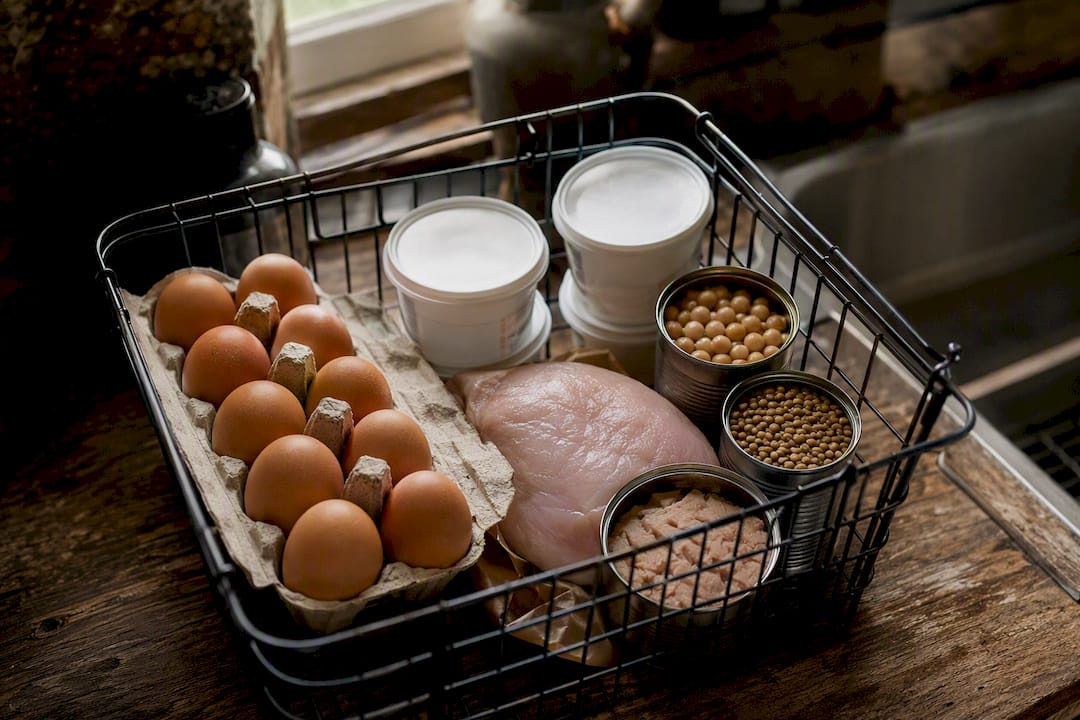
Numbers on a page mean nothing until they're on a plate. Here are three day templates built around an 80 kg lifter targeting roughly 130 grams of protein daily, adjustable up or down based on your own body weight from the table above.
Template A: Standard four-meal day
- Breakfast: 3 eggs plus Greek yogurt (32 g)
- Lunch: Chicken breast, rice, vegetables (35 g)
- Post-workout snack: Whey protein shake (25 g)
- Dinner: Salmon or lean beef, potatoes, salad (38 g)
Template B: Three-meal day for lower-appetite eaters
- Breakfast: Protein smoothie with whey, milk, banana (40 g)
- Lunch: Turkey and cheese sandwich, cottage cheese (40 g)
- Dinner: Lean beef or tofu stir-fry with legumes (40 g)
Template C: Vegetarian day
- Breakfast: Greek yogurt, cottage cheese, chia seeds (30 g)
- Lunch: Lentils, quinoa, and tofu bowl (32 g)
- Snack: Whey or pea protein shake (25 g)
- Dinner: Tempeh, beans, and eggs (38 g)
Plant-based lifters need to pay closer attention to leucine content, since most plant proteins carry less leucine per gram than animal sources. Combining legumes with a whey or pea protein isolate at one meal, or simply eating a slightly larger portion of plant protein, closes that gap.
A simple weekly shopping list covers most of this: eggs, Greek yogurt, cottage cheese, chicken breast, ground turkey, salmon or canned tuna, whey protein powder, lentils, and canned beans. Cook a large batch of chicken and rice on Sunday, portion it into containers, and you've solved four days of lunches before Monday even starts. For a deeper shopping and prep breakdown, Ironatforty's meal prep guide for strength athletes over 40 walks through batch cooking systems built for exactly this age group.
Why Training Consistency Beats Perfect Timing
If you take one thing from this entire article, take this: the lifter who trains hard three times a week and eats "good enough" protein will outperform the lifter chasing a perfect timing protocol who skips workouts.
Resistance training adherence, not nutrient timing precision, is what the evidence keeps pointing to as the dominant driver of strength and muscle gains over 40. The RCTs showing no benefit from timed protein doses all had one thing in common: the subjects were training consistently, and that training stimulus is what drove their results, not when they drank a shake.
Practical rules to live by:
- Get your protein in after training when it's convenient, but don't stress if life gets in the way for an hour or two.
- Make hitting your daily protein target the non-negotiable habit; treat exact meal timing as flexible.
- Match your protein intake to how often you train. Someone lifting four days a week doing full-body sessions has more recovery demand than someone doing two short sessions.
- Progressive overload, meaning gradually increasing weight, reps, or volume over time, does more for your strength curve than any shake timing decision ever will.
If your training program itself needs work, that's the higher leverage fix. Ironatforty's guide to building muscle after 40 covers how to structure progressive overload for a body that recovers slower than it did twenty years ago, and pairing that with your calculated TDEE and protein targets gives you a complete system rather than isolated pieces.
Common Protein Timing Myths That Waste Your Effort
A few persistent myths keep otherwise smart lifters over 40 chasing precision that doesn't pay off.
- The 2-hour rule is not a hard cutoff. The idea that protein must land within two hours of training or the workout is "wasted" isn't supported by the evidence. Your muscle stays receptive to protein for up to 24 to 48 hours post-training. Eating within a few hours before or after your session is plenty.
- Mega-dosing one giant meal doesn't beat spreading it out. Because of the muscle full effect, a single 100 gram protein meal doesn't stimulate muscle protein synthesis four times harder than a 30 gram meal. Splitting protein across three to five meals a day makes better use of each dose.
- Skipping breakfast to save calories usually backfires. Going 12-plus hours without protein overnight, then delaying your first meal further, extends the window your body spends in a lower synthesis state. A protein-forward breakfast resets that faster.
- Not every protein powder is created equal. Check for third-party testing (like NSF Certified for Sport or Informed Choice) rather than trusting label claims alone, especially if you're buying budget brands.
Where to Go From Here
Ironatforty built its protein intake guide for lifters over 40 specifically because generic nutrition advice keeps ignoring how anabolic resistance changes the math for this age group. That guide goes deeper into daily targets and food sourcing than this article's space allows.
Two free tools make the numbers in this article actionable instead of theoretical. The TDEE calculator estimates your daily calorie needs so you can set a protein target that fits your actual maintenance or deficit, not a generic number pulled from a magazine. Pair that with the 1RM calculator, available alongside other free training and nutrition tools, to establish your strength baselines and track whether your training, not just your diet, is progressing the way it should. Between the calculators and the training guides, you have what you need to build a plan around your numbers instead of someone else's.
The Real Priority Order After 40
Most of what gets sold as protein timing advice is a distraction from the two things that actually move the needle: total daily protein and training consistency. The research here is unusually clean on this point. Once total protein intake is controlled for, timing effects mostly vanish, and that holds true even in trials specifically designed to find a timing benefit in older adults.
Where conventional advice falls short is treating everyone the same regardless of age. A 25 year old's muscle responds to a smaller protein dose than yours does. Anabolic resistance is real, and it means your per-meal floor, roughly 30 to 40 grams, matters more to you than it did a decade ago. That's not a timing rule. It's a dosing rule that happens to shape how you schedule meals.
If you take away one priority, make it this: hit your daily gram target, clear the per-meal threshold at three to four meals, and show up for your lifting sessions consistently. Everything else, the pre-sleep shake, the post-workout sprint to the kitchen, is optimization on the margins. Handle the fundamentals first.
— Iron@40 Staff
This article is general information, not a substitute for advice from a qualified doctor. Consult a qualified healthcare professional about your own circumstances before acting on anything here.
Sources
- The effect of protein timing on muscle strength and hypertrophy: a meta-analysis
- Critical variables regulating age-related anabolic responses to protein nutrition in skeletal muscle
- Neither pre-sleep nor post-exercise protein consumption influences resistance exercise training adaptations in older adults (full article)
- The anabolic response to dietary protein is not limited by the maximal stimulation of protein synthesis in healthy older adults: a randomized crossover trial
FAQ
What Is the 2-Hour Protein Rule?
The 2 hour rule claims you must eat protein within two hours of training or lose the workout's muscle-building benefit. Evidence shows muscle stays receptive to protein for up to 24 to 48 hours post-training, so eating within a few hours works just as well.
Can You Still Build Muscle at 40?
Yes. Resistance training combined with adequate daily protein (1.2 to 1.6 g/kg) builds muscle at 40 and well beyond, though anabolic resistance means you need slightly larger per-meal protein doses than younger lifters to get the same response.
Does Protein Timing Really Matter?
Total daily protein intake matters far more than timing. Once researchers control for total daily protein, meta-analyses find no significant independent benefit from timing on strength or hypertrophy.
What Kills Muscle Gains the Most?
Inconsistent resistance training and insufficient daily protein intake do far more damage to muscle gains than any timing mistake. Skipping workouts or chronically under eating protein outweighs missing a "perfect" post-workout window every time.
How Often Should You Eat Protein Over 40?
Spacing protein across three to five meals roughly every three to four hours works well, since muscle regains sensitivity to a new protein stimulus in that window after the previous meal's anabolic response fades.