Adults over 40 need significantly more protein than the standard RDA to preserve and build muscle, especially when lifting weights. The commonly cited 0.8 grams per kilogram of body weight was set to prevent deficiency, not to support muscle protein synthesis in aging adults. Research-backed guidelines now place optimal protein intake for muscle over 40 at 1.2–1.6 grams per kilogram of body weight daily, distributed across meals in doses large enough to overcome a physiological barrier called anabolic resistance. Resistance training is the foundation. Protein is what makes that training stick.
How does aging affect muscle protein needs?
Muscle loss after 40 is real, measurable, and faster than most people expect. Muscle mass declines 30–50% between ages 40 and 80. That is not a slow fade. It is a structural shift that affects strength, metabolism, and injury risk.
The core problem is anabolic resistance. After 40, your muscles become less responsive to the protein signal that triggers growth and repair. Younger adults can stimulate muscle protein synthesis with 15–25 grams of protein per meal. Older adults need more protein per meal to get the same response. The threshold rises because the body's efficiency at converting dietary protein into muscle tissue drops with age.
Hormonal changes make this worse. For women, the estrogen drop that begins around 40 accelerates sarcopenia risk and reduces the muscle-protective effects of training. For men, declining testosterone blunts the anabolic response to both protein and exercise. These are not excuses. They are facts that change how you need to eat.
Here is what changes after 40 that directly affects your protein strategy:
- Reduced anabolic sensitivity: Your muscles need a larger protein dose per meal to trigger synthesis.
- Slower digestion and absorption: Protein moves through your system less efficiently, which affects how much you actually use.
- Hormonal shifts: Lower estrogen and testosterone reduce the muscle-building signal from both food and training.
- Higher baseline loss: You lose muscle faster at rest, which means your protein floor is higher just to break even.
Pro Tip: If you are a woman over 40, the hormonal piece is not optional reading. Understanding how menopause affects strength training changes how you structure both your training and your protein intake.
What is the optimal daily protein intake after 40?
The answer depends on what you are doing in the gym. Sedentary adults over 40 need 1.0–1.2 grams per kilogram of body weight daily. Adults doing moderate activity land at 1.2–1.4 grams per kilogram. If you are strength training consistently, the target is 1.4–1.6 grams per kilogram. These are not aggressive numbers. They are the floor for muscle maintenance.
Here is what that looks like in practice for a 180-pound (82 kg) lifter:
- Sedentary: 82–98 grams of protein per day
- Moderately active: 98–115 grams per day
- Strength training: 115–131 grams per day
Those numbers look manageable until you realize most people eating a standard American diet land well below 100 grams daily without tracking. Closing that gap requires intention, not luck.
The per-meal number matters just as much as the daily total. Older adults need 30–40 grams of protein per meal to overcome anabolic resistance and actually stimulate muscle protein synthesis. Younger adults can get by with 15–25 grams. You cannot. Spreading 130 grams across five 26-gram meals will not cut it. Three to four meals with 30–40 grams each is the structure that works.
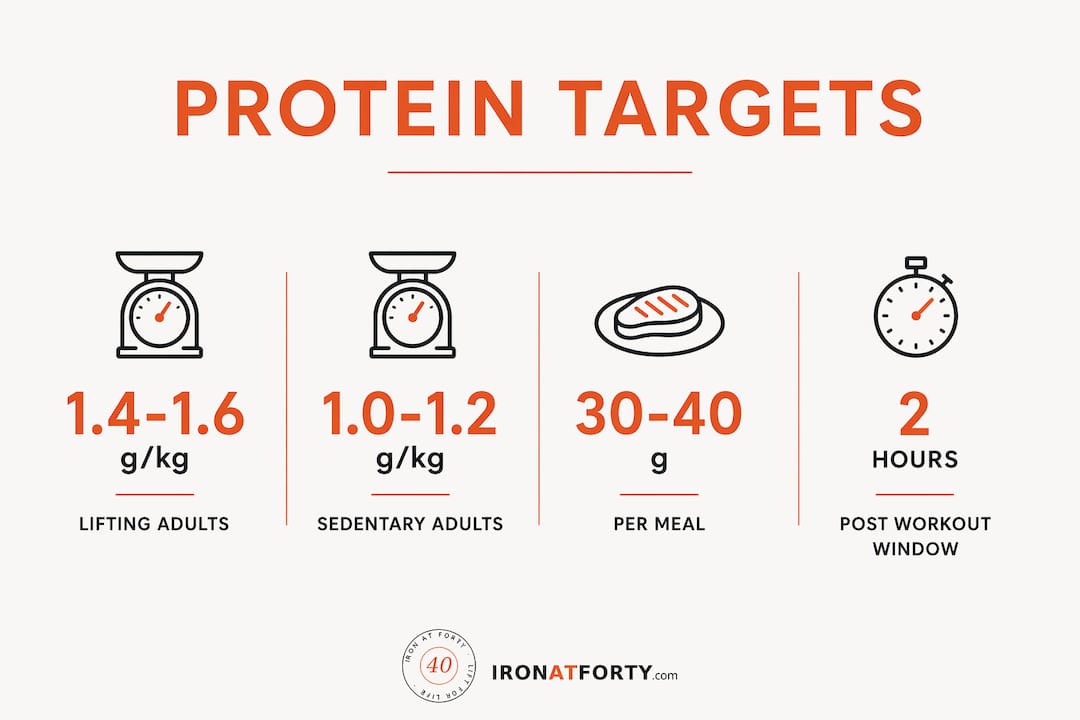
Timing is more flexible than the fitness industry wants you to believe. The post-exercise anabolic window lasts about 2 hours, which means you do not need to choke down a shake the second you rack the bar. Total daily intake and per-meal dose matter more than hitting an exact minute on the clock. That said, eating protein consistently throughout the day, not just at dinner, is non-negotiable.
| Activity level | Daily target (per kg) | Per-meal dose |
|---|---|---|
| Sedentary | 1.0–1.2 g/kg | 25–30 g |
| Moderately active | 1.2–1.4 g/kg | 30–35 g |
| Strength training | 1.4–1.6 g/kg | 30–40 g |
Pro Tip: Use the TDEE Calculator at Ironatforty to find your daily calorie needs first, then set protein as your anchor macro before filling in fats and carbs.
Which protein sources best support muscle health over 40?
Not all protein is equal when anabolic resistance is in the picture. The key variable is leucine, the essential amino acid that triggers muscle protein synthesis at the cellular level. Foods high in leucine give your muscles a stronger signal to grow and repair. Foods low in leucine require you to eat more total protein to get the same effect.
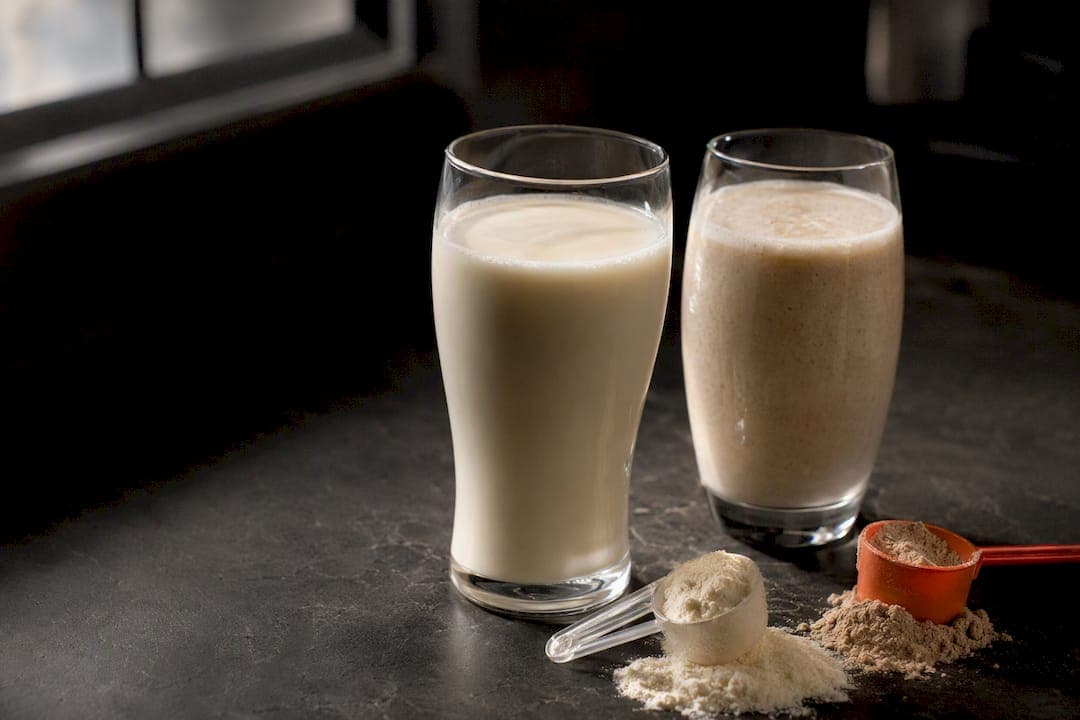
Whey protein combined with resistance training produces superior gains in muscle mass and strength compared to soy or casein post-exercise. Whey is fast-digesting and leucine-dense, which makes it the most effective choice immediately after training. That does not mean every meal needs to be a shake. It means whey earns its place in your post-workout window.
The best whole-food protein sources for adults over 40, ranked by leucine content and bioavailability:
- Chicken breast and turkey: High leucine, low fat, easy to prep in bulk.
- Eggs: Complete amino acid profile, highly bioavailable, and cheap.
- Greek yogurt and cottage cheese: Dairy proteins with strong leucine content and casein for overnight muscle support.
- Salmon and tuna: High protein, omega-3 fats that reduce muscle inflammation.
- Soy (edamame, tofu, tempeh): The strongest plant-based option for leucine content.
Muscle protein synthesis improvements are dose-dependent, meaning higher protein doses from quality sources produce greater gains when paired with consistent training. Plant proteins are not disqualified, but they generally require larger portions to match the leucine content of animal sources. If you eat mostly plants, prioritize soy and consider a leucine supplement or a plant-based protein powder that blends rice and pea protein for a complete amino acid profile.
Older adults need both higher protein amounts and better quality to maintain muscle functionality. Quantity without quality is a losing strategy after 40.
How to integrate protein intake with training and real life
The science is clear. Applying it when you have a job, a family, and a body that recovers slower than it used to is the actual challenge. Here is how to make it work.
Adjust for your body composition. If your BMI is above 30, calculate protein using adjusted body weight rather than total body weight. This prevents overestimating your needs and keeps calories in check while still supporting lean mass. Adjusted body weight is roughly the midpoint between your current weight and your ideal body weight.
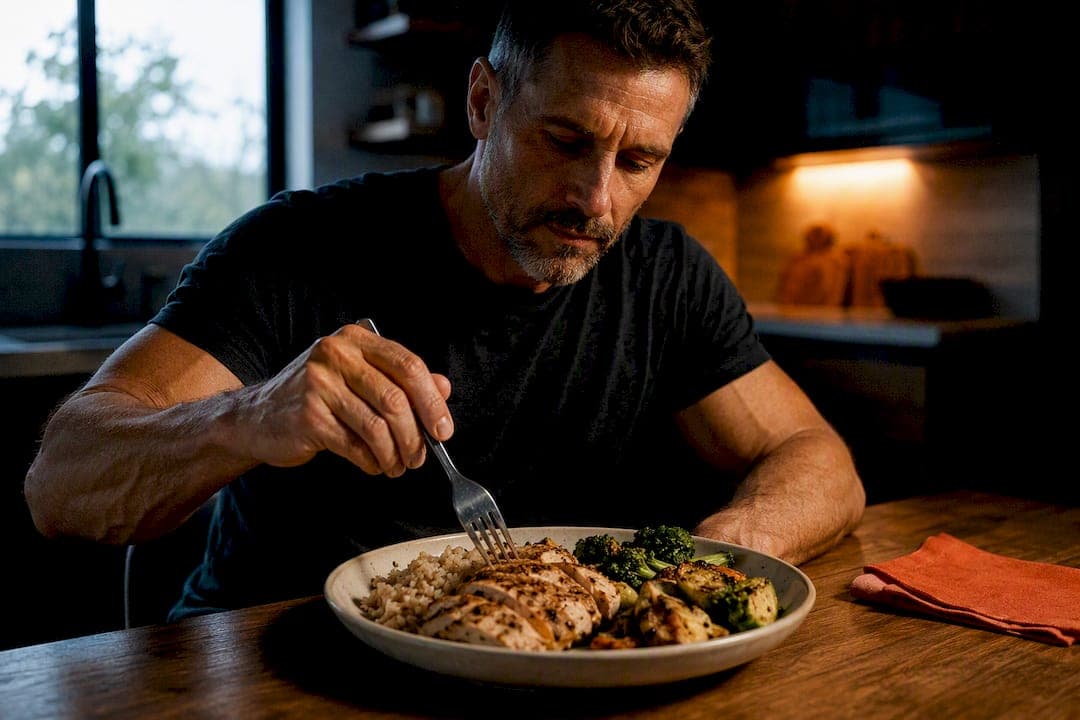
Build your meals around protein first. Decide on your protein source before anything else on the plate. A 6-ounce chicken breast, two eggs plus a cup of Greek yogurt, or a 5-ounce salmon fillet each land in the 35–45 gram range. Build the rest of the meal around that anchor.
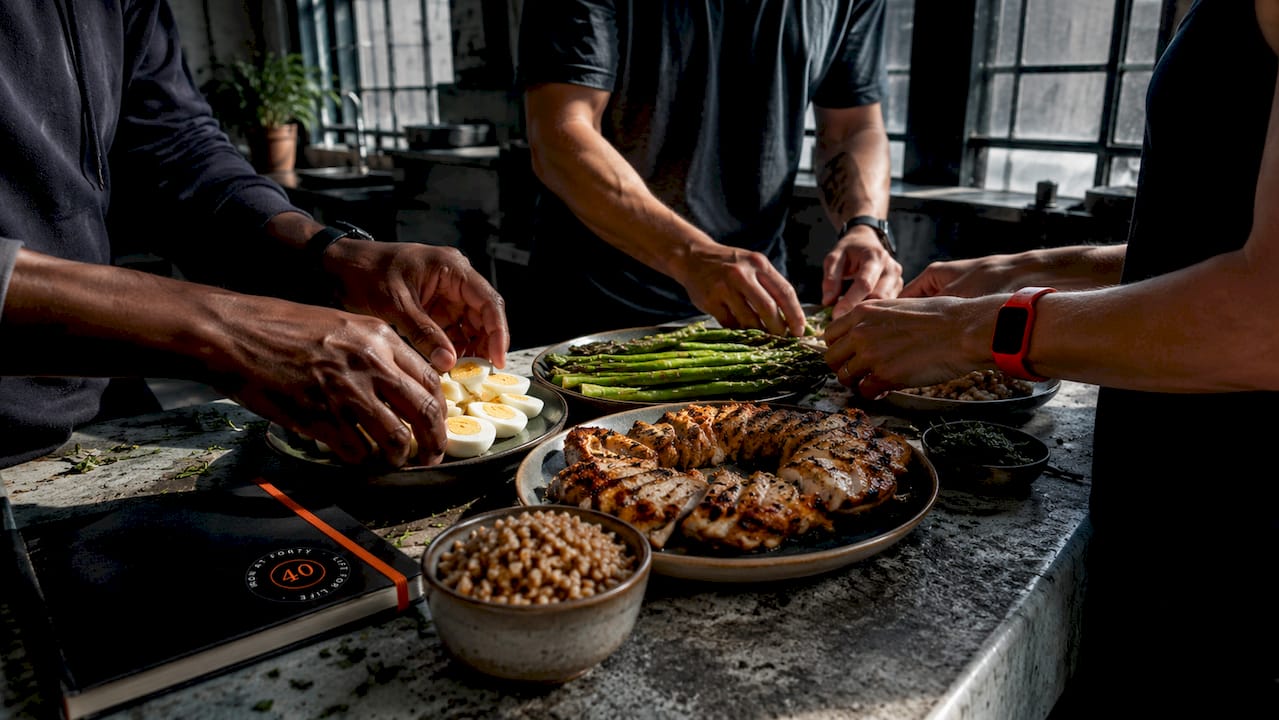
Prep in batches. Cooking protein every day is the fastest way to fall off the plan. Meal prep for strength athletes works because it removes the daily decision. Grill chicken, hard-boil eggs, and portion cottage cheese on Sunday. The week takes care of itself.
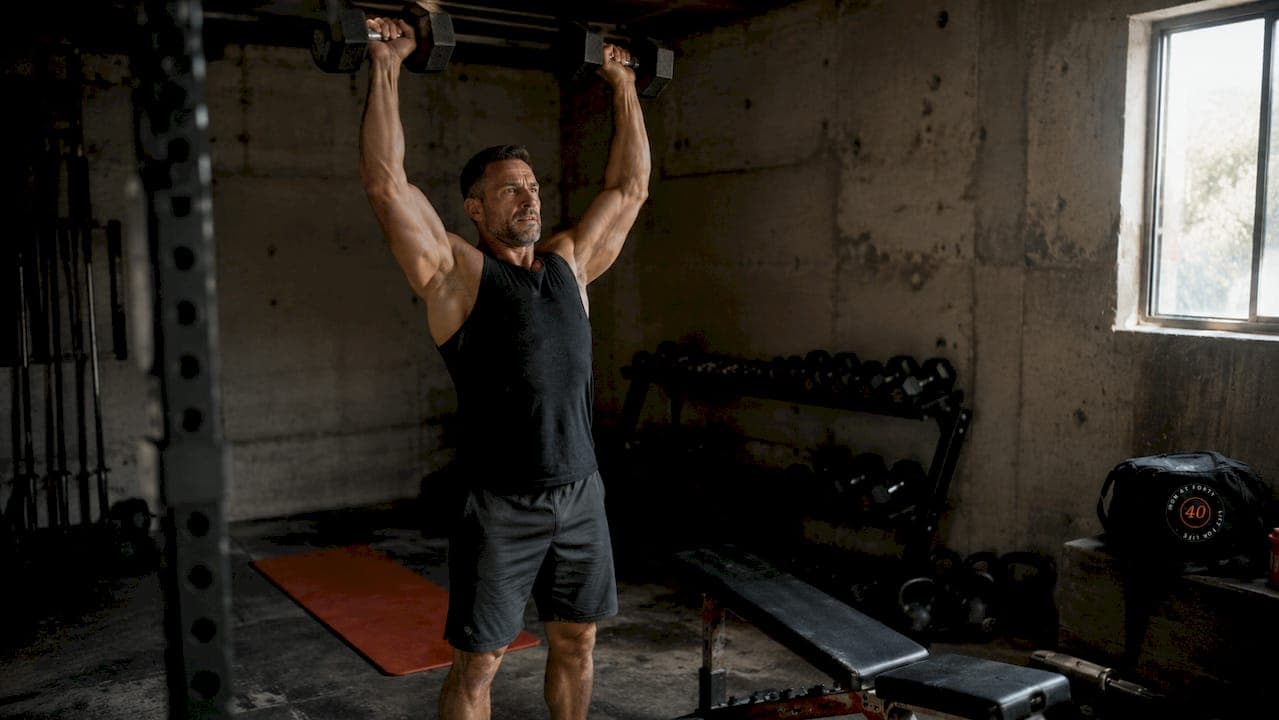
Resistance training is not optional. Protein alone yields minimal muscle maintenance without a resistance stimulus. Think of training as the reason your body uses the protein you eat. Without it, extra protein does not build muscle. It just gets oxidized or stored. If you need a place to start, look at effective training programs built specifically for adults over 40.
Pro Tip: Distribute protein across three to four meals rather than loading it at dinner. Consistent protein spread throughout the day drives better muscle protein synthesis than the same total eaten in one or two sittings.
Key Takeaways
Adults over 40 must eat more protein per day and per meal than standard guidelines suggest, and resistance training is what makes that protein count.
| Point | Details |
|---|---|
| Daily protein target | Aim for 1.4–1.6 g/kg if you lift; 1.0–1.2 g/kg if sedentary. |
| Per-meal dose | Hit 30–40 g per meal to overcome anabolic resistance after 40. |
| Best protein sources | Prioritize whey, chicken, eggs, dairy, salmon, and soy for leucine content. |
| Timing flexibility | Total daily intake matters more than hitting an exact post-workout minute. |
| Training is the foundation | Protein supports muscle only when paired with consistent resistance exercise. |
What I have learned lifting past 40
The biggest mistake I see adults over 40 make is treating protein like a detail. They get the training right, they show up consistently, and then they eat 80 grams of protein a day and wonder why they are not recovering or growing. Protein is not a supplement to your plan. It is load-bearing.
The second mistake is obsessing over timing while ignoring total intake. I have watched people stress about drinking a shake within 20 minutes of training while eating 90 grams of protein total for the day. Get the daily number right first. Then worry about distribution. Then, and only then, think about timing.
Quality matters more than most people admit. Eating 150 grams of protein from processed deli meat and protein bars is not the same as eating it from eggs, Greek yogurt, salmon, and chicken. The leucine content, the bioavailability, and the overall nutrient density are different. Your body knows the difference even if the macro tracker does not.
Resistance training is the primary driver. Protein is the frosting. You cannot frost a cake that does not exist. If your training is inconsistent, fix that before you spend another minute calculating grams. The core longevity practices that keep aging athletes healthy all point back to the same thing: lift consistently, eat enough protein, and do not skip either.
— Jeff
Protein and training resources at Ironatforty
Ironatforty publishes science-backed nutrition guidance built specifically for adults over 40 who lift. The nutrition section covers protein strategy, meal timing, insulin resistance, and recovery nutrition without the recycled gym-bro advice. If you want to personalize your protein targets, the TDEE Calculator gives you your daily calorie and macronutrient baseline in under two minutes. From there, you set protein as your anchor and build the rest of your diet around it. No coach required. Just the numbers your body actually needs.
FAQ
How much protein do I need daily after 40?
Adults over 40 who strength train need 1.4–1.6 grams of protein per kilogram of body weight daily. Sedentary adults over 40 should target at least 1.0–1.2 grams per kilogram to prevent muscle loss.
What is anabolic resistance and why does it matter?
Anabolic resistance is the reduced ability of aging muscles to respond to protein and build new tissue. It means adults over 40 need larger protein doses per meal, around 30–40 grams, compared to 15–25 grams for younger adults.
Is whey protein better than other protein types after 40?
Whey protein is the most effective option post-exercise because it is fast-digesting and high in leucine, the amino acid that triggers muscle protein synthesis. Research shows whey outperforms soy and casein for muscle and strength gains in older adults.
Does protein timing matter after a workout?
The post-exercise anabolic window lasts about 2 hours, so you have flexibility. Total daily protein intake and per-meal dose matter more than hitting an exact minute after training.
Can plant-based protein support muscle growth after 40?
Plant proteins can support muscle growth, but most require larger portions to match the leucine content of animal sources. Soy is the strongest plant-based option. Blending rice and pea protein powders provides a more complete amino acid profile.