Meal prep for strength athletes is the practice of planning, cooking, and portioning nutrient-dense meals in advance to fuel muscle growth, recovery, and consistent performance. After 40, this practice stops being optional. Your metabolism shifts, testosterone drops, and recovery takes longer. You cannot out-train a chaotic diet, and you cannot out-improvise a week of missed meals. The good news: a structured prep system built around your training demands takes about 2–3 hours on a Sunday and pays back every single day of the week.
What macronutrient targets should strength athletes over 40 follow?
Protein is the non-negotiable anchor of nutrition for strength training. Strength athletes need 1.6–2.2g of protein per kg of body weight daily. During a caloric deficit, that number climbs to 2.5g/kg to protect muscle tissue from breakdown. For a 200-pound (91kg) lifter, that means 145–200g of protein on a normal training day.
Spreading that protein across your meals matters as much as the total. Distributing 30–40g of protein per meal across 4–5 meals maximizes muscle protein synthesis throughout the day. Eating 150g in two sittings leaves muscle-building potential on the table.
Here is a practical breakdown of daily targets for a 185-pound (84kg) strength athlete:
- Protein: 135–185g daily (1.6–2.2g/kg), 30–40g per meal across 4–5 meals
- Carbohydrates: 250–500g daily (3–6g/kg), scaled to training load and intensity
- Dietary fat: 67–100g daily (0.8–1.2g/kg supports hormone production, including testosterone)
- Pre-workout: 30–40g protein plus moderate carbs 60–90 minutes before training
- Post-workout: 30–40g protein plus fast-digesting carbs within 60 minutes to replenish glycogen
- Pre-sleep: 30–40g of slow-digesting protein like cottage cheese or Greek yogurt to support overnight muscle repair
Carbohydrate targets shift with your schedule. Heavy squat day calls for the upper end of that 3–6g/kg range. A rest day or light conditioning session warrants the lower end. Fat intake stays relatively constant because it supports hormone balance, not just energy.
How to plan and execute weekly meal prep efficiently
Efficiency is the whole point. A focused 2–3 hour prep session on Sunday saves 5–7 hours of weekday cooking and cuts food costs by 30–40%. That time savings alone is worth building the habit.
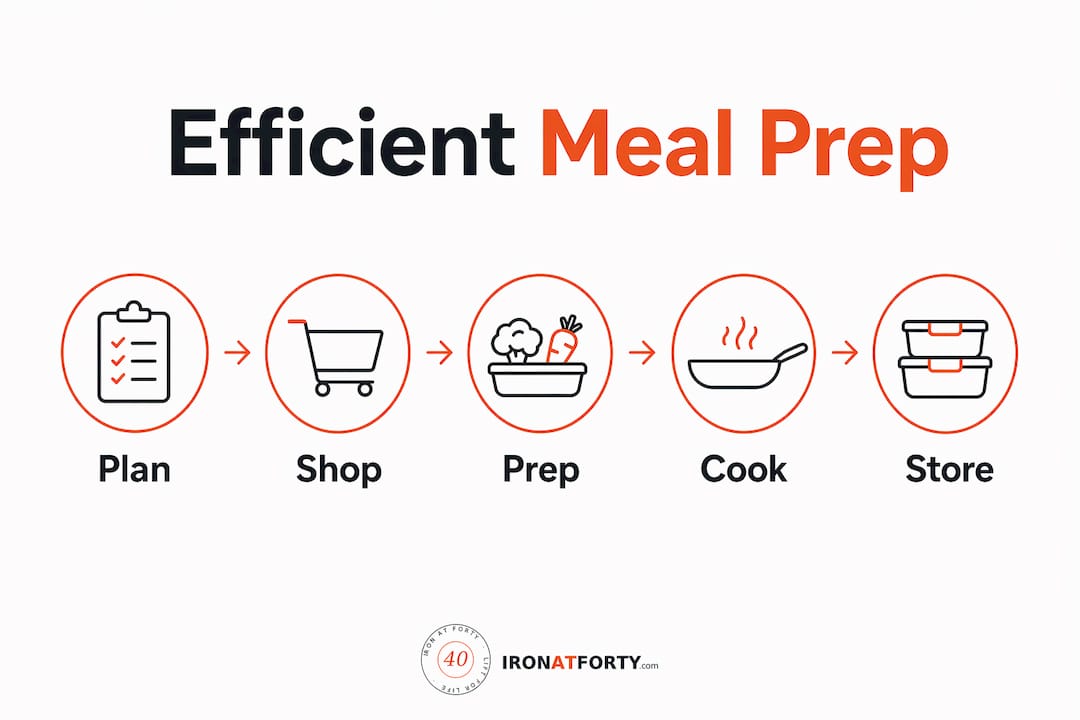
The two main approaches are batch cooking and component prepping. Here is how they differ:
| Approach | What you make | Best for |
|---|---|---|
| Batch cooking | Complete meals portioned into containers | Simplicity and speed during the week |
| Component prepping | Separate proteins, starches, and vegetables | Variety, flexibility, and reducing waste |
Component prepping wins for most lifters over 40. Prepping proteins, starches, and vegetables separately lets you mix and match throughout the week without eating the same exact meal five days in a row. Cook a batch of ground beef, a tray of roasted sweet potatoes, and a sheet pan of broccoli. Combine them differently each day.
Here is a practical Sunday prep sequence:
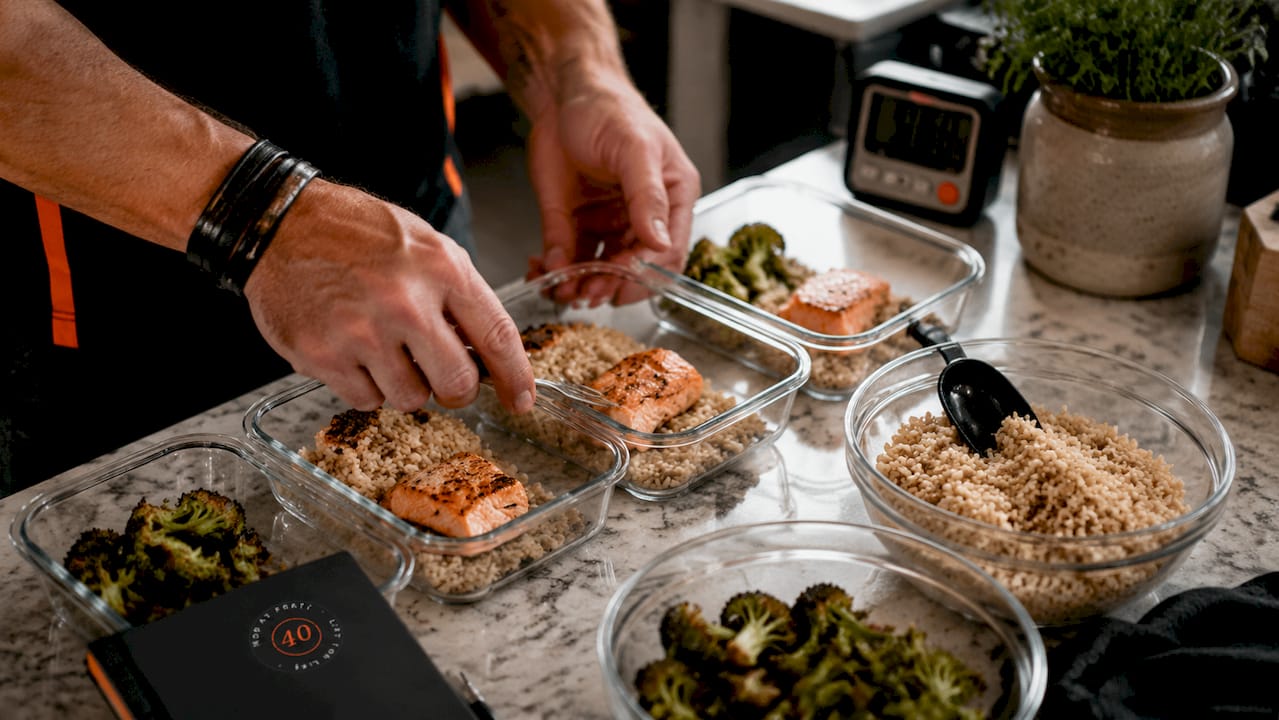
- Start proteins first. Oven proteins like chicken thighs or salmon take the longest. Get them in at the start.
- Roast vegetables simultaneously. Use a second oven rack or a separate sheet pan. Broccoli, peppers, and zucchini roast in 20–25 minutes.
- Cook grains on the stovetop. Rice, quinoa, or oats can simmer unattended while proteins and vegetables roast.
- Portion and label containers. Divide everything into daily servings. Label with the date.
- Freeze anything beyond day 5. Cooked proteins and starches stay safe for 4–5 days refrigerated. Freeze the rest immediately to maintain quality.
Pro Tip: Scale your seasoning 1.5x to 2x for large batches rather than multiplying linearly. Add sauces the day you eat, not during prep. This prevents mushy textures in grains and vegetables by midweek.
Mise en place matters here. Chop all vegetables before anything hits the heat. Measure out spices in advance. The goal is to move through the kitchen without stopping to think.
What meal prep adjustments support recovery and hormone health after 40?
Recovery-focused meal prep is not the same as pre-workout fueling. Proper recovery nutrition enables strength gains by supporting muscle repair and preventing the energy deficits that stall progress. After 40, this distinction matters more than ever.
Here are the key adjustments that make a real difference:
- Keep dietary fat high enough. Fat intake at 0.8–1.2g/kg supports testosterone and other anabolic hormones. Dropping fat too low in an attempt to cut calories is one of the most common mistakes older lifters make.
- Load your plate with color. Antioxidants from vegetables like spinach, bell peppers, and blueberries reduce exercise-induced inflammation. This is not optional recovery support. It is the difference between feeling wrecked on Thursday and feeling ready to train.
- Eat protein before sleep. 30–40g of slow-digesting protein like cottage cheese or casein protein before bed supports overnight muscle protein synthesis. Your body repairs tissue while you sleep. Give it the raw material.
- Reduce carbs slightly on rest days. You do not need 500g of carbs when you are not training. Dropping to the lower end of your carb range on rest days improves insulin sensitivity without hurting performance.
- Never run a steep caloric deficit. Eating too little while training hard is the fastest route to stalled recovery, hormonal disruption, and lost muscle. Use a TDEE calculator to establish your maintenance calories before cutting anything.
Pro Tip: Avocado, olive oil, whole eggs, and fatty fish like salmon are your best fat sources for hormone support. Build at least one of these into every day of your prep.
The physiological changes after 40 mean your body is less forgiving of nutritional gaps. Meal prep closes those gaps automatically.
What are practical high-protein meal ideas for powerlifters and strength athletes?
Meal ideas for powerlifters do not need to be complicated. They need to be protein-dense, easy to reheat, and varied enough that you still want to eat them on day four.
Here are proven prep-friendly options:
- Grilled chicken thighs with quinoa and roasted peppers. Chicken thighs retain moisture better than chicken breast through the week and reheat without turning rubbery.
- Baked salmon with sweet potatoes and steamed broccoli. Salmon delivers omega-3s for inflammation control alongside 35–40g of protein per serving.
- Ground beef rice bowls with black beans and salsa. Ground beef holds texture well after reheating and hits 40g+ of protein per bowl easily.
- Overnight oats with Greek yogurt and mixed berries. This is your pre-workout breakfast. Greek yogurt adds 15–20g of protein and the oats provide slow-releasing carbs.
- Hard-boiled eggs and cottage cheese. Simple, no-cook protein snacks that hit 20–25g of protein per serving and travel well.
Here is a sample daily high protein meal plan for a 185-pound strength athlete:
| Meal | Example | Protein |
|---|---|---|
| Breakfast | Overnight oats with Greek yogurt and berries | 35g |
| Lunch | Ground beef rice bowl with black beans | 45g |
| Pre-workout | Cottage cheese with banana | 25g |
| Post-workout | Salmon with sweet potato and broccoli | 40g |
| Pre-sleep | Casein shake or cottage cheese | 30g |
That totals 175g of protein across five meals. Each meal hits the 30–40g target for maximizing muscle protein synthesis. The variety prevents the burnout that kills most high protein meal plans by week three.
For flavor, keep 2–3 versatile sauces on hand. Rotating sauces prevents flavor fatigue and dramatically improves long-term adherence. Chimichurri, teriyaki, and a simple garlic olive oil cover most protein and grain combinations without adding significant calories.
Key takeaways
Meal prep for strength athletes over 40 works because it removes daily food decisions, locks in macronutrient targets, and supports recovery with every meal you eat.
| Point | Details |
|---|---|
| Hit protein targets consistently | Eat 1.6–2.2g of protein per kg daily, spread across 4–5 meals of 30–40g each. |
| Prep components, not just full meals | Separate proteins, starches, and vegetables to mix and match and avoid burnout. |
| Protect hormones with dietary fat | Keep fat at 0.8–1.2g/kg daily to support testosterone and recovery after 40. |
| Use sauces to stay consistent | Rotate 2–3 versatile sauces to prevent flavor fatigue and maintain adherence. |
| Freeze beyond day 5 | Refrigerate cooked food for up to 4–5 days and freeze the rest to maintain quality and safety. |
What I have learned from years of prepping under the bar
Here is the uncomfortable truth about meal prep: most lifters over 40 overcomplicate it and then quit. They plan elaborate recipes, buy ingredients they never use, and burn out by week two. The system that actually works is boring on paper and effective in practice.
I have found that the biggest shift is treating recovery nutrition with the same seriousness as training. Pre-workout meals get all the attention. But what you eat after training and before sleep determines how well you actually recover. That is where most people leave gains behind.
The other thing nobody tells you: your first prep session will take four hours. Your fifth will take 90 minutes. The learning curve is real, but it is short. Start with three foods you already eat, prep those, and build from there. Consistency beats perfection every single week.
Flavor is not a luxury. It is a compliance tool. I keep chimichurri and a simple soy-ginger sauce in the fridge every week. Those two sauces turn the same chicken and rice into four different meals. That is not a small thing when you are eating for performance 365 days a year.
If you want to go deeper on the mindset side of this, showing up consistently matters more than any individual meal plan. Build the system first. The results follow.
— Jeff
Build your meal prep system with Ironatforty
Ironatforty exists for lifters like you. Not for 22-year-olds chasing aesthetics, but for serious athletes over 40 who want real guidance on training and nutrition without the recycled gym bro content.

Start with the TDEE calculator to nail your daily calorie target before you prep a single meal. Then explore the full suite of free training and nutrition tools built specifically for strength athletes over 40. Every tool, every article, and every recommendation at Ironatforty is designed to help you train smarter, recover faster, and stay strong well past 40.
FAQ
How much protein do strength athletes over 40 need daily?
Strength athletes over 40 need 1.6–2.2g of protein per kg of body weight daily, rising to 2.5g/kg during caloric deficits. Spread that across 4–5 meals of 30–40g each to maximize muscle protein synthesis.
How long does meal-prepped food last in the fridge?
Cooked proteins and starches stay safe for 4–5 days when refrigerated properly. Freeze anything you will not eat within five days to preserve quality and prevent waste.
What are the best proteins for weekly meal prep?
Chicken thighs, ground beef, salmon, and eggs hold up best through the week. Chicken thighs and ground proteins retain moisture better than chicken breast and reheat without drying out.
How do I avoid eating the same meal every day?
Prep proteins, starches, and vegetables as separate components rather than complete meals. Rotate 2–3 versatile sauces like chimichurri or teriyaki to create variety from the same base ingredients.
Why is dietary fat important for strength athletes over 40?
Dietary fat at 0.8–1.2g/kg daily supports testosterone production and hormone balance, both of which decline with age. Cutting fat too aggressively while training hard disrupts recovery and hormonal health.