The main categories of resistance training equipment include free weights, resistance machines, resistance bands and tubes, cable and functional trainers, suspension and bodyweight systems, and accessories or specialty tools. However, these categories can be further classified mechanically by how they apply resistance: constant resistance (free weights), variable resistance (cams, chains, resistance bands), and accommodating/fluid resistance (pneumatic or isokinetic machines). For raw strength, barbells and plate-loaded machines are the floor. For hypertrophy, any of those categories works when volume and intensity are matched. For rehab or joint-sensitive training, machines and bands reduce injury risk. For portability, bands and suspension trainers win outright. For longevity and power preservation as you age, accommodating resistance (pneumatic or isokinetic) offers the most joint-friendly loading, though free weights with controlled tempo provide a practical alternative when specialized equipment isn't available.
One truth runs through all of it: program design drives adaptations. Volume, intensity, and progression matter more than which tool you pick.
- Strength: barbells, plate-loaded machines
- Hypertrophy: free weights or machines, matched programming
- Rehab/joint care: selectorized machines, resistance bands
- Portability: bands, suspension trainers
- Longevity/aging: accommodating resistance (pneumatic or isokinetic when available), controlled-tempo free weights as a practical alternative
Key Takeaways
The most effective resistance training setup matches your goal, space, and training age — not the most expensive or most popular tool on the market.
| Point | Details |
|---|---|
| Program design beats gear choice | Volume, intensity, and progression drive adaptations; free weights and machines produce similar outcomes when programming is matched. |
| Match equipment to your goal | Barbells for strength, machines or free weights for hypertrophy, bands and machines for rehab, bands and suspension trainers for portability, accommodating resistance (pneumatic or isokinetic) for longevity and power if available. |
| Accommodating resistance matters after 40 | Pneumatic and isokinetic machines support high-velocity work with reduced joint stress; bands and tempo control approximate this without the cost. |
| Safety requires active maintenance | Inspect cables, bands, and safety pins regularly; the NSCA recommends scheduled inspection and minimum spacing for all training environments. |
| Start minimal, progress deliberately | A barbell, plates, power rack, and band set cover most training needs; add tools only when a specific gap in your program demands it. |
Table of Contents
- How do the main equipment categories compare at a glance?
- What are the three mechanical types of resistance training equipment?
- Free weights: barbells, dumbbells, kettlebells, and plates
- What types of resistance machines should you know about?
- How do resistance bands and tubes actually work in a program?
- Why are cable machines worth the investment?
- Suspension trainers and bodyweight systems: how far can they take you?
- What accessories and specialty tools actually move the needle?
- How do you actually choose the right resistance equipment?
- Why accommodating resistance matters most after 40
- The Ironatforty take on gear vs. program
- Sources
- FAQ
How do the main equipment categories compare at a glance?
Pro Tip: If you're working with under 200 square feet and a budget under $500, start with an adjustable dumbbell set and a set of resistance bands. That combination covers more than 80% of the movements in any beginner or intermediate program.
The NSCA safety checklist recommends minimum spacing between equipment and routine inspection of cables, belts, and chains — guidance that applies whether you're outfitting a garage or a commercial floor.
What are the three mechanical types of resistance training equipment?
Not all resistance feels the same under load, and that's not just a perception issue. The NSCA classifies resistance training equipment into three mechanical categories: constant resistance (most free weights), variable resistance (cams, chains, bands), and accommodating/fluid resistance (pneumatic or isokinetic machines). Each category applies force differently across the range of motion.
Constant resistance delivers the same external load throughout the movement. A barbell loaded with 135 lbs weighs 135 lbs at the bottom of a squat and at the top. This is simple and effective, but it creates a mismatch: your muscles are stronger at some joint angles than others, so the load feels easiest where you're mechanically strongest.
Variable resistance changes the external load across the range of motion to better match your strength curve. Three tools do this differently:
- Cams and levers alter moment arms to shift torque as you move through the rep
- Chains add linear resistance as more chain lifts off the floor, loading the stronger lockout position
- Rubber-based resistance (bands) follows a curvilinear stress-strain relationship, meaning tension increases non-linearly as the band stretches
The NSCA Strength & Conditioning Journal notes that these three modes have meaningfully different mechanical properties, not just different names for the same idea.
Accommodating or fluid resistance is the most specialized category. Pneumatic machines use pressurized air; isokinetic devices control contraction speed. Both allow the muscle to work at near-maximal effort across the full range of motion, which is why they show up in rehab clinics and elite sports performance settings. The practical limitation is cost and size.
Why this matters for your training: if you've ever noticed that a barbell bench press feels hardest at the bottom and easy at lockout, that's the constant-resistance mismatch in action. Bands, chains, or a cam-based machine can shift load to where you're strongest and keep tension where you're weakest.
Free weights: barbells, dumbbells, kettlebells, and plates
Free weights are the backbone of most serious strength programs. They require the lifter to control the load in three dimensions, which builds stability alongside strength and transfers well to real-world movement patterns. Per unit of load, they're also the most cost-efficient option in any gym.
The Human Kinetics equipment guide covers free-weight modalities alongside machine subtypes, and the practical case for free weights is consistent across practitioner resources: multi-plane loading, compound movement options, and scalable progression.
Barbell work is the foundation for heavy compound lifts: squat, deadlift, bench press, overhead press, and row. A standard Olympic barbell handles up to 700 lbs with the right plates, making it the most scalable tool in the gym. The trade-off is that heavy barbell work often requires a spotter or a power rack with safety pins.
Dumbbells shine for unilateral work. A single-leg Romanian deadlift or a single-arm row exposes and corrects side-to-side imbalances that bilateral barbell work can mask. Adjustable dumbbells (like the Bowflex SelectTech or PowerBlock series) compress a full rack into two units, which matters if you're working with limited floor space.
Kettlebells are built for ballistic and power work: swings, cleans, snatches, and Turkish get-ups. The offset center of mass creates a different loading demand than a dumbbell of the same weight. If you want a 30-minute strength session that also taxes your conditioning, kettlebell training for men is worth programming in.
Plates and adjustable systems give you flexibility. A 300-lb barbell and plate set costs roughly $300–$500 new and covers most training needs for years.
Safety checklist for free-weight training:
- Use collars on every loaded barbell, every time
- Set safety pins at the correct height before squatting or benching alone
- Wear flat, stable shoes (not running shoes) for squats and deadlifts
- Warm up the specific joints you're loading before adding weight (see warming up for heavy lifting)
Pro Tip: If you're over 40 and returning to barbell work, start with goblet squats and trap-bar deadlifts before loading a straight bar. Both patterns are more joint-friendly and teach the movement before the load gets heavy.
An 8-week controlled trial found no meaningful difference in strength or muscle architecture outcomes between free-weight and machine-based programs when volume and intensity were matched. Pick the tool that lets you train consistently and safely, not the one with the most mythology attached to it.
What types of resistance machines should you know about?
Machines stabilize the movement path for you. That's their core advantage: you load the pattern without needing to control the bar in space, which lowers the skill barrier and reduces the need for a spotter. For older lifters, post-surgical rehab, or anyone learning movement patterns, that stability is genuinely useful, not a crutch.
The Human Kinetics excerpt provides practitioner-level descriptions of each subtype:
- Selectorized machines use a weight stack with a pin selector. Fast to adjust, safe, and easy to use. The trade-off is a fixed movement path that may not match your anatomy.
- Plate-loaded machines (like a Hammer Strength chest press) accept Olympic plates and allow heavier loading than most selectorized stacks. Popular in powerlifting and bodybuilding gyms.
- Cam/lever machines use an eccentric cam to vary the torque across the range of motion, matching the load to the muscle's strength curve. Nautilus-style equipment pioneered this design.
- Rod/linear machines include the Smith machine and leg press. The Smith constrains the bar to a vertical (or near-vertical) path; the leg press uses a linear sled. Both reduce stability demands significantly.
- Hydraulic machines use fluid resistance, which increases with movement speed. They're quiet and low-maintenance but offer limited eccentric loading, which limits their use for hypertrophy-focused programs.
- Pneumatic machines use pressurized air and allow high-velocity concentric work with reduced injury risk. The NSCA notes that pneumatic units support speed-controlled resistance but require a compressor and significant space, putting them out of reach for most home setups.
- Isokinetic machines control contraction speed rather than load, maintaining a set velocity regardless of force applied. They appear primarily in clinical rehab and sports medicine settings.
Pro Tip: For a commercial gym program, pair selectorized machines for isolation work (leg curl, cable row, lat pulldown) with free weights for compound lifts. You get the stability benefits of machines where they matter and the transfer benefits of free weights where they count.
A maintenance note worth taking seriously: the NSCA safety checklist recommends scheduled inspection of cables, belts, and chains on all machines. A fraying cable on a lat pulldown is a real injury risk, not a minor inconvenience.
How do resistance bands and tubes actually work in a program?
Bands offer portable variable resistance at a fraction of the cost of any machine. A full set of loop bands runs $20–$50 and fits in a gym bag. That's the floor. The ceiling is that bands can't replicate the absolute loading of a barbell for maximal strength work.
Common band types and their uses:
- Flat loop bands (superbands): large, thick loops used for pull-up assistance, barbell augmentation (banded squats/deadlifts), and mobility work
- Tube bands with handles: mimic cable machine movements (rows, presses, curls) when anchored to a door or rack
- Mini-bands: short loops placed around ankles or knees for hip activation, lateral walks, and glute work
- Figure-8 bands: double-loop design for upper-body pulling and pressing movements
Anchor methods matter. A door anchor works for most tube band exercises. A rack post or a heavy dumbbell works for floor-based pulling. For banded barbell work, loop the band around the bar sleeve and anchor it to the rack base or a heavy kettlebell.
Progression with bands:
- Move from lighter to heavier band tension (most sets are color-coded by resistance)
- Stack two bands for more resistance
- Combine bands with free weights (banded deadlifts, banded bench press) to add accommodating resistance to compound lifts
Safety checklist:
- Inspect bands before every session for nicks, tears, or discoloration
- Replace bands that show any cracking or surface damage
- Never anchor a band to anything that can move or tip
Pro Tip: If you're rehabbing a shoulder or knee, bands are often the safest first tool to load the joint through a pain-free range. The CDC's Growing Stronger program recommends starting with bodyweight and light resistance tools before progressing to heavier loads — bands fit that progression perfectly.
The NASM lists bands alongside dumbbells, barbells, kettlebells, and cable systems as core resistance training tools, which reflects how mainstream their use has become in both clinical and performance settings.
Why are cable machines worth the investment?
A cable machine's defining feature is a variable line of pull. You can set the pulley at ankle height for a woodchop, shoulder height for a face pull, or overhead for a tricep pushdown. That flexibility makes cables the most versatile single piece of equipment in a commercial gym, and the reason serious home gym builders often prioritize a functional trainer over a second barbell.
Common configurations:
- Single-stack pulley tower: one weight stack, one adjustable pulley. Lower cost ($600–$1,500), smaller footprint.
- Dual-stack functional trainer: two independent stacks and pulleys. Allows simultaneous bilateral or split movements. Costs $1,500–$4,000+ but replaces a significant portion of a selectorized machine lineup.
Programming examples where cables outperform free weights:
- Anti-rotation cable chops (core stability under load)
- Single-arm cable rows (constant tension through full range)
- Cable face pulls (shoulder health and rear delt work)
- Pallof press variations (rotational stability)
Cables maintain tension at the bottom of a curl or the top of a row, where a dumbbell goes slack. For hypertrophy-focused accessory work, that continuous tension is a genuine advantage. Space-wise, a dual-stack functional trainer needs roughly 8x8 feet of clear floor, comparable to a power rack setup but without the ceiling height requirement for overhead pressing.
Suspension trainers and bodyweight systems: how far can they take you?
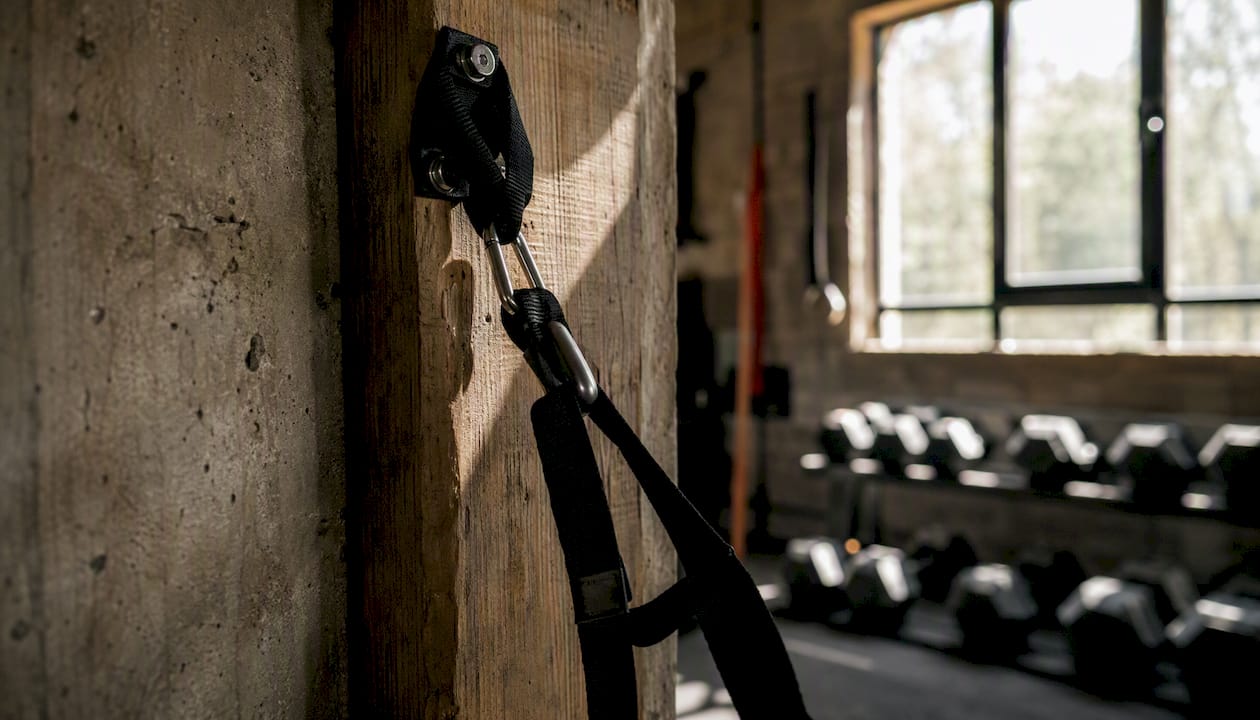
A suspension trainer (TRX is the best-known brand, though similar systems exist at lower price points) uses your body weight and the angle of your body as the resistance variable. Steepen the angle, increase the load. Flatten it, reduce it. No plates, no stacks.
Progression examples:
- Push-up: feet on floor → feet elevated → suspended push-up with hands in straps
- Row: body near vertical → body parallel to floor → feet elevated inverted row
- Single-leg squat: assisted with band → bodyweight → loaded with vest or dumbbell
The limitation is real: suspension trainers cap out at your body weight plus any added load. For a 180-lb lifter chasing a 300-lb squat, a TRX is a warm-up tool and accessory system, not a primary strength driver. Where they genuinely excel is travel training, rehab progressions, and core stability work that complements heavier barbell or machine sessions.
Pro Tip: Always inspect the anchor point before loading a suspension trainer. A door anchor rated for 300 lbs is fine for most users; a pull-up bar or beam anchor needs to be checked for play or rust before every session. The hardware is cheap; the injury from a failed anchor is not.
Bodyweight systems more broadly (pull-up bars, dip stations, parallettes) follow the same logic: scalable through leverage and angle, limited by absolute load. They're excellent for building a starter routine from scratch before adding external resistance.
What accessories and specialty tools actually move the needle?
Accessories don't replace a primary training tool. They make the primary tool safer, more effective, or more varied. Here's how to tier them for a home or garage gym build:
Must-have:
- Power rack or squat stand ($300–$1,200): non-negotiable for safe solo barbell work; safety pins save lives
- Adjustable bench ($150–$500): flat, incline, and decline positions in one piece
- Collars ($15–$80): spring collars for light work, locking collars for heavy sets
- Chalk or lifting straps ($10–$30): chalk improves grip on deadlifts and rows; straps reduce grip fatigue on high-rep pulling
Nice-to-have:
- Medicine balls ($30–$150): rotational throws, slams, and partner work; excellent for power development
- Sandbags ($50–$200): odd-object loading that challenges grip and core stability differently than a barbell
Optional/specialty:
- Battle ropes ($80–$250): conditioning tool, not a strength driver; needs 15–20 feet of clear space
- Sleds ($200–$600): push/pull conditioning with low joint stress; excellent for older lifters because there's no eccentric phase to cause soreness
A sled is worth calling out specifically. Because sled pushes and drags are concentric-only movements, they build leg strength and conditioning without the muscle damage of eccentric loading. For a lifter over 40 managing knee or hip issues, a sled session is often more recoverable than a heavy squat day.
How do you actually choose the right resistance equipment?
Start with your goal, not your budget. Budget shapes the options; the goal determines which options matter.
Buyer checklist (in priority order):
- Define your primary goal: maximal strength, hypertrophy, fat loss, rehab, or general fitness. Each has a different equipment floor.
- Measure your space: know the exact square footage before buying anything. A power rack needs at least 8x8 feet with 9-foot ceilings for overhead pressing.
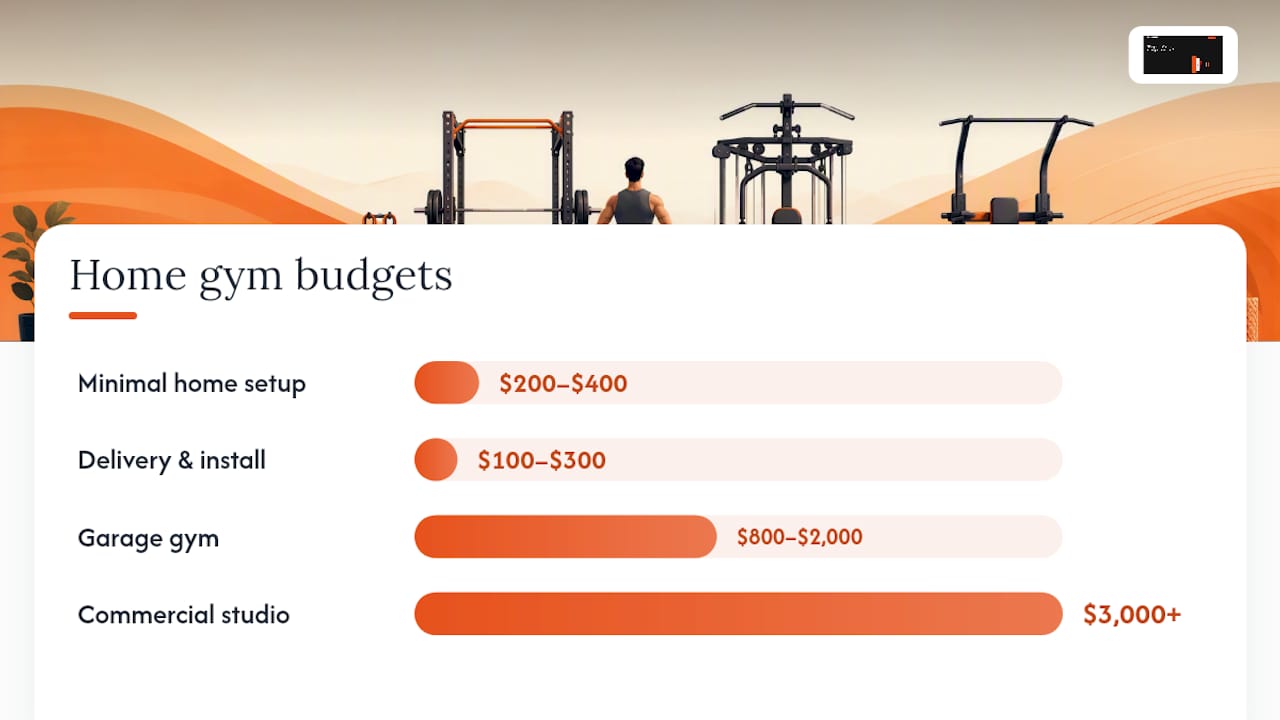
- Set a realistic budget: include delivery and installation costs, which can add $100–$300 for heavy equipment.
- Map your progression path: can you add load, resistance, or complexity as you get stronger? A fixed-weight dumbbell set caps out fast.
- Check safety and maintenance requirements: cables fray, bands crack, and bearings wear. Factor in inspection time and replacement costs.
- Consider resale value: quality barbells (Rogue, Texas Power Bar) hold value well. Cheap selectorized machines do not.
Red flags when buying used equipment:
- Frayed cables or cracked pulleys on any machine
- Rust on barbell sleeves or knurling (surface rust is cosmetic; pitting affects grip and structural integrity)
- Missing or damaged safety pins on a power rack
- Bands with any visible cracking or surface damage
Starter kit recommendations:
- Minimal home setup ($200–$400): adjustable dumbbells, resistance band set, pull-up bar. Covers the CDC's phased progression from bodyweight to loaded movements.
- Garage gym ($800–$2,000): barbell, 300-lb plate set, power rack, adjustable bench, band set.
- Commercial studio or serious home gym ($3,000+): dual-stack functional trainer, barbell setup, selectorized machine or two, sled.
Pro Tip: Before buying, test the equipment at a gym for at least four weeks. A cable machine that feels perfect in a showroom may not match your movement patterns under load. Training age affects which tools you need — a beginner and a 10-year lifter have very different equipment floors.
Haugen et al.'s systematic review makes the point clearly: training variable manipulation drives adaptations, and differences between modalities often trace back to stability demands rather than an inherent superiority of one tool over another. Buy what you'll actually use consistently. That's the progressive overload principle applied to gear selection.
For a minimum effective dose approach to home gym building, you need less than you think. Two or three well-chosen tools beat a cluttered garage full of equipment you rotate through randomly.
Why accommodating resistance matters most after 40
Here's what most equipment guides skip: the mechanical type of resistance matters more as you age, not less.
Pneumatic and isokinetic machines offer speed-controlled resistance. The machine matches the force you apply, which means you can move explosively without the joint stress of a heavy barbell at the same velocity. For a 50-year-old trying to maintain power output (which declines faster than strength after 40), that's a meaningful advantage.
Research from the NSCA indicates that pneumatic machines support high-velocity work with reduced injury risk. The catch is cost (commercial pneumatic units run $3,000–$10,000+), compressor requirements, and floor space that most home gyms can't accommodate.
Practical alternatives for lifters without access to pneumatic equipment:
- Banded barbell work: add light bands to squats and deadlifts to increase load at the stronger lockout position and reduce it at the more vulnerable bottom position
- Tempo control: a 3-second eccentric followed by an explosive concentric trains the same neuromuscular quality without specialized equipment
- Medicine ball throws and sled pushes: high-velocity concentric movements with low eccentric stress
- Kettlebell swings and cleans: ballistic loading that trains power without the joint compression of heavy barbell Olympic lifts
Pro Tip: If your facility has a pneumatic machine (some commercial gyms carry Keiser equipment), prioritize it for lower-body power work. Even one session per week of high-velocity leg press or squat on a pneumatic unit can help preserve the fast-twitch output that aging erodes fastest.
For older lifters managing joint health alongside strength goals, the Ironatforty joints resource covers the recovery and maintenance side of this equation in detail.
The Ironatforty take on gear vs. program
Gear conversations are seductive. A new barbell or a cable machine feels like progress. It isn't, not by itself.
The evidence is consistent: when volume, intensity, and progression are matched, free weights and machines produce similar outcomes. The tool matters less than the structure around it. What actually drives results is training consistency over intensity, a clear progression scheme, and recovery that matches your training age and life demands.
For lifters over 40, the equipment question is really a risk-management question. Which tools let you train hard, stay healthy, and keep showing up? That's a different frame than "which tool builds the most muscle in theory." Machines reduce injury risk for heavy loading without a spotter. Bands protect joints during warm-up and accessory work. A power rack makes solo barbell training survivable. None of that is glamorous. All of it matters.
Use the Ironatforty 1RM Calculator to set load targets before you train, and the TDEE Calculator to align your nutrition with your training volume. Equipment is the vehicle. Programming and nutrition are the fuel.
Ready to build a program around the equipment you have? The Ironatforty training hub has structured programs for lifters over 40, and the free tools page gives you a TDEE Calculator and 1RM Calculator to plan load and calories before your first session.
Sources
- Study comparing free-weight and machine-based training — PubMed (trial summary)
- Haugen et al., BMC Sports Science, Medicine and Rehabilitation (2023)
- Resistance Training Exercises & Concepts You Should Use — NASM blog
- Growing Stronger — CDC (home strength program guidance)
- Types of resistance training equipment — Human Kinetics excerpt
- NSCA safety checklist — NSCA
FAQ
What is the best resistance training equipment for beginners?
Resistance bands and adjustable dumbbells are the most accessible starting points. The CDC's Growing Stronger program recommends beginning with bodyweight and light handheld weights before progressing to heavier loads.
Do free weights build more muscle than machines?
Not inherently. An 8-week controlled trial found no meaningful difference in muscle architecture outcomes between free-weight and machine programs when volume and intensity were matched. Choice should be based on goals, stability needs, and injury history.
What types of resistance training equipment work best for older lifters?
Selectorized machines, resistance bands, and accommodating resistance tools (pneumatic machines where available) reduce joint stress while maintaining training load. Sleds are also valuable because the concentric-only loading pattern limits post-session soreness.
How do resistance bands differ from cable machines?
Bands provide variable resistance that increases as the band stretches, with no fixed pulley path. Cable machines offer a consistent line of pull that you can adjust by height, maintaining more uniform tension across the range of motion.
What equipment do I actually need for a home gym?
A barbell, 300 lbs of plates, a power rack with safety pins, an adjustable bench, and a resistance band set cover the vast majority of training needs. Add adjustable dumbbells if space and budget allow.