Yes, sleep directly supports muscle repair, and the mechanism is precise: deep sleep times the release of anabolic hormones, while cutting sleep short measurably reduces how much muscle protein you build after a meal. One study found an 18% drop in post-meal muscle protein synthesis after a single night of total sleep deprivation. Treat one bad night as a real setback to recovery, not a minor inconvenience, and adjust your next training session and meals accordingly.
TL;DR:
- Sleep deprivation can reduce muscle protein synthesis by up to 18 percent and increase cortisol levels by about 21 percent, impairing recovery.
- Most anabolic activity occurs during slow-wave sleep, which is concentrated in the first three to four hours of sleep, and shorting this phase hampers muscle repair.
- Older lifters over 40 must prioritize longer and more consistent sleep, spreading protein intake across multiple meals and avoiding late training to optimize recovery.
- Sleep disorders like sleep apnea and insomnia fragment sleep architecture, leading to hormonal imbalances that negatively affect strength and hypertrophy.
- Napping can help recover alertness but cannot fully replace the hormonal and recovery benefits of a full night of quality sleep.
Table of Contents
- How Sleep Physiologically Supports Muscle Repair
- How Much Sleep Do You Need for Muscle Growth?
- What Do Human Sleep Deprivation Studies Show?
- Evidence-Backed Strategies to Protect Your Recovery
- Special Considerations for Lifters Over 40
- How Do Sleep Disorders Affect Muscle Recovery?
- Nutritional Interactions With Sleep and Muscle Repair
- Does Your Workout Type Affect Your Sleep Quality?
- Why Chronotype Matters for Recovery Timing
- Sleep Is Part of Your Training Program, Not Separate From It
- Tools to Plan Your Recovery Around Sleep
- Sources
- FAQ
How Sleep Physiologically Supports Muscle Repair
Sleep is not downtime for your muscles. It is when the actual rebuilding happens, and the biology behind it is specific enough to matter for how you train.
Most of the anabolic action happens during slow-wave sleep (SWS), the deepest non-REM stage, usually concentrated in the first half of the night, as detailed by Airmed Fit. This is when your sympathetic nervous system quiets down and your pituitary gland releases the majority of your daily growth hormone (GH) pulse. GH then drives IGF-1 production in the liver and muscle tissue, which supports satellite cell activity, the process your muscles used to repair micro-damage from lifting. Recent brain-mapping research from UC Berkeley has identified the actual neural circuits controlling GH timing during sleep, confirming that this is not a loose correlation. It is a wired-in system.
Cut sleep short and that system flips. Cortisol rises, testosterone drops, and insulin sensitivity worsens. All three shifts favor protein breakdown over protein building.
Statistic Callout: A single night of total sleep deprivation raised cortisol by roughly 21% and lowered testosterone by roughly 24% in men, based on acute deprivation trial data.
What poor sleep does to your recovery in practical terms:
- Blunts the GH pulse that drives overnight tissue repair
- Elevates cortisol, which promotes protein breakdown
- Lowers testosterone, weakening anabolic signaling
- Reduces insulin sensitivity, hampering nutrient delivery to muscle
How Much Sleep Do You Need for Muscle Growth?
Most healthy adults need adequate sleep each night, and if you're training hard four or more days a week, you may benefit from additional sleep for optimal recovery.
The specific stage that matters most for hypertrophy is slow-wave sleep, and it is front-loaded. You get the bulk of it in your first two sleep cycles, roughly the first three to four hours after you fall asleep. This is why fragmented sleep, or going to bed late and cutting the front end short, costs you more recovery than the total-hours number alone suggests. Two nights of six hours with solid architecture can beat one broken eight-hour night for hormonal recovery.
A few variables shift the target:
- Age reduces SWS naturally, meaning older lifters often need more total sleep opportunity to bank the same repair window.
- Chronotype matters. Night owls forced into early schedules lose sleep quality even at a normal duration.
- Training load raises SWS need. Heavier lifting blocks appear to increase the body's drive for deep sleep, according to sport science reviews on sleep and muscle recovery.
The exact dose-response curve, how many extra minutes of SWS equal how much extra muscle protein synthesis, isn't fully mapped yet. Treat these ranges as a floor, not a precise prescription.
What Do Human Sleep Deprivation Studies Show?
The clearest evidence comes from controlled trials measuring muscle protein synthesis directly, not just self-reported soreness or performance.
In the key trial on this topic, researchers used stable isotope tracing to measure postprandial (post-meal) muscle protein fractional synthesis rate after a night of total sleep deprivation. The rate dropped from 0.072% per hour in rested conditions to 0.059% per hour after one sleepless night, an 18% reduction in your body's ability to use dietary protein for repair.
Statistic Callout: One night of total sleep loss produced an 18% drop in muscle protein synthesis alongside a 21% rise in cortisol and a 24% fall in testosterone, all in the same acute deprivation study.
Multi-night sleep restriction studies extend this pattern further, showing reduced myofibrillar protein synthesis and gene expression shifts toward a catabolic profile over consecutive nights of short sleep.
A few caveats worth flagging:
- Sample sizes in these trials tend to be small, so treat magnitudes as directional, not gospel.
- Hormonal responses vary by sex. Some trials report more consistent synthesis reductions in men, with more variable female responses.
- These are acute, lab-controlled conditions. Real-world sleep loss is often less extreme but more chronic.
Evidence-Backed Strategies to Protect Your Recovery
You can't out-train bad sleep, but you can stack the deck in your favor when a good night isn't guaranteed. Here's the priority order.
- Extend sleep before you expect to lose it. Sleep extension trials show that adding 30 to 90 minutes of sleep in the nights leading up to a known disruption, travel, a new baby, a work crunch, raises IGF-1 concentrations and helps buffer the anabolic hit that follows.
- Use strategic naps. A 20 to 30 minute nap in the early afternoon can partially restore alertness and chip away at accumulated sleep debt without wrecking your ability to fall asleep that night. Longer naps risk sleep inertia and can delay bedtime.
- Time your protein deliberately. Hit your post-workout protein window as usual, then consider a pre-bed dose of slow-digesting protein, around 30 to 40 grams, to keep amino acids available during the overnight repair window. Our protein intake guide breaks down exact targets by body weight and age.
- Adjust training after a bad night, don't cancel it. Keep the load heavy but trim total volume. High-intensity, lower-volume sessions appear to preserve myofibrillar signaling better than long, grinding accessory work when you're running on short sleep. Save skill-heavy or technically demanding lifts for when you're rested.
- Lock in sleep hygiene basics. Consistent bed and wake times, morning light exposure, and cutting caffeine after early afternoon all support the SWS-heavy first half of the night where most of the hormonal action happens.
Pro Tip: If you know a rough night is coming, don't wait until you're already exhausted. Bank an extra 45 minutes of sleep for two or three nights beforehand. It's a cheap insurance policy against the cortisol spike that follows.
Reviews on athlete recovery consistently point to this same trio, sleep optimization, naps, and load adjustment, as the most defensible countermeasures when a full night's sleep isn't available.
Special Considerations for Lifters Over 40
Your sleep architecture changes with age, and pretending otherwise is how a lot of lifters over 40 end up chronically undertrained on recovery. SWS naturally declines as you age, and so does baseline GH output, which means the exact window that used to carry your overnight repair is smaller than it was at 25. That's not a reason to give up. It's a reason to protect what you've got more aggressively.
A few adjustments that matter more after 40:
- Spread protein across four or five meals instead of loading it into one or two, since older muscle responds less efficiently to any single dose.
- If appetite allows, add a pre-sleep protein feed to compensate for the shorter anabolic window.
- Guard a consistent sleep and wake schedule harder than you did in your 20s. Inconsistency costs you more now.
- Increase training volume conservatively. A blunted GH pulse means less room for error on recovery debt.
Our cortisol and recovery guide walks through how stress hormones interact with training load specifically for lifters past 40, and the TDEE calculator helps you dial in energy intake while you're managing this.
How Do Sleep Disorders Affect Muscle Recovery?
Sleep apnea and insomnia don't just steal hours, they wreck the architecture of the sleep you do get, and that's often worse for recovery than short duration alone.
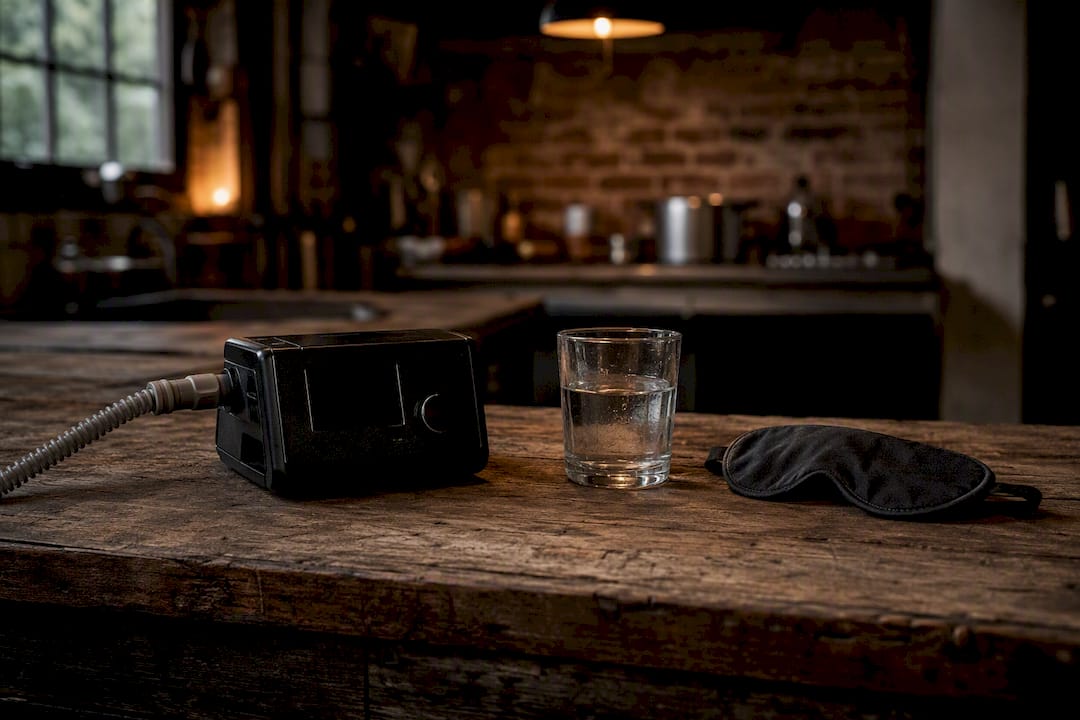
Obstructive sleep apnea causes repeated arousals throughout the night, fragmenting SWS even when total time in bed looks normal on paper. Each apnea event triggers a small sympathetic nervous system spike, similar in direction to the cortisol response seen in acute sleep deprivation trials, just repeated dozens of times a night instead of once. Lifters with undiagnosed apnea often report plateaued strength and stubborn soreness despite training and eating well, and the missing variable turns out to be sleep quality rather than programming.
Insomnia creates a different problem: chronic partial sleep restriction. Falling asleep late or waking frequently cuts into that front-loaded SWS window specifically, which is exactly the period tied to peak GH secretion. Over weeks, this compounds into the same hormonal profile seen in lab-based sleep restriction studies, elevated cortisol, suppressed testosterone, and reduced protein synthesis capacity.
If you snore heavily, wake up gasping, or feel unrefreshed after 8 hours in bed, that's worth a conversation with a doctor before you troubleshoot programming further. No amount of periodization fixes a hormonal environment that's being sabotaged nightly by fragmented sleep.
Nutritional Interactions With Sleep and Muscle Repair
What you eat before bed changes how well you use the sleep you get, and the timing matters almost as much as the total.
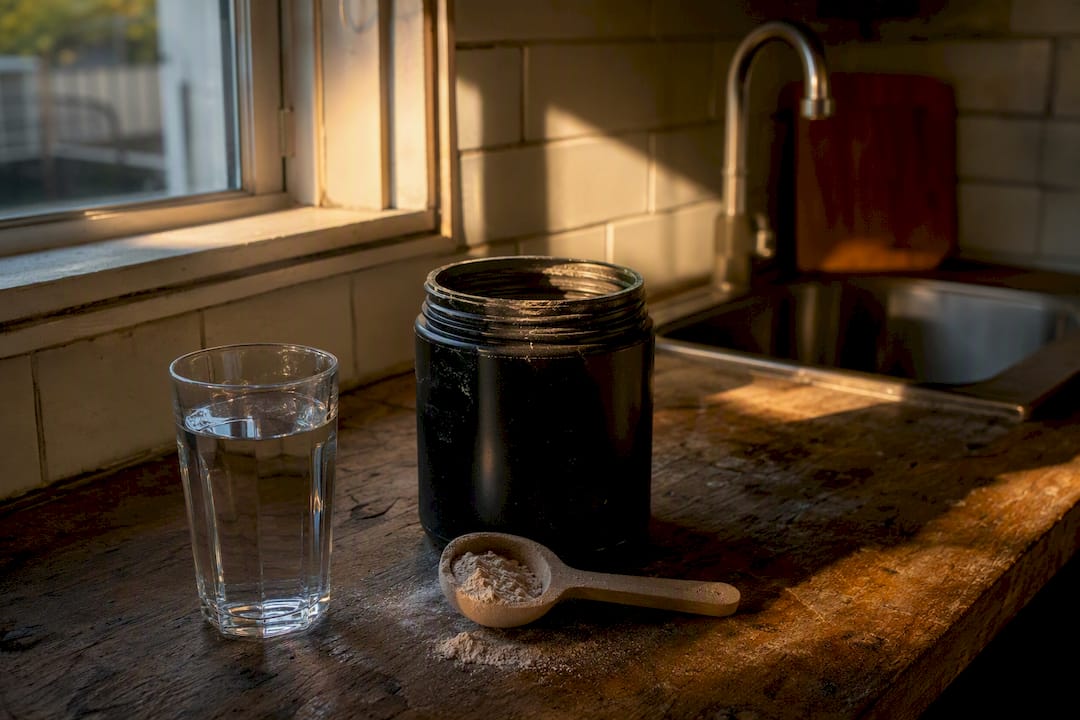
Pre-sleep protein feeding, typically a slow-digesting source like casein, supplies amino acids during the hours when your body is actively synthesizing new muscle tissue but isn't receiving any dietary input otherwise. A dose in the 30 to 40 gram range, taken 30 to 60 minutes before bed, appears to support overnight muscle protein synthesis without disrupting sleep onset for most people.
Carbohydrate timing plays a supporting role too. A moderate carb intake at dinner can raise insulin modestly, which may improve amino acid uptake into muscle tissue and also supports the natural evening rise in melatonin production. Heavy, high-fat meals close to bedtime tend to do the opposite, delaying sleep onset and fragmenting early-night SWS, which is the worst possible outcome given how much repair happens in that window.
Alcohol deserves a specific call-out here because so many lifters underestimate it. Even moderate alcohol before bed suppresses SWS and REM sleep, and the disruption to hormonal recovery can rival what you'd see from a shortened sleep duration. If you're chasing hypertrophy, alcohol in the two to three hours before bed is one of the more avoidable recovery costs. For specifics on hitting your daily protein targets around training and sleep, our protein guide for lifters over 40 covers exact per-meal amounts.
Does Your Workout Type Affect Your Sleep Quality?
Not all training sessions leave you sleeping the same way, and that feedback loop matters for recovery planning.
Moderate to vigorous resistance training, especially earlier in the day, tends to improve sleep quality and can increase the amount of SWS you get that night. Heavy training days appear to raise the body's drive for deep sleep, according to research on sleep and recovery in athletes, which lines up with the idea that SWS is partly a demand-driven response to physical stress.
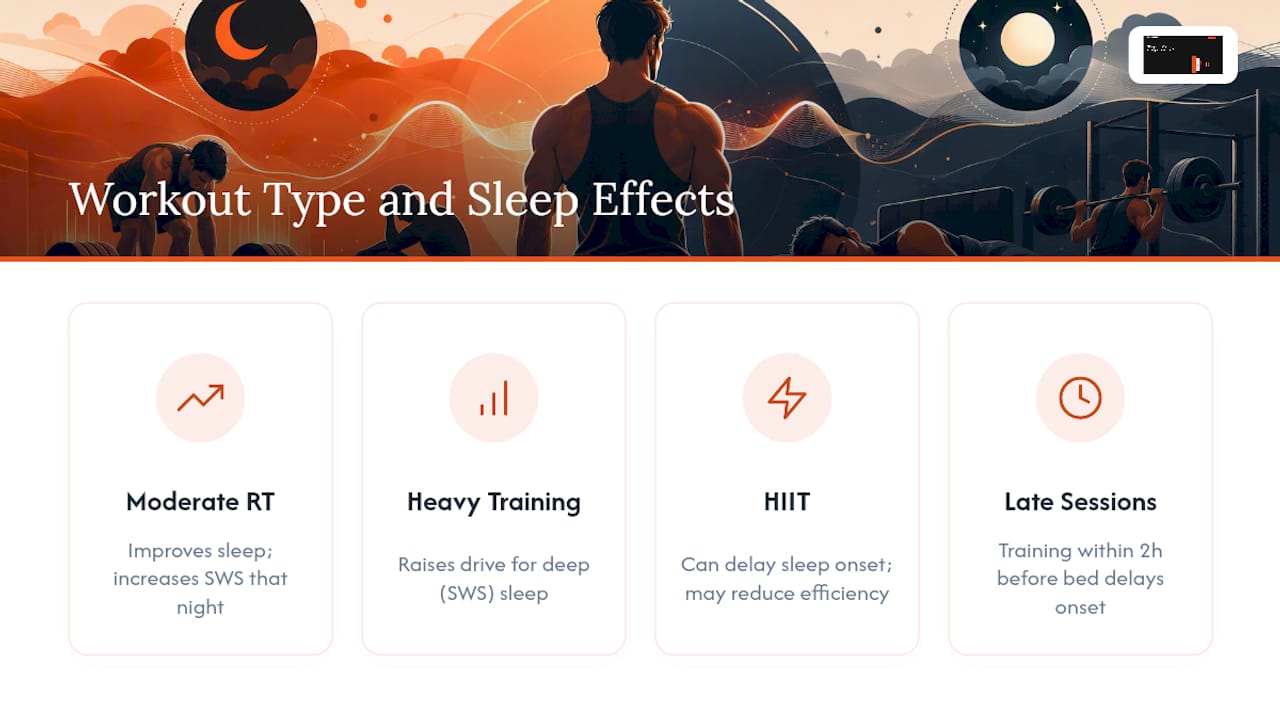
High-intensity interval work and very late evening sessions are a different story. Training within two hours of bedtime, particularly anything that spikes core body temperature and heart rate significantly, can delay sleep onset and reduce sleep efficiency for some lifters, even if it doesn't show up as a problem the following morning. The effect isn't universal, some people sleep fine after a late hard session, but if you're already struggling with sleep onset, that's the first variable worth testing.
Long-duration endurance work carries its own tradeoff: it can improve overall sleep quality over time but may also increase next-day fatigue and cortisol if volume outpaces recovery capacity, particularly in lifters also trying to build strength. Resource on avoiding that spiral is covered in our overtraining guide, which is worth a read if you're stacking heavy lifting with a lot of conditioning work.
The practical takeaway is straightforward: train hard, but respect a buffer window before bed, and pay attention to whether your own sleep responds differently on high-volume days versus high-intensity ones.
Why Chronotype Matters for Recovery Timing
Your internal clock isn't just a preference, it's a biological variable that changes when your body is primed to release the hormones that drive muscle repair.
Circadian rhythm governs the timing of your cortisol and GH cycles independent of when you actually fall asleep. Night owls forced onto an early schedule, common with 9-to-5 work, often get technically adequate sleep duration but poor sleep quality because their body's hormonal cycle hasn't shifted to match the earlier bedtime. The result looks like general fatigue and slow recovery, but the root cause is a mismatch between clock time and biological time, not insufficient hours.
Practical chronotype management starts with morning light exposure, which is one of the strongest signals for resetting your circadian clock. Getting outside within an hour of waking, even for 10 to 15 minutes, helps anchor your cortisol awakening response and shifts your evening melatonin release earlier, making it easier to hit that early SWS window consistently.
Training timing interacts with this too. If you're a genuine night owl, forcing yourself into 5 a.m. training sessions may cost you more in disrupted circadian signaling than you gain in schedule convenience. Where your calendar allows it, training closer to your natural energy peak, rather than against it, tends to support both training quality and the sleep that follows.
Sleep Is Part of Your Training Program, Not Separate From It
Most lifters track sets, reps, and calories with real discipline, then treat sleep as whatever's left over after everything else gets scheduled. That's backwards. The evidence on how sleep loss disrupts hormonal and metabolic pathways is specific enough that it deserves the same planning as your programming.
Track it simply: log hours slept and a rough recovery rating each morning, then look for the pattern over a few weeks. When the numbers dip, that's your cue to pull back volume before your body forces the issue for you.
— Iron@40 Staff
Tools to Plan Your Recovery Around Sleep
Getting your protein and calories dialed in makes the sleep strategies above actually work, instead of just sounding good on paper.
Ironatforty's nutrition hub breaks down exactly how to structure protein intake around training and recovery for lifters over 40, without the generic "eat more protein" advice that ignores how your needs actually shift with age. Pair that with the free TDEE calculator to nail down your energy needs during a sleep-extension phase or a heavy training block, since guessing at calories while you're also managing recovery debt is how progress stalls. If you're not sure where your numbers stand right now, run them through the calculator and adjust your next few weeks of training and meals based on what it tells you.
This article is general information, not a substitute for advice from a qualified doctor. Consult a qualified healthcare professional about your own circumstances before acting on anything here.
Sources
- Effects of Sleep Deprivation on Acute Skeletal Muscle Recovery After Exercise (PMC7785053)
- Sleep Loss and Post-Exercise Muscle Recovery: Hormonal, Inflammatory, Metabolic and Circadian Mechanisms with Practical Implications for Athletes
- Sleep extension increases IGF-I concentrations before and during sleep deprivation in healthy young men
- Sleep strengthens muscle and bone by boosting growth hormone levels. UC Berkeley researchers discover how.
FAQ
Is 5 hours of sleep bad for muscle recovery?
Yes. Five hours falls well short of the 7 to 9 hour range most adults need, and lab studies show even a single night of severe sleep restriction can raise cortisol, lower testosterone, and reduce muscle protein synthesis measurably.
How many hours of sleep do you need for muscle recovery?
Most healthy adults need 7 to 9 hours, and lifters training four or more days a week often do better at the high end of that range or with a modest extension of 30 to 60 minutes.
Is 7 hours of sleep enough for muscle repair?
Seven hours sit at the low end of the recommended range and works for many people, but sleep quality matters as much as duration. Fragmented sleep at 7 hours can leave you with less slow-wave sleep than a solid, uninterrupted 7 hours would provide.
Can napping replace lost nighttime sleep for recovery?
Not fully. A 20 to 30 minute nap can reduce sleep debt and restore some alertness, but it doesn't replicate the hormonal timing of a full night's slow-wave sleep cycle.
Does poor sleep affect strength more than hypertrophy?
Both are affected, but strength tends to hold up better in the short term while hypertrophy-related processes like protein synthesis show measurable declines even after one bad night, based on trial data on postprandial synthesis rates.