Stock your kitchen with lean proteins (chicken, eggs, salmon, Greek yogurt, lentils), whole grains (oats, brown rice, sweet potatoes), vegetables, fruits, and healthy fats, then hit 1.2–1.6 g of protein per kg of body weight daily to drive muscle growth. That's the floor. Everything below shows you exactly what to buy, how much to eat, and how to build it into a week that actually works.
Your quick shopping reminder:
- Lean animal proteins: chicken breast, turkey, lean beef (90/10), eggs
- Seafood: salmon, tuna, shrimp
- Dairy: Greek yogurt, cottage cheese, milk
- Legumes and plant proteins: lentils, chickpeas, tofu, tempeh
- Whole grains and starches: oats, brown rice, quinoa, sweet potatoes, white potatoes
- Vegetables: spinach, broccoli, kale, bell peppers
- Fruits: bananas, berries, oranges
- Nuts, seeds, and nut butters: almonds, pumpkin seeds, natural peanut butter
- Healthy oils: extra-virgin olive oil, avocado oil
For a lifter around 80 kg, a daily target of protein intake should be aligned with recommended ranges to support muscle growth. Per meal, aim for 0.3–0.4 g/kg — about 24–32 g per sitting across 4–5 meals — to consistently trigger muscle protein synthesis (MPS).
Key Takeaways
The single most important thing you can do this week is hit 1.2–1.6 g of protein per kg of body weight daily, spread across 4–5 meals of 24–32 g each, built from the whole foods on this list.
| Point | Details |
|---|---|
| Daily protein target | Aim for 1.2–1.6 g/kg/day; an 80 kg lifter needs roughly 96–128 g total. |
| Per-meal protein for MPS | Hit 0.3–0.4 g/kg per meal (24–32 g) across 4–5 meals to sustain muscle protein synthesis. |
| Post-workout timing | Consume 20–40 g of high-quality protein within ~60 minutes after training. |
| Limit these foods | Cut ultra-processed foods, high-added-sugar items, trans fats, and excessive alcohol. |
| Set calories with a tool | Use the Ironatforty TDEE Calculator or NIDDK Body Weight Planner before starting a bulk. |
Table of Contents
- The complete bodybuilding food list, organized by category
- How to turn this list into daily calories, macros, and meals
- Foods and habits that quietly kill your gains
- Your practical grocery checklist and meal-prep routine
- Supplements worth your money (and the ones that aren't)
- What the food list actually means for lifters over 40
- Sources
- FAQ
The complete bodybuilding food list, organized by category
The Dietary Guidelines for Americans 2020–2025 recommends building meals around nutrient-dense foods from every major group. For muscle building, that framework still applies — you just weight it toward protein and performance carbs.
Lean animal proteins
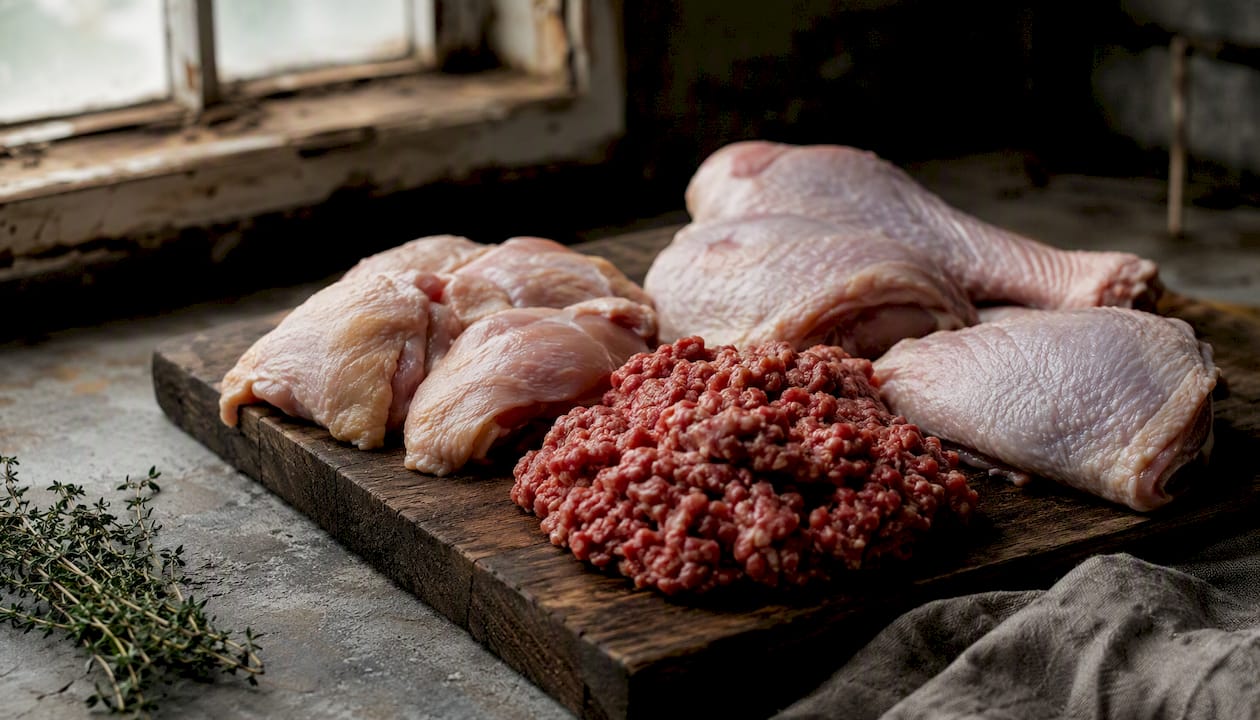
Chicken breast, turkey breast, lean ground beef (90/10). These are your workhorses. A typical serving of cooked chicken delivers a significant amount of protein with minimal fat, facilitating per-meal protein targets within a calorie-controlled diet. Turkey is nearly identical in profile. Lean beef adds creatine and zinc, which matter for recovery and testosterone support.
Eggs
Two whole eggs provide a notable amount of protein along with fat-soluble vitamins and choline not found in egg whites alone. Skip the egg-white-only approach unless you're deep in a cut. The yolk is where the micronutrient density lives.
Seafood
Salmon (3 oz, ~17 g protein) brings omega-3 fatty acids that reduce exercise-induced inflammation. Tuna is leaner and cheaper — a solid pantry staple. Shrimp is nearly pure protein at around 20 g per 3 oz serving, with almost no fat.
Dairy
Greek yogurt (8 oz plain, ~23 g protein) and cottage cheese are two of the most underrated muscle-building foods in any grocery store. Both are rich in casein, a slow-digesting protein that makes them ideal before bed. Milk covers both whey and casein in one glass.
Legumes and plant proteins
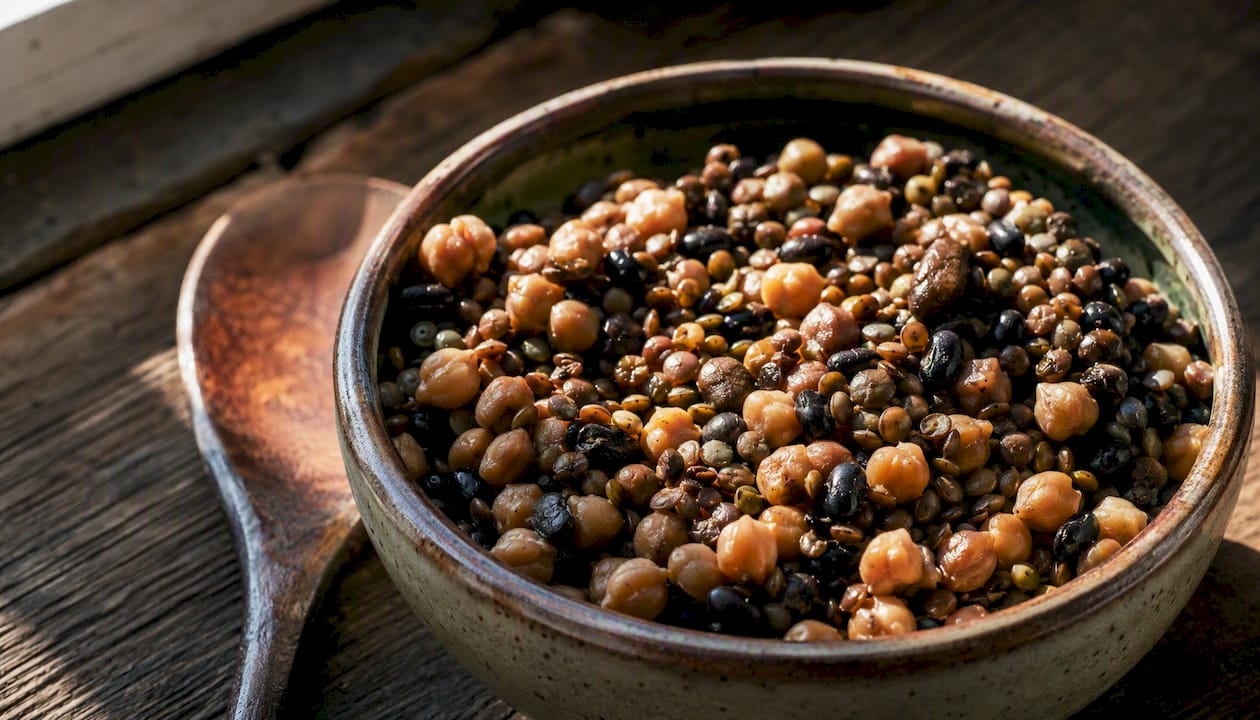
One cup of cooked lentils provides a significant amount of protein along with beneficial nutrients such as iron, folate, and fiber. Chickpeas, black beans, and edamame are close behind. If you eat primarily plant-based, research suggests adding a ~10% protein buffer above standard targets to account for lower essential amino acid (EAA) bioavailability. Combining lentils with rice or pairing tofu with edamame gets you a complete EAA profile in one meal.
Tofu and tempeh are the most practical whole-food plant proteins. Tempeh edges out tofu on protein density and adds gut-friendly fermentation benefits. Mycoprotein (sold as Quorn in the US) is worth knowing about if you want variety.
Whole grains and starchy carbs
Oats, brown rice, quinoa, sweet potatoes, and white potatoes are your primary energy sources. Quinoa is the only grain that qualifies as a complete protein (all nine EAAs), though in modest amounts. Sweet potatoes add beta-carotene and potassium. White potatoes get a bad reputation they don't deserve — boiled or baked, they're one of the most satiating carb sources per calorie.
Pro Tip: Cook a large batch of rice or potatoes at the start of the week. Cold cooked potatoes and rice develop resistant starch, which feeds gut bacteria and blunts the glycemic spike when reheated.
Vegetables
Leafy greens (spinach, kale) and cruciferous vegetables (broccoli, Brussels sprouts) are non-negotiable. They're low-calorie, high-micronutrient, and packed with nitrates that support blood flow during training. Volume-wise, they let you fill a plate without crowding out protein or carbs.
Fruits
Bananas are the pre-workout carb most lifters already know. Berries (blueberries, strawberries) are the ones they overlook — dense in antioxidants that blunt post-training oxidative stress. Oranges add vitamin C, which supports collagen synthesis for joint health.
Nuts, seeds, and nut butters
One ounce of peanuts provides about 7 g of protein alongside healthy monounsaturated fats. Almonds, walnuts, and pumpkin seeds round out the category. Natural peanut butter and almond butter are calorie-dense, so they're best used as a calorie top-up rather than a primary protein source. A tablespoon on oats or rice cakes is a quick, practical addition.
Healthy oils
Extra-virgin olive oil and avocado oil are the two worth keeping in your kitchen. Both are high in monounsaturated fats and support cardiovascular health. Use olive oil for dressings and low-heat cooking; avocado oil handles higher cooking temperatures without degrading.
How to turn this list into daily calories, macros, and meals
Step 1: Set your calories
Muscle gain requires a calorie surplus, but it doesn't need to be large. Use the NIDDK Body Weight Planner or Ironatforty's TDEE Calculator to estimate your maintenance calories, then add 200–300 calories above that. A calorie surplus is needed for muscle gain, but an excessively large surplus mainly increases fat rather than muscle.
Step 2: Set your protein target
Target 1.2–1.6 g of protein per kg of body weight per day. For an 80 kg (175 lb) lifter, that's 96–128 g daily. Spread it across 4–5 meals at 0.3–0.4 g/kg per meal (roughly 24–32 g per sitting) to keep MPS elevated throughout the day.
Step 3: Time your carbs
Carbs around training support glycogen replenishment and recovery. A banana or a bowl of oats 60–90 minutes before training works well. Post-workout, pair 20–40 g of high-quality protein with a carb source within about 60 minutes to support recovery, especially if you're over 40 and your post-exercise MPS window is slightly longer.
One-day sample meal plan (for an 80 kg lifter)
- Breakfast: 1 cup oats + 2 whole eggs + 1 cup berries (~30 g protein, ~60 g carbs)
- Mid-morning snack: 8 oz plain Greek yogurt + 1 oz almonds (~25 g protein)
- Lunch: 4 oz chicken breast + 1 cup brown rice + 2 cups spinach + olive oil (~38 g protein, ~50 g carbs)
- Pre-workout: 1 banana + 1 tbsp natural peanut butter (~7 g protein, ~30 g carbs)
- Post-workout dinner: 4 oz salmon + 1 medium sweet potato + broccoli (~30 g protein, ~40 g carbs)
Total: approximately 130 g protein, 2,400–2,600 calories depending on portions.
Per-meal protein reference
| Food | Serving | Protein (approx.) |
|---|---|---|
| Chicken breast (cooked) | 3 oz | 24 g |
| Greek yogurt (plain) | 8 oz | 23 g |
| Lentils (cooked) | 1 cup | 18 g |
| Salmon (cooked) | 3 oz | 17 g |
| Whole eggs | 2 large | 13 g |
| Peanuts | 1 oz | 7 g |
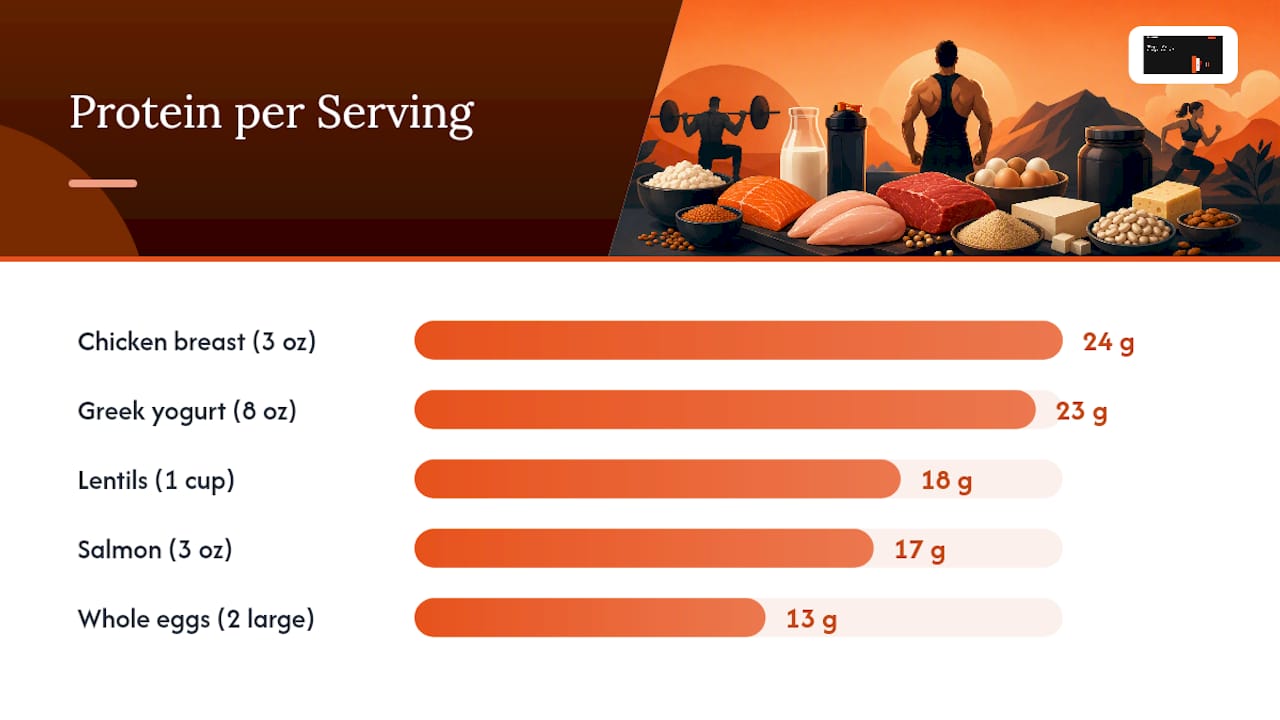
Protein figures sourced from Harvard Health.
Foods and habits that quietly kill your gains
Not everything on a grocery shelf belongs in a muscle-building plan. These categories are worth limiting:
- Ultra-processed foods (fast food, packaged snacks, deli meats with fillers): calorie-dense but nutrient-poor, they crowd out the protein and micronutrients your muscles actually need. Small amounts occasionally won't derail you. A daily habit will.
- High-added-sugar foods and beverages (sodas, candy, sweetened cereals): the Dietary Guidelines recommend keeping added sugars below 10% of total calories. Repeated high intake of added sugars without corresponding physical activity is more likely to promote fat gain rather than muscle growth.
- Deep-fried and high-trans fat items (fried chicken, commercially fried snacks): trans fats drive systemic inflammation, which directly competes with recovery. Occasional fried food is fine; making it a staple is not.
- Excessive alcohol: alcohol suppresses MPS acutely and disrupts sleep quality, both of which matter more as you age. A drink or two on a rest day is unlikely to derail progress. Regular heavy drinking is a different story.
- Chronically low-protein days: skipping protein at breakfast or lunch and trying to compensate with a massive dinner doesn't work. Your body can only use so much protein per meal for MPS. Distribute it or lose it.
Your practical grocery checklist and meal-prep routine
Grocery checklist by storage zone
Pro Tip: Frozen salmon, shrimp, and broccoli cost significantly less than fresh and retain nearly identical nutritional profiles. Buying frozen for these three items alone can cut your weekly grocery bill without touching protein quality.
Meal-prep workflow (Sunday, ~90 minutes)
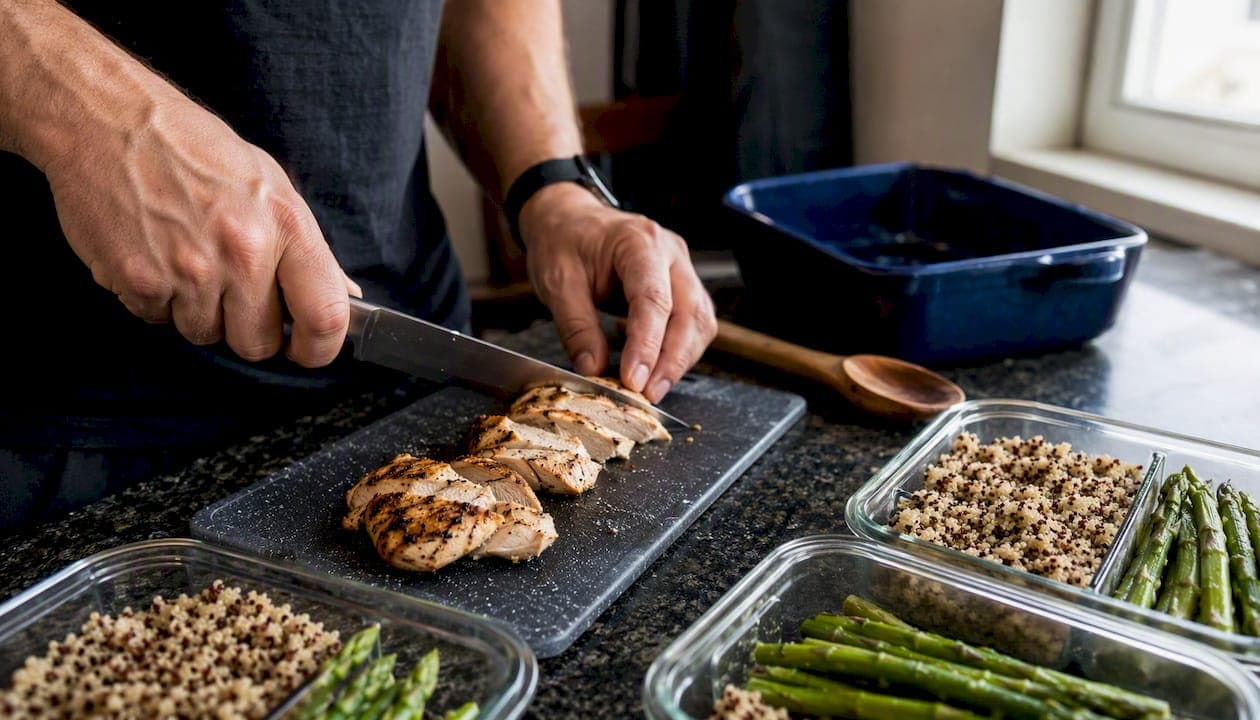
Grill or bake 3–4 lbs of chicken breast in one oven session. While that cooks, boil a large pot of brown rice and roast sweet potatoes on a second sheet pan. Hard-boil a dozen eggs. Portion everything into containers: one protein source + one carb source + one vegetable per container. That's 4–5 lunches and dinners done. Breakfast is oats and Greek yogurt — no prep needed.
For a deeper batch-cooking system built around lifters over 40, the Ironatforty meal-prep guide covers portioning strategy and time-saving templates in detail.
Supplements worth your money (and the ones that aren't)
Most of your results come from the food list above. Supplements fill gaps — they don't replace a solid diet. That said, two are genuinely worth considering:
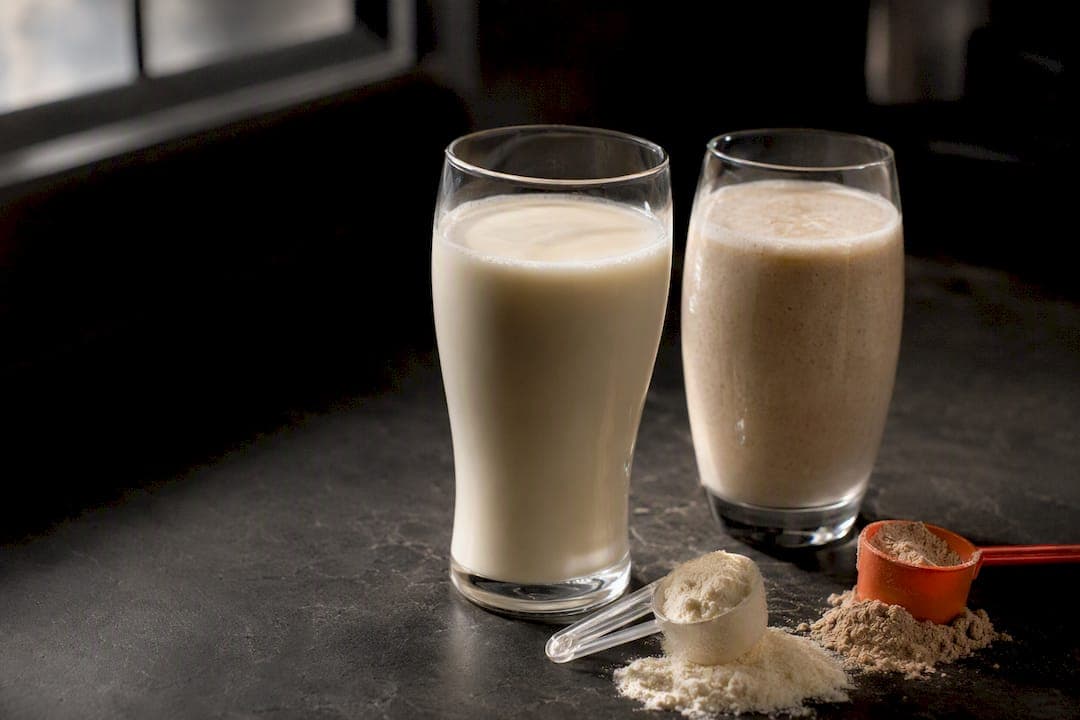
- Whey protein powder: Whey is leucine-rich and rapidly digested, making it practical for post-workout use when whole-food meals aren't convenient. A 20–30 g serving covers a full MPS-stimulating dose. Combined with resistance training, whey supplementation shows meaningful effects on muscle mass and strength, particularly in older adults. Use it when hitting your daily protein target from food alone is genuinely difficult — not as a default replacement for meals.
- Creatine monohydrate: 3–5 g per day is the most well-supported, cost-effective supplement in strength sports. It increases phosphocreatine availability, supporting higher-rep work and faster recovery between sets. No loading phase is necessary. Take it daily, timing doesn't matter much.
- Vitamin D and omega-3s: Worth checking if you're deficient (a blood test tells you). Low vitamin D is common in adults over 40 and correlates with reduced muscle function. Omega-3s from fish oil can reduce inflammation, though getting them from two servings of fatty fish per week is preferable to supplementing.
Safety note: The supplement industry is loosely regulated. The NCCIH advises consumers to be cautious with bodybuilding supplements because of variable quality, undisclosed ingredients, and adulteration risks. Stick to brands that carry third-party testing certification (NSF Certified for Sport or Informed Sport). If your whole-food protein targets are consistently met, protein powder is optional.
What the food list actually means for lifters over 40
Here's the honest version: the foods on this list work for everyone. But how you use them matters more once you're past 40.
Anabolic resistance — the slight blunting of MPS per gram of protein — is real, but research shows it's largely driven by inactivity rather than age itself. Consistent resistance training preserves your muscle's ability to respond to protein. The practical implication: don't cut training volume to compensate for age. Cut it only when recovery demands it, and use the Ironatforty recovery resources to read those signals accurately.
Four rules I'd give any lifter over 40 working from this list:
- Distribute protein. Four to five meals with 25–35 g each beats two large protein dumps. Your recovery is slower; your MPS window is longer. Use it.
- Prioritize nutrient-dense calories. Every calorie should be doing a job. Micronutrients (zinc, magnesium, vitamin D, omega-3s) matter more for recovery and hormone health after 40 than they did at 25.
- Don't fear carbs around training. Protein is not effective in isolation. Carbs fuel the sessions that create the stimulus for muscle growth. Skip them pre-workout and you're leaving performance on the table.
- Track your calories at least once. You don't need to log forever, but running your numbers through the Ironatforty TDEE Calculator once gives you a real baseline. Most people are surprised by how far off their estimates are.
Combine grains with legumes at most meals to cover your EAA bases. The protein intake guide for lifters over 40 walks through the math in detail if you want to get precise.

Ready to put this grocery list to work? Ironatforty's nutrition hub and free training tools give you everything you need to set your calories, track your protein, and build a plan that fits your life over 40.
Sources
- Protein Requirements for Master Athletes: Just Older Versions of Their Younger Selves - PMC
- Building better muscle - Harvard Health
- Dietary Guidelines for Americans, 2020-2025 (PDF)
- Body Weight Planner (NIDDK) — BWP
This article is general information, not a substitute for advice from a qualified doctor. Consult a qualified healthcare professional about your own circumstances before acting on anything here.
FAQ
What are the best foods for bodybuilding?
Lean animal proteins (chicken, eggs, salmon), Greek yogurt, lentils, oats, sweet potatoes, and leafy greens form the core of any effective muscle-building diet. Prioritize foods that deliver high protein per calorie and pair them with quality carbs to fuel training.
What kills muscle gains the most?
Chronically low protein intake and poor sleep are the two biggest suppressors of muscle growth. Excessive alcohol also acutely blunts muscle protein synthesis and disrupts the recovery sleep your body needs to rebuild.
What drink builds muscle fast?
No single drink builds muscle, but milk (which contains both whey and casein) and a post-workout whey protein shake are the most practical liquid protein sources. Both deliver leucine-rich protein that triggers MPS when combined with resistance training.
Which bodybuilder reportedly ate 140 eggs a day?
That claim is often attributed to Vince Gironda, a bodybuilding coach from decades ago who promoted high-egg diets. It's more legend than verified fact, and no credible evidence supports that intake as safe or effective. Two to four whole eggs per day as part of a balanced diet is a practical, evidence-backed approach.