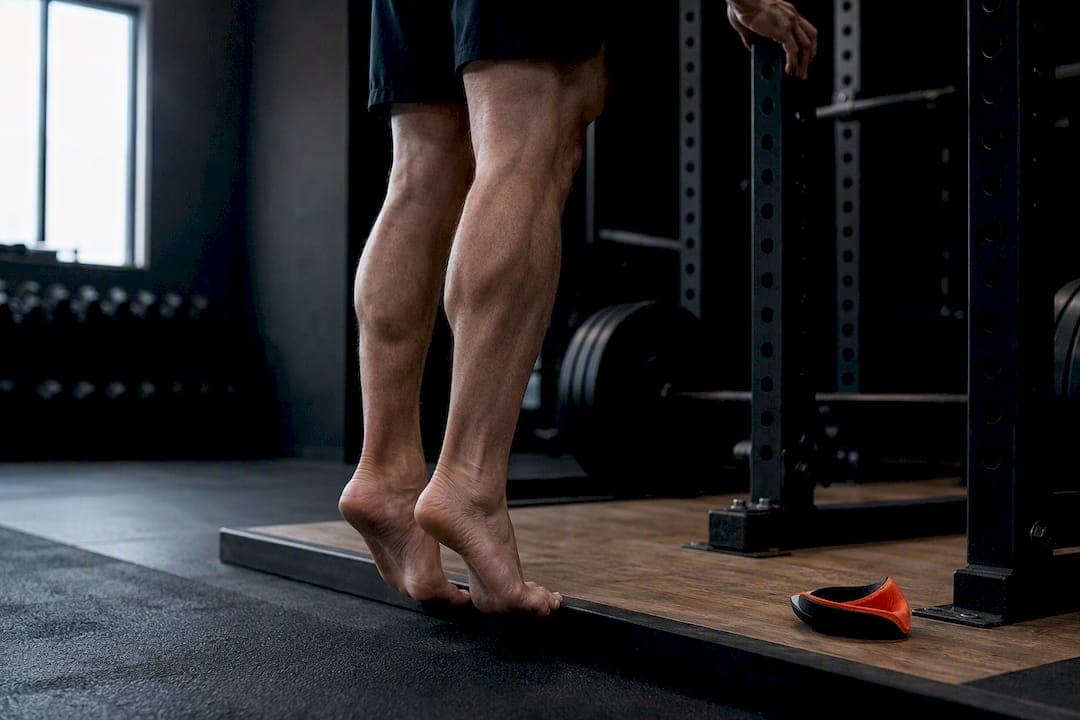
Here's the short version you can use right now. Before any workout, run through this sequence: apply heat for 20 minutes if you have time, then spend 2–3 minutes on light movement (marching in place, slow arm swings), followed by 5–10 minutes of joint-specific dynamic moves. Finish with 1–2 gentle muscle activations before loading anything. Total time: 10–15 minutes on a regular day, as few as 5 minutes on a flare day.
Quick warm-up checklist for joint pain:
- Heat (optional but recommended): Warm shower or heating pad, ~20 minutes before you start
- Light aerobic primer: 2–3 minutes of marching in place or slow walking
- Dynamic joint moves: 5–10 minutes of hip circles, arm circles, heel-to-toe walks, and modified lunges (see full list below)
- Gentle activation: 1–2 moves targeting the muscles around the joint you'll be loading
- Safety rule: Stay within a comfortable range of motion. Stop immediately for sharp, sudden, or worsening pain. Use a chair or countertop for balance whenever you need it.
The Arthritis Foundation recommends dynamic warm-ups specifically for people with arthritis — controlled compound movements that prepare joints while minimizing stress, especially when performed with a reduced range of motion and support as needed.
Key Takeaways
A consistent warm-up routine for joint pain requires heat preparation, dynamic movement, and a clear progression rule: add reps before you add resistance.
| Point | Details |
|---|---|
| Heat before, ice after | Apply heat before your workout; ice for up to 20 minutes if swelling appears post-activity. |
| Dynamic moves beat static holds | Controlled compound movements prepare arthritic joints better than cold static stretches. |
| Reps before resistance | Increase repetitions or range of motion before adding load — ACE's core progression rule for arthritis. |
| Red flags mean stop | Sharp pain, new swelling, redness, or post-exercise pain lasting over two hours are signals to stop and contact a clinician. |
| Ironatforty's Joints hub | The Joints hub and heavy-lifting warm-up guide extend this checklist into full training programs for lifters over 40. |
Table of Contents
- Why does warming up help when your joints hurt?
- What should you do before the warm-up even starts?
- Joint-friendly dynamic warm-up exercises, step by step
- How long should the warm-up be, and how do you progress?
- When should you stop, and when do you need a clinician?
- Two ready-to-use warm-up routines you can start today
- What does the evidence actually say about exercise and joint pain?
- The real issue most lifters over 40 miss
- Ironatforty has the tools to take this further
- Sources
- FAQ
Why does warming up help when your joints hurt?
Warming up changes what's happening inside the joint, not just around it. As joint temperature rises, synovial fluid becomes less viscous and distributes more evenly across cartilage surfaces, reducing friction and improving range of motion. Surrounding muscles become more pliable, which takes load off the joint itself during movement.
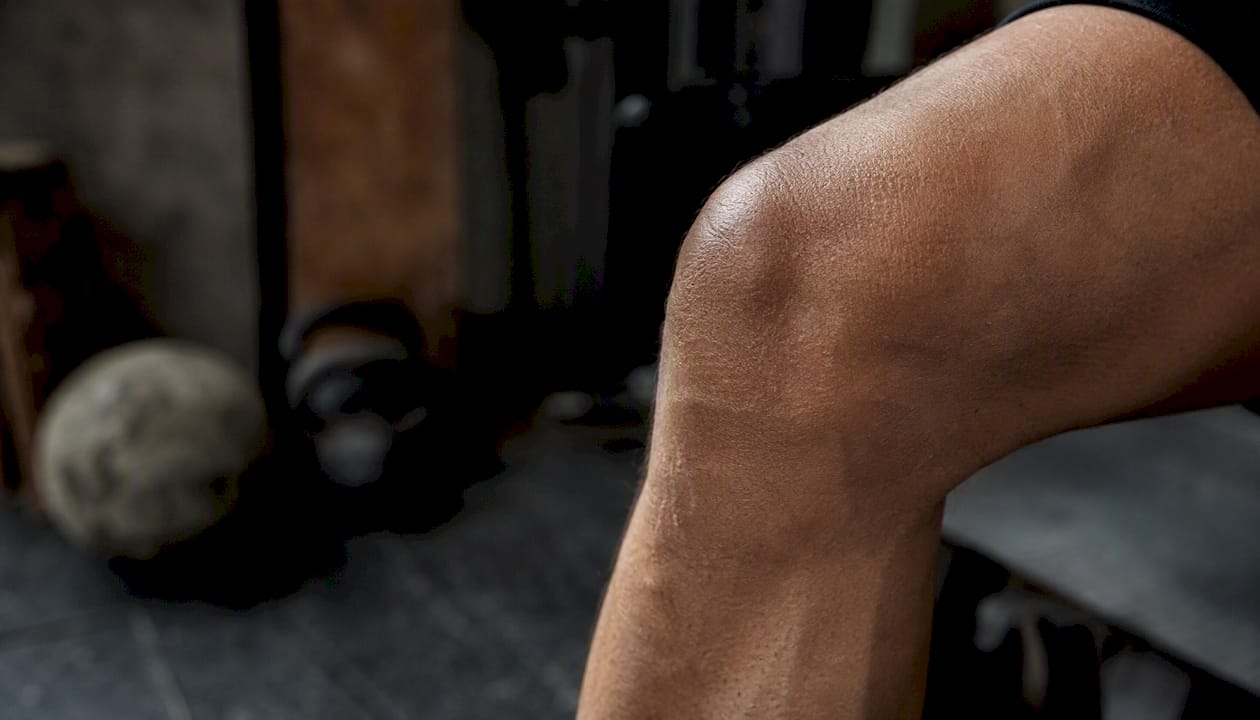
The Mayo Clinic notes that starting slowly and using a short warm-up of range-of-motion activities before strengthening or aerobic work is a core principle for people returning to activity with arthritis. The Arthritis Foundation reinforces this: warm-ups that mimic the activity you're about to do prepare the relevant joints and tissues far better than unrelated static stretches held cold.
For people with osteoarthritis specifically, this matters more than it does for younger, healthy joints. Cartilage doesn't have its own blood supply, so it depends on the mechanical pumping action of movement to receive nutrients. A proper warm-up starts that process before you add load.
What should you do before the warm-up even starts?
Think of this as your pre-launch checklist. Getting these right takes five minutes and meaningfully changes how the warm-up feels.
- Apply heat: A warm shower, heating pad, or warm towel for roughly 20 minutes before exercise relaxes muscles and reduces stiffness. Mayo Clinic's guidance on arthritis and exercise specifically recommends this timing. If you shower in the morning, work out right after.
- Set up your support: Have a sturdy chair, countertop, or wall within reach before you start. This isn't optional for balance-challenged moves — it's just smart setup.
- Check your swelling: If a joint is visibly swollen or hot to the touch, skip dynamic loading on that joint and substitute isometrics instead (see modifications below).
- Medication timing: If you take anti-inflammatory medication, check with your doctor about optimal timing relative to exercise. Don't use pain medication to push through a joint that's telling you to stop.
- Hydrate: Drink water before you start. Synovial fluid is largely water-based, and even mild dehydration can affect joint lubrication.
Joint-friendly dynamic warm-up exercises, step by step
These seven moves come directly from Arthritis Foundation-recommended dynamic warm-ups. Each one has a modification for flare days or limited mobility.
- Hip circles: Stand with feet shoulder-width apart, hands on hips. Draw slow circles with your hips, 5 reps each direction. Modification: seated, draw smaller circles with your pelvis.
- Arm circles and swings: Arms out to the sides, make small-to-medium circles forward and back, 10 reps each. Progress to controlled pendulum swings across the body. Modification: reduce the arc; stay seated if shoulder pain is present.
- High-stepping march: March in place, lifting knees to a comfortable height for 20 steps. Modification: seated leg lifts, alternating knees, 10 reps per side.
- Heel-to-toe walk: Walk forward placing heel down first, then rolling through to the toe, 10 steps. Modification: perform seated ankle pumps and toe raises, 10 reps each.
- Modified lunge with torso rotation: Step forward into a shallow lunge (not full depth), rotate your torso gently toward the front leg, return. 5 reps per side. Modification: half-squat depth with chair support; skip the rotation if it causes back pain.
- Step up and over (lateral): Step sideways over a low obstacle or just practice the lateral weight shift, 8 reps per side. Modification: seated lateral leg raises, 10 reps per side.
- Isometric wall sit (flare-day swap): Back against the wall, lower to a comfortable angle and hold for 10–20 seconds. No joint motion, full muscle engagement. The Arthritis Foundation recommends isometrics as a safe strength option during inflammatory flare-ups to preserve muscle without stressing the joint.
Pro Tip: Keep your breathing steady and rhythmic throughout every move. Exhale on the effort phase, inhale on the return. Controlled breathing reduces muscle tension and helps you stay within a safe range of motion rather than pushing through discomfort.
How long should the warm-up be, and how do you progress?
The floor is 5 minutes. The ceiling depends on your day.
On a regular training day, 10–15 minutes of warm-up is appropriate for anyone with chronic joint stiffness. Longer warm-ups help increase synovial fluid production and reduce friction before you add load. On a flare day, 5 minutes of gentle seated moves is enough — the goal shifts from preparation to maintenance.

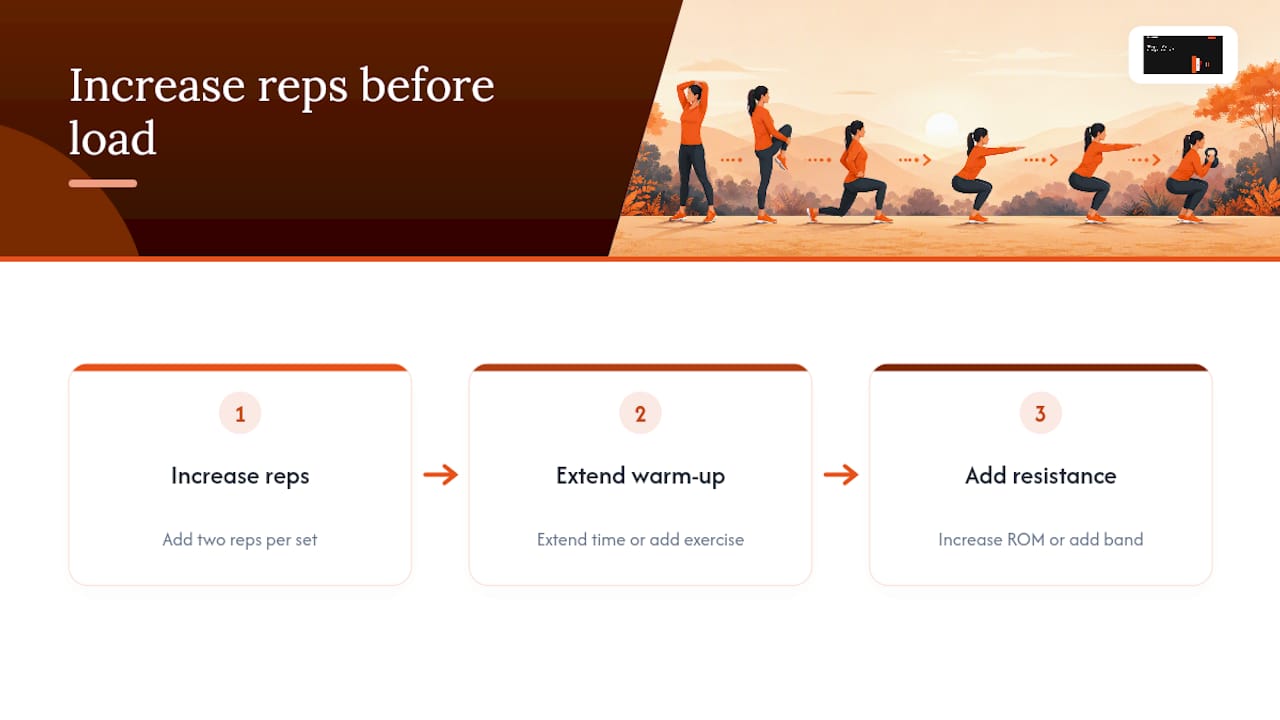
ACE Fitness guidance on arthritis exercise programming is clear on progression: increase repetitions before you increase resistance. Add two reps per set before you add weight. This applies to the warm-up itself — extend duration or add one more exercise before you increase the range of motion or add a resistance band. Consistency matters more than intensity here. Daily range-of-motion work, even on rest days, keeps joints from stiffening between sessions. For readers building toward heavier training, the progressive overload guide for lifters over 40 covers exactly how to layer load on top of a solid movement base.
Cold mornings and high-humidity days often mean longer warm-ups. Give yourself an extra 5 minutes if you wake up stiff.
When should you stop, and when do you need a clinician?
Not all joint discomfort during warm-up is a red flag. Mild stiffness that eases within the first few minutes is normal. These signals are not:
- Sharp or sudden pain that appears during a specific movement
- Swelling that increases during or after activity
- Redness or heat in the joint that wasn't there before you started
- Loss of weight-bearing ability or significant instability
- Pain that persists more than two hours after exercise ends
Stop the session if any of these appear. If swelling develops, apply ice for up to 20 minutes post-activity, per Mayo Clinic's arthritis exercise guidance. Contact your clinician if the swelling or pain doesn't resolve within 24 hours, or if it's a new symptom.
Ask for a physical therapy referral when: your pain pattern is changing, you're avoiding movements out of fear rather than actual pain, or you've had a recent joint procedure. Bring a short symptom diary to that appointment — three to five days of notes on which movements hurt, at what point in the session, and how long the pain lasted. Supervised exercise programs can produce clinically meaningful improvements in pain and function for osteoarthritis, particularly when tailored to the individual.
Two ready-to-use warm-up routines you can start today
For a deeper look at mobility restoration strategies that pair well with these routines, the HTK Training mobility checklist covers progressive warm-up templates built for athletes returning from injury or managing chronic tightness.
What does the evidence actually say about exercise and joint pain?
Short answer: exercise is first-line treatment for hip and knee osteoarthritis, not a risk to manage around.
A network meta-analysis of 103 trials involving 9,134 participants found that aerobic and mind-body exercise had the largest effect sizes for pain and physical function in knee and hip osteoarthritis at or near the 8-week mark. That's not a marginal benefit. EULAR's updated recommendations for non-pharmacological management of hip and knee OA call for individualized, multicomponent plans that include tailored exercise, patient education, and consideration of assistive devices or footwear. ACE guidance aligns: individualized programming, daily ROM activity, and consistency over intensity.
The practical takeaway from all of it: heat before, dynamic warm-up always, ice after if swelling appears, and build reps before you build load.
The real issue most lifters over 40 miss
Here's the honest take: most people with joint pain skip the warm-up on the days they need it most. When a knee is stiff or a shoulder aches, the instinct is to either push straight into the work or skip the session entirely. Both are wrong.
The warm-up is the session on those days. Treat it that way. Do a "joint survey" early: run through bodyweight versions of your planned movements at reduced range and pay attention to what each joint tells you. If something sharpens rather than eases, switch that movement to an isometric. If it eases, proceed with load. This isn't caution for its own sake — it's the difference between training consistently for years and spending months sidelined.
For lifters specifically, the priority order is: daily ROM work first, then warm-up quality, then load. Chasing PRs through a stiff, cold joint is how you end up reading about SI joint recovery instead of lifting. Consistency beats intensity every time, and the training consistency article on Ironatforty makes that case with numbers.
Ironatforty has the tools to take this further
You've got the checklist. Now build the habit around it.

Ironatforty's Joints hub collects every joint health and recovery guide in one place, from warm-up protocols to long-term rehabilitation strategies. If you're ready to structure your training around these warm-ups, the free tools page includes a TDEE Calculator and 1RM Calculator to help you plan load and energy balance around your sessions. And if you're lifting and need a longer, load-specific warm-up protocol, the warming up for heavy lifting guide is the natural next step. Pick the 5-minute or 10-minute routine above, run it three times this week, and use those tools to plan what comes after it.
Sources
- 7 Dynamic Warm-Ups | Arthritis Foundation
- Exercise helps ease arthritis pain and stiffness - Mayo Clinic
- Exercise Programming for Clients Who Have Arthritis | ACE Fitness
- Network meta-analysis of exercise for knee and hip osteoarthritis | PMC
This article is general information, not a substitute for professional medical advice. Confirm any exercise plan with your physician or a licensed physical therapist before starting.
FAQ
What causes sudden joint pain in multiple joints at once?
Sudden multi-joint pain can signal an inflammatory condition such as rheumatoid arthritis, gout, or a viral illness. See a clinician promptly if the pain is new, severe, or accompanied by swelling, redness, or fever.
How do you reduce joint pain and inflammation before exercise?
Apply heat for roughly 20 minutes before activity to reduce stiffness, then use a dynamic warm-up of controlled range-of-motion movements. Mayo Clinic recommends this sequence specifically for people with arthritis.
How long should a warm-up be for someone with arthritis?
A minimum of 5 minutes on flare days and 10–15 minutes on regular training days. Longer warm-ups help increase synovial fluid distribution and reduce friction before you add load.
Can you exercise during an arthritis flare-up?
Yes, with modifications. Switch dynamic loading to isometric exercises (wall sits, seated holds) on high-inflammation days to maintain muscle engagement without moving the irritated joint, as recommended by the Arthritis Foundation.
When should joint pain send you to a physical therapist?
Seek a PT referral when pain patterns are changing, you're avoiding movements out of fear rather than actual pain, or you've had a recent joint procedure. Bring a symptom diary covering which movements hurt and how long the pain lasts.