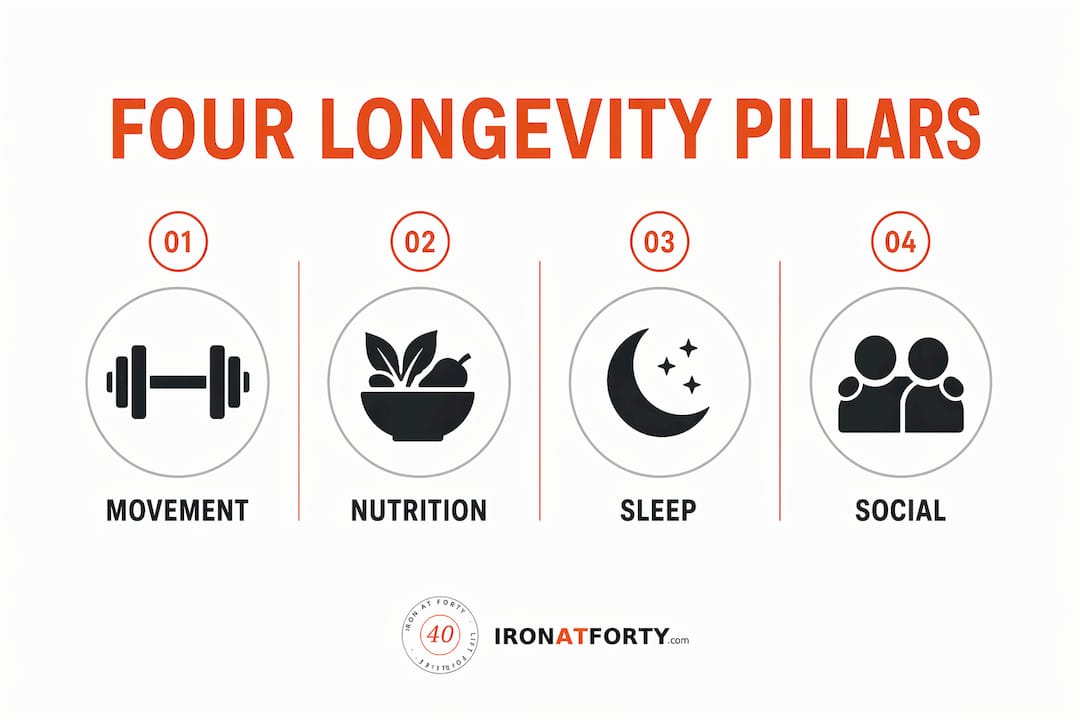
The four pillars of longevity are movement, nutrition, sleep, and social connection. These four lifestyle factors form the foundation of healthy aging, and mastering them is the most direct path to a longer, higher-quality life. Research confirms that chronic inactivity, poor diet, and sleep debt are the primary accelerants of fast aging. The good news: you do not need a complete lifestyle overhaul. Small, consistent improvements in each pillar compound into meaningful gains in healthspan, especially after 40 when the biological stakes get real.
What are the four pillars of longevity?
The four pillars are movement, nutrition, sleep, and social connection. Each one operates at the cellular level, influencing hormone regulation, inflammation, cardiovascular function, and cognitive health. These pillars are free and available to everyone, regardless of budget or access to medical care. Supplements and biohacking add marginal benefit at best. Get the foundation right first.
The pillars also work together. Poor sleep raises cortisol, which drives cravings and undermines your nutrition. Weak social ties increase stress, which disrupts sleep. Movement improves insulin sensitivity, which makes nutrition more effective. You cannot fully optimize one pillar while ignoring the others.
How does movement improve longevity after 40?
VO2 max is the single strongest predictor of mortality in adults. A one-unit increase in VO2 max reduces cardiovascular mortality risk by roughly 45%. That number should stop you cold. No drug, supplement, or biohack comes close to that effect size.
Two types of training drive the biggest longevity returns after 40: Zone 2 cardio and resistance training.
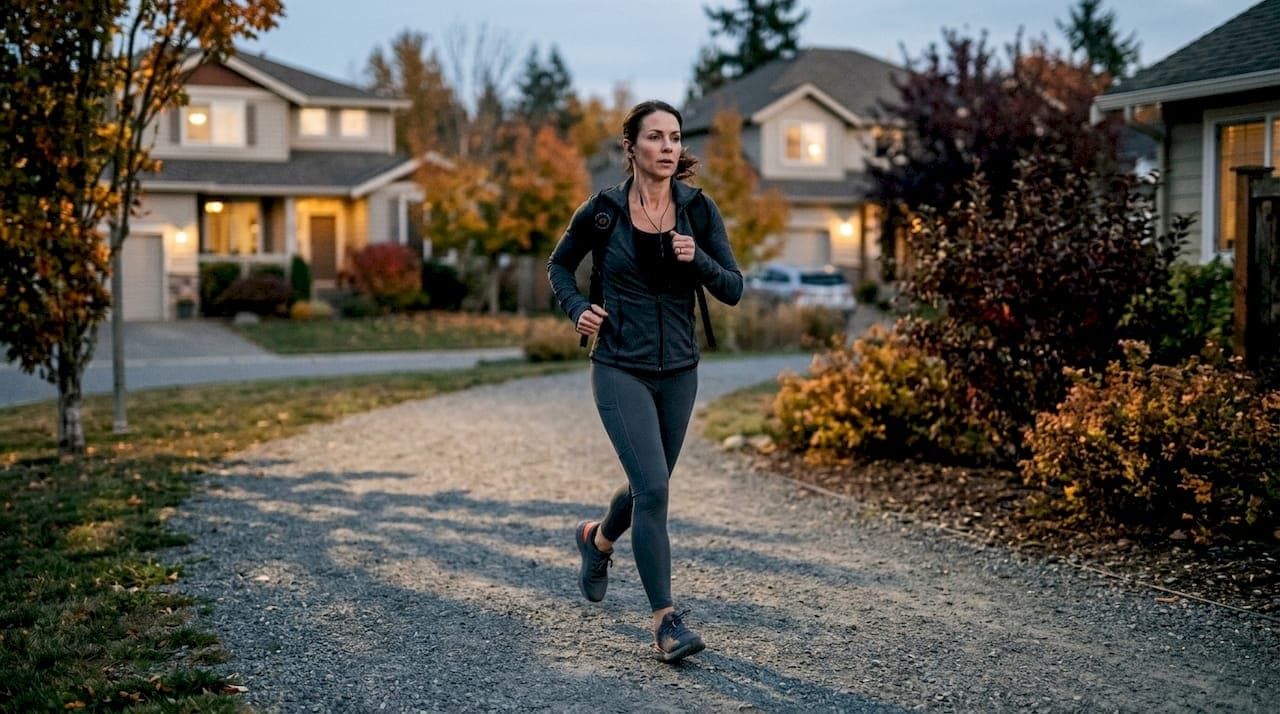
- Zone 2 cardio means working at a pace where you can hold a conversation but feel genuinely challenged. Zone 2 is the most effective aerobic training method for building your cardiovascular base without overtraining. It trains your mitochondria to burn fat efficiently, which supports metabolic health long-term.
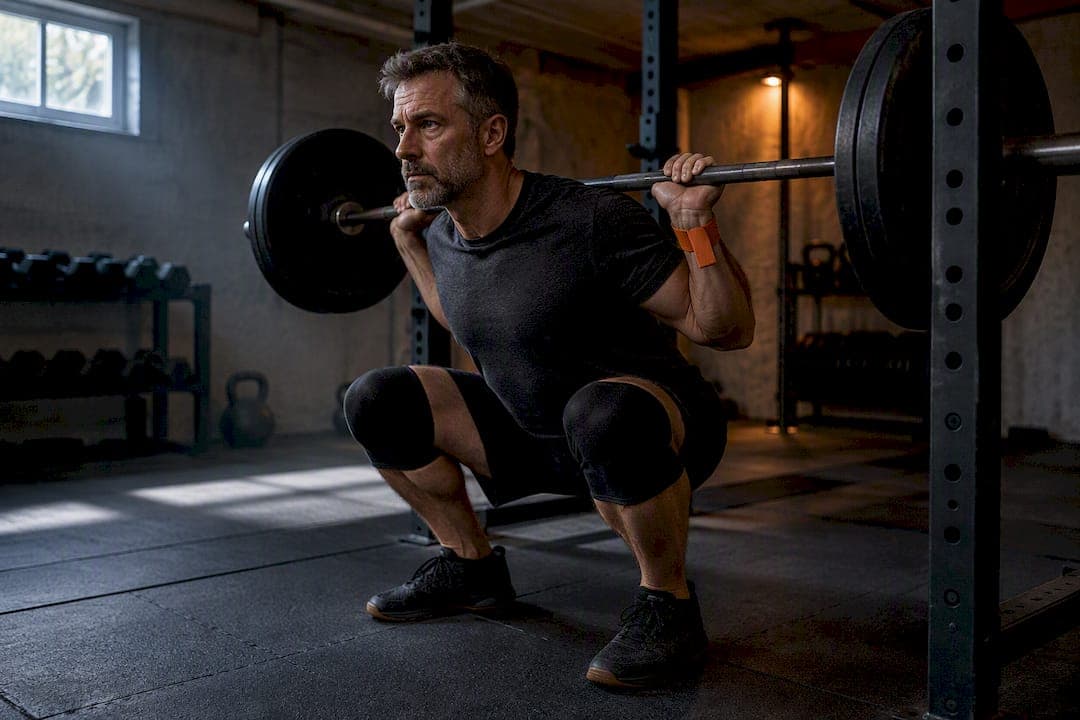
- Resistance training is non-negotiable. Adults over 30 lose 3–5% of muscle mass per decade without it. Muscle is metabolic currency. Lose it and you lose functional independence, insulin sensitivity, and the ability to recover from illness.
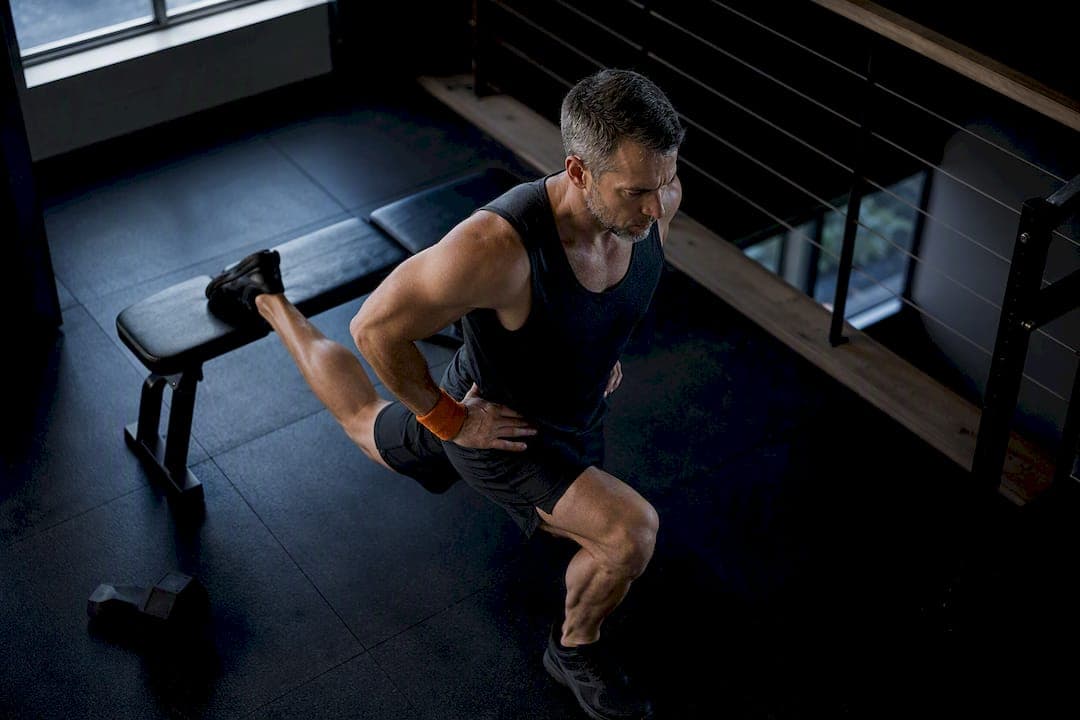
- Exercise snacks work. Short bouts of movement spread across the day, like a 10-minute walk after lunch or a set of bodyweight squats before dinner, count. Going from zero to 10 minutes of daily activity yields more health benefit than going from 30 to 40 minutes.
- Consistency beats intensity. This is not a motivational slogan. It is the physiological reality of training after 40. Showing up three times a week for a year outperforms two months of brutal training followed by burnout.
Pro Tip: If you can sing while doing cardio, you are going too easy. If you cannot speak in full sentences, you are going too hard. Zone 2 lives in between. Use that as your daily calibration.
For a structured approach to building this base, Ironatforty covers effective training programs designed specifically for adults over 40.
What nutritional strategies support longevity after 40?
Protein is the most underrated longevity nutrient. It preserves muscle mass, supports immune function, and keeps you full enough to avoid the processed food spiral. Aim for 0.8 to 1 gram of protein per pound of bodyweight daily. Most people over 40 eat far less than that.
Beyond protein, the pattern matters more than any single food. Mediterranean-style eating, built around vegetables, whole grains, legumes, fish, and olive oil, consistently shows up in longevity research as a dietary pattern that reduces chronic inflammation. Inflammation is the slow burn behind heart disease, cognitive decline, and metabolic dysfunction.
Here is what a longevity-focused plate looks like in practice:
- Vegetables at every meal. Not as a side thought. As the anchor. One extra cup of vegetables daily is part of the small-change formula that can add four years to healthspan.
- Whole grains over refined carbs. Brown rice, oats, and quinoa keep blood sugar stable. Stable blood sugar protects against insulin resistance, which accelerates aging.
- Minimal ultra-processed food. This is not about perfection. It is about reducing the chronic inflammation load that processed food creates over years.
- Adequate hydration. Dehydration impairs cognitive function and recovery. Water is not glamorous, but it is foundational.
Nutrition and movement are inseparable. You cannot out-train a consistently poor diet, and you cannot out-eat a sedentary lifestyle. They amplify each other when both are dialed in.
Why is sleep a non-negotiable longevity pillar?
Sleep is where your body repairs itself. Skimping on it is not a productivity hack. It is a fast track to accelerated aging.
Consistent sleep timing and 7–9 hours per night improve longevity and metabolic function. The timing piece is underappreciated. Going to bed and waking at the same time every day, including weekends, regulates your circadian rhythm and deepens sleep quality. Duration without consistency is only half the equation.
Here is a practical sleep improvement sequence:
- Set a fixed wake time. Pick one and protect it. Your body will start building sleep pressure around it within days.
- Cut screens 60 minutes before bed. Blue light suppresses melatonin. This is not optional if you want deep sleep.
- Keep your bedroom cool and dark. Core body temperature needs to drop to initiate deep sleep. A cool room accelerates that process.
- Track your sleep. Wearables like Garmin, Whoop, or Oura give you data on deep sleep duration and sleep consistency. Some people increase deep sleep substantially just by adjusting their bedtime routine after seeing the data.
- Add 24 minutes. Research shows that adding just 24 minutes of sleep per night is part of the small-change stack that can extend healthspan by four years.
Pro Tip: Do not chase more total sleep before you fix consistency. A stable sleep schedule for two weeks will improve your deep sleep more than going to bed an hour earlier on random nights.
How do social connections influence longevity?
The 8-decade Harvard Study of Adult Development found that strong social connections are the top predictor of long-term happiness and health, ranking above diet and exercise alone. That finding holds up across decades of follow-up data. Relationships are not a soft longevity factor. They are a hard one.
Social isolation links directly to higher dementia and heart disease risk. Loneliness triggers the same stress response as physical danger. Chronic activation of that response degrades cardiovascular and cognitive health over time.
Not all socializing is equal. The key distinction is restorative versus draining relationships.
- Restorative relationships leave you feeling energized, seen, and supported. These are the ones that matter for longevity.
- Draining relationships create chronic low-grade stress. More time with them does not add to your healthspan.
- Community and purpose matter. Regular involvement in a group, whether a gym, a faith community, a volunteer organization, or a weekly dinner with close friends, provides both social contact and a sense of meaning.
- Quality over quantity. Two or three deep, reliable relationships protect health more than a wide but shallow social network.
After 40, social networks tend to shrink naturally. Careers, family demands, and geography pull people apart. The lifestyles habits for longevity that matter here are intentional. Schedule the call. Show up to the group. Protect the relationships that restore you.
Key Takeaways
The four pillars of longevity, movement, nutrition, sleep, and social connection, work as a system; neglecting one undermines the others and accelerates aging.
| Point | Details |
|---|---|
| VO2 max drives survival | A one-unit increase in VO2 max cuts cardiovascular mortality risk by roughly 45%. |
| Muscle loss is preventable | Adults lose 3–5% of muscle per decade without resistance training; lifting reverses this. |
| Small sleep gains compound | Adding 24 minutes of sleep nightly is part of a stack that can extend healthspan by four years. |
| Social ties are medical | The Harvard Study ranks strong relationships above diet and exercise as longevity predictors. |
| Consistency is the method | Going from zero to 10 minutes of daily activity yields more benefit than adding 10 minutes to an existing 30-minute routine. |
What I have learned from living these pillars
I spent years chasing the next supplement, the next protocol, the next biohack. I tracked every metric except the ones that actually moved the needle. The honest truth is that the four pillars are boring. They are not new. They do not have a great marketing story. And they work better than everything else combined.
The biggest mindset shift for me was dropping the all-or-nothing approach. Missing one workout does not erase your fitness. One bad night of sleep does not tank your health. What matters is the floor you set, not the ceiling you occasionally hit. I started asking myself: "What is the minimum I can do today to stay consistent?" That question changed everything.
Objective metrics helped me stay honest. Tracking VO2 max trends, monitoring deep sleep duration, and using a TDEE calculator to stay calibrated on nutrition removed the guesswork. Numbers do not lie. They also do not shame you. They just show you where to focus next.
If you are over 40 and lifting, the core longevity practices that matter most are not glamorous. They are the ones you do every week, without drama, for years.
— Jeff
Ironatforty has the tools to back every pillar
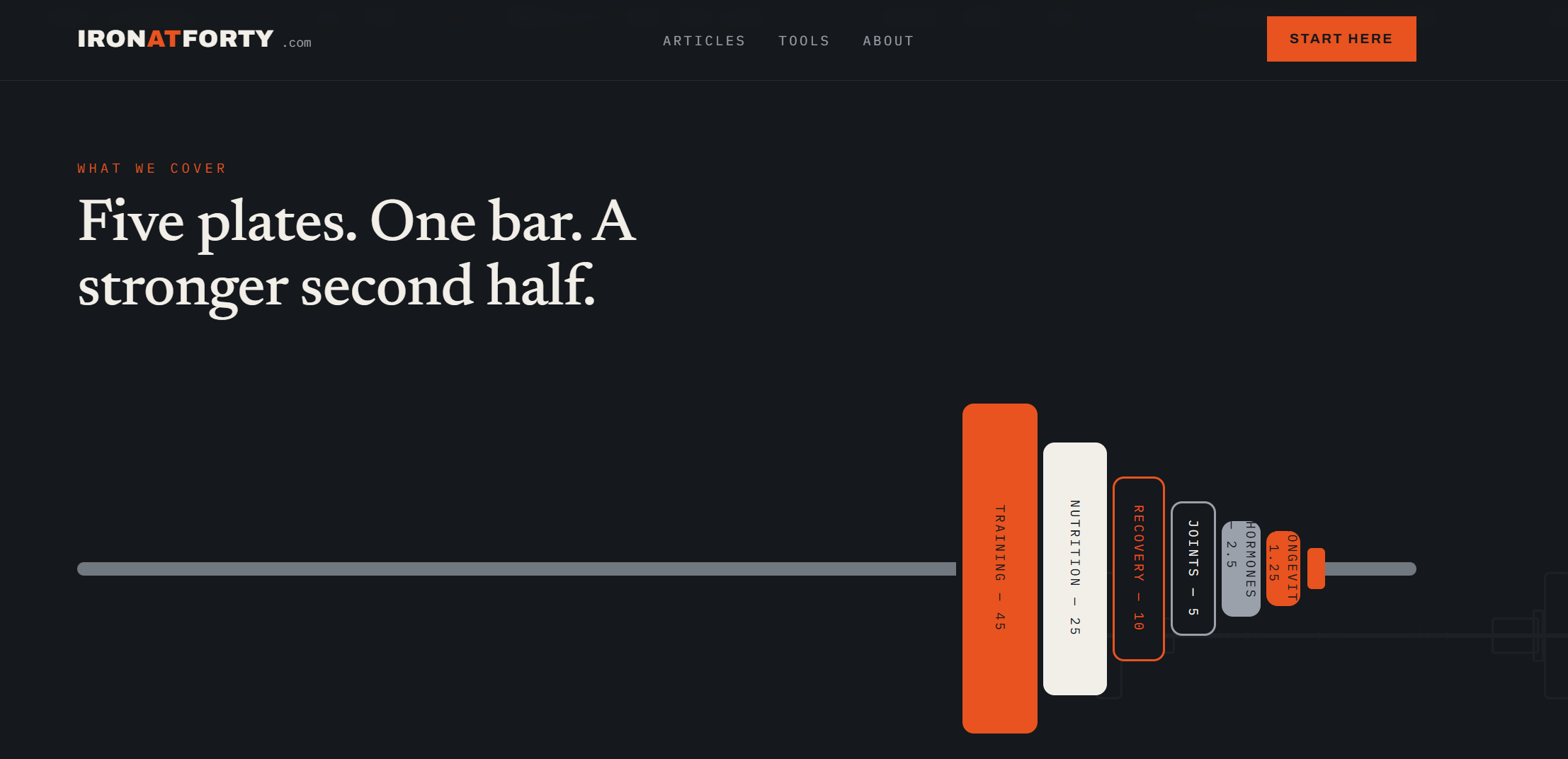
Ironatforty publishes science-backed guidance for lifters over 40 who want real answers, not recycled gym advice. Whether you are working on your nutrition strategy, building a training program that protects your joints, or figuring out your caloric needs, the resources are free and built for your situation.
Start with the nutrition hub for protein targets, meal strategies, and metabolic health guidance tailored to adults over 40. Then use the free training and nutrition tools to put numbers behind your plan. A TDEE Calculator, a 1RM Calculator, and structured training guidance are all there, no coach required. The pillars are simple. The execution gets easier when you have the right resources behind you.
FAQ
What are the four pillars of longevity?
The four pillars of longevity are movement, nutrition, sleep, and social connection. These lifestyle factors work together to reduce disease risk, preserve muscle and cognitive function, and extend healthspan.
How much exercise do you need for longevity after 40?
Consistency matters more than volume. Going from zero to 10 minutes of daily activity yields more health benefit than adding 10 minutes to an existing 30-minute routine, making small, regular movement the priority.
How many hours of sleep supports longevity?
Seven to nine hours per night with consistent sleep and wake times supports longevity and metabolic health. Timing is as important as duration for regulating circadian rhythm and deep sleep quality.
Why do social connections affect how long you live?
The Harvard Study of Adult Development found that strong social ties are the top predictor of long-term health, ranking above diet and exercise. Social isolation raises dementia and heart disease risk by triggering chronic stress responses.
Do supplements help with longevity?
Supplements provide minor refinements at best. The foundational longevity gains come from movement, nutrition, sleep, and social connection. Mastering these four pillars first is the evidence-based priority before adding any advanced protocols.