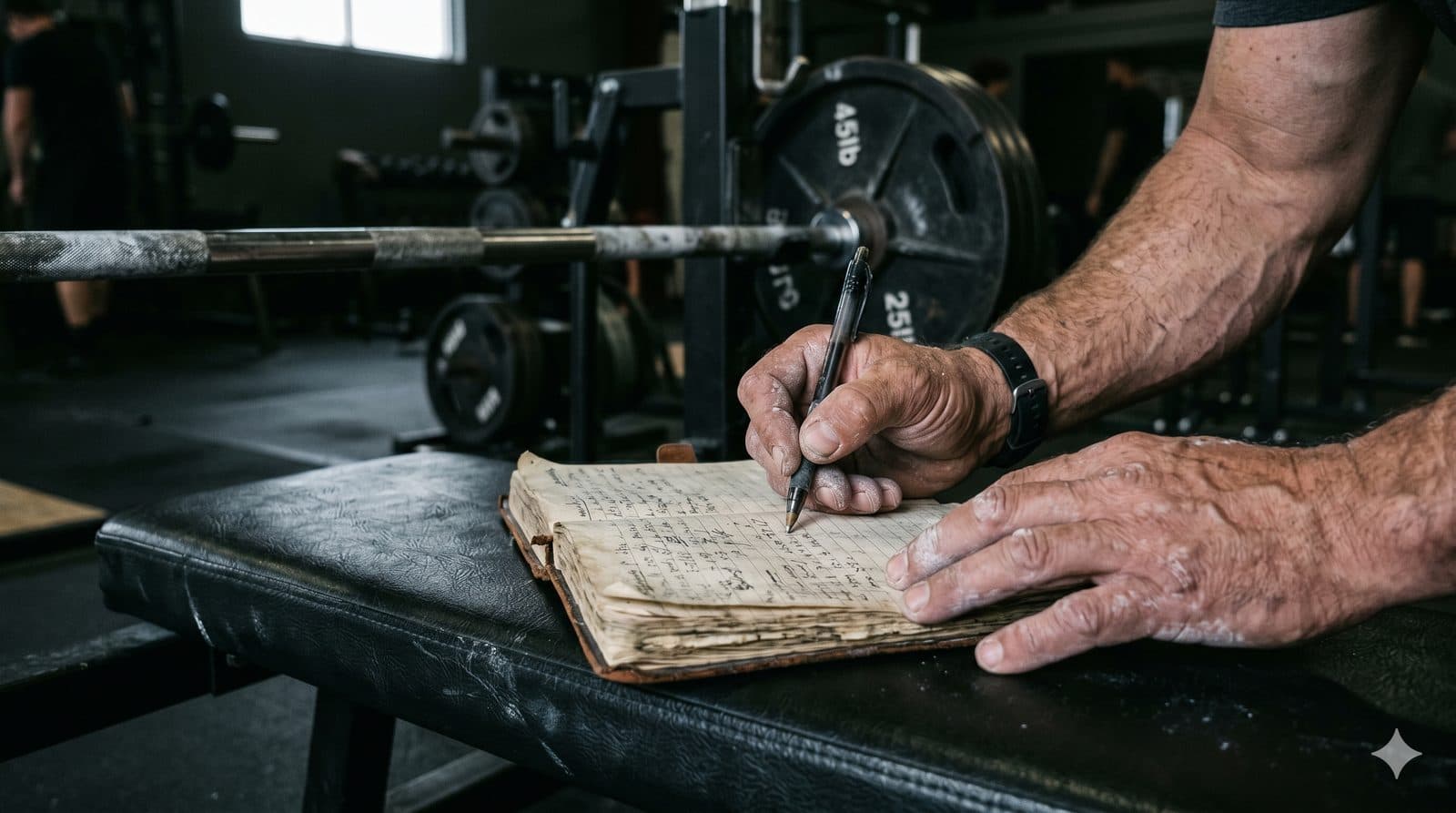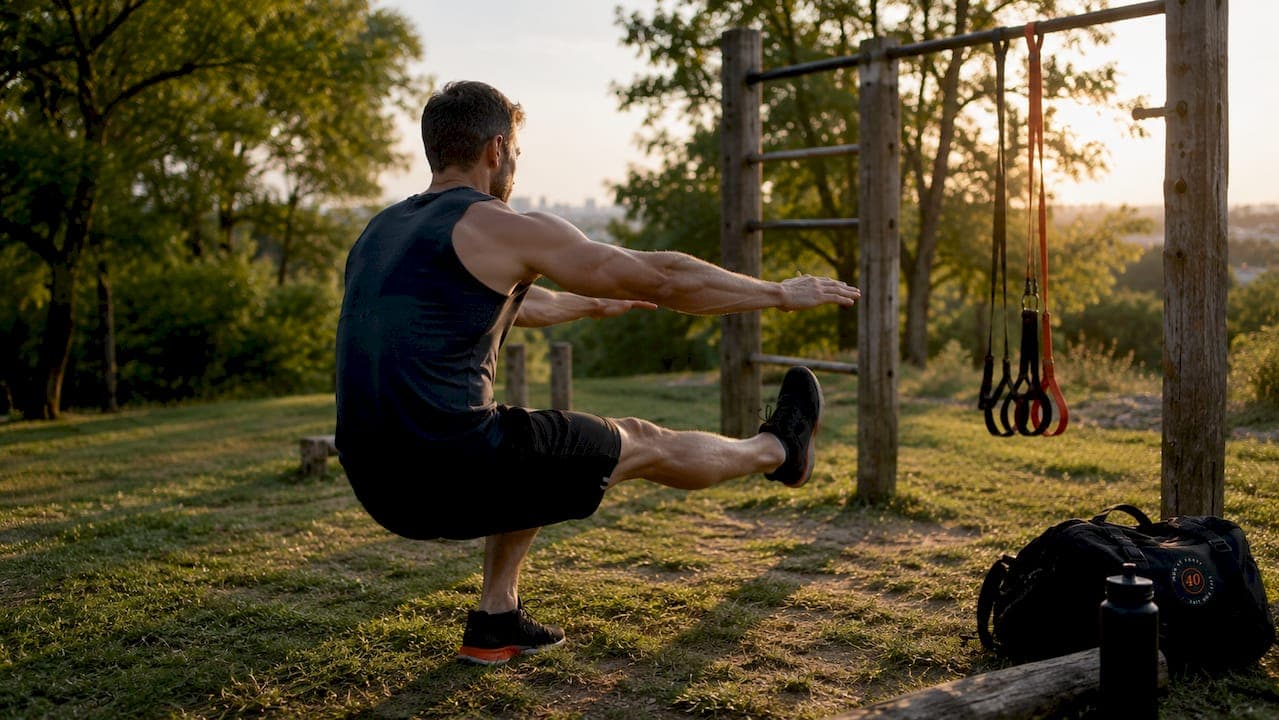
Unilateral training is defined as any exercise that works one limb independently, such as a single-leg squat or a single-arm row. The benefits of unilateral training go well beyond aesthetics. For lifters over 40, this approach corrects muscle imbalances, reduces joint strain, and builds the kind of functional strength that keeps you moving well for decades. Research confirms that unilateral exercises expose asymmetries hidden by bilateral lifts, making them a more precise training tool for aging bodies. If you are still skipping single-leg work, you are leaving real gains on the table.
1. How unilateral training builds more strength than you expect
The bilateral deficit is the core reason unilateral training produces such strong results. Each limb working alone can generate more force than when both limbs contract together. That means a barbell squat actually limits how much total force your legs can produce. Single-leg work removes that ceiling.
A 2023 meta-analysis found that unilateral training produced large effect sizes for both jumping ability and single-leg maximum strength. Effect sizes reached ES = 0.61 for jumping and ES = 8.95 for single-leg strength. Those are not marginal gains. They represent a meaningful jump in functional output.
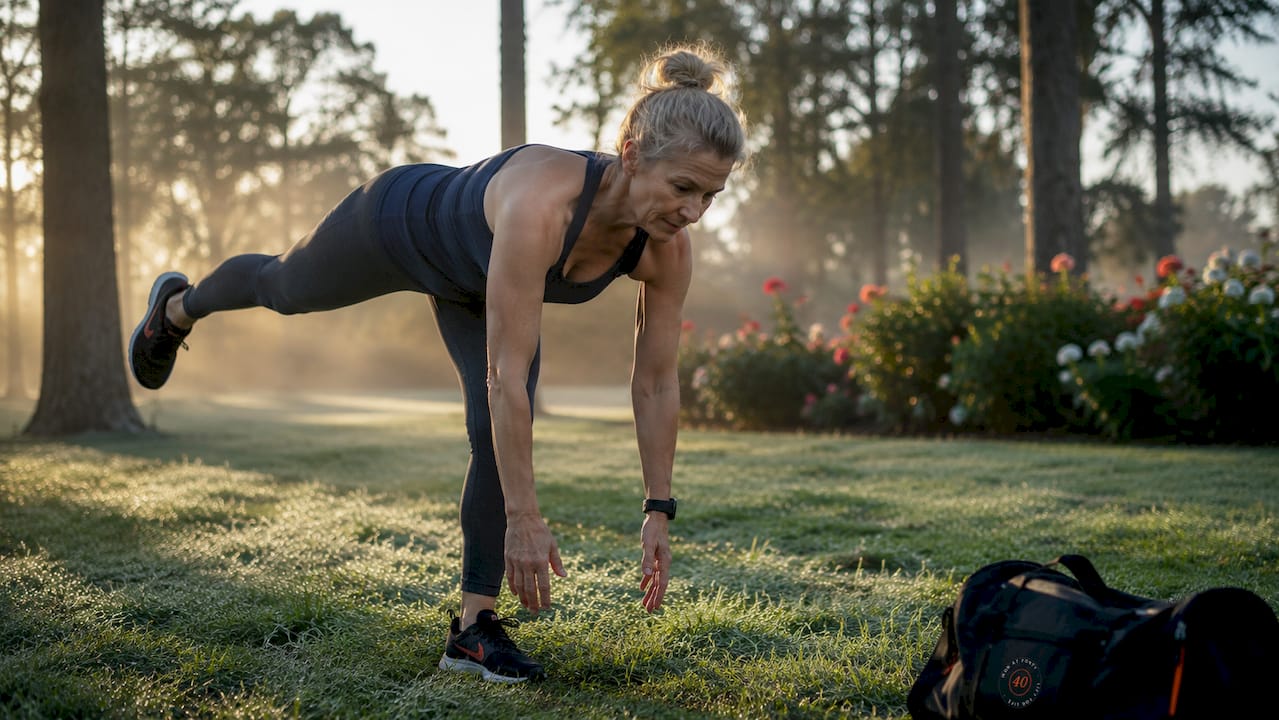
The practical takeaway is straightforward. Your stronger leg has been carrying your weaker leg through every bilateral lift you have ever done. Single-leg exercises force the weaker side to do its own work, which closes the gap fast.
Key unilateral strength exercises to prioritize:
- Bulgarian split squats for quad and glute development with minimal spinal load
- Single-leg Romanian deadlifts for posterior chain strength and hip stability
- Single-arm dumbbell rows for back thickness and scapular control
- Lateral lunges for frontal-plane strength often ignored in standard programs
These movements also support overall athletic performance in older adults, which is exactly why they belong in your program.
2. How unilateral training improves balance and protects your joints
Single-leg exercise benefits go straight to your joints and your nervous system. When you stand on one leg, your core and obliques fire harder to resist rotation. That anti-rotation demand reduces unnecessary strain on your hips, knees, and ankles. Bilateral lifts do not replicate this effect.
Proprioception, your body's ability to sense its own position, declines with age. Single-leg training directly trains this system. Better proprioception means faster reflexive corrections when you stumble. That translates to fewer falls and fewer injuries.
Compensation patterns are another problem unilateral work fixes. When one side is weaker, your body shifts load to the stronger side during bilateral lifts. Over time, that creates chronic joint stress. Unilateral exercises eliminate the compensation by isolating each side.
Recommended unilateral exercises for joint health and balance:
- Single-leg deadlifts (bodyweight or light load to start)
- Step-ups onto a stable box
- Single-leg calf raises for ankle stability
- Lateral band walks for hip abductor activation
Pro Tip: Add single-leg work 2–3 times per week. That frequency is enough to reduce injury risk and build meaningful strength symmetry without overtaxing your recovery.
3. The best unilateral exercises for functional strength after 40
Functional strength means your body can handle real life, not just a barbell. Unilateral training mirrors everyday movement patterns like walking, climbing stairs, and getting up from a chair. Every step you take is a unilateral movement. Training that way builds strength that transfers directly.
Bulgarian split squat
Set your rear foot on a bench and lower your front knee toward the floor. Keep your torso upright and your front shin close to vertical. This movement loads the glutes and quads hard while keeping spinal compression low. It is one of the best lower-body builders available to lifters over 40.
Single-leg Romanian deadlift
Hinge at the hip on one leg while the other extends behind you. Keep a slight bend in the standing knee and maintain a neutral spine. This exercise builds hamstring and glute strength while training balance simultaneously. Start with a light dumbbell and focus on control before adding load.
Single-arm dumbbell row
Brace one hand on a bench and row a dumbbell with the opposite arm. Drive the elbow back and squeeze the shoulder blade at the top. This builds unilateral back strength and corrects the pulling imbalances that cause shoulder problems over time.
Lateral lunge
Step wide to one side and sit into that hip while keeping the opposite leg straight. This trains the frontal plane, the direction most bilateral programs completely ignore. It builds hip mobility and inner thigh strength that protects your knees.
Pro Tip: Hip internal rotation loading during single-leg movements promotes hip mobility and reduces impingement risk. Think about screwing your standing foot into the floor rather than letting your knee cave outward.
Training barefoot during unilateral exercises, when the surface is safe and clean, enhances foot muscle strength and proprioception. That extra sensory feedback sharpens your balance and builds resilience in the small muscles of the foot and ankle.
4. How to program unilateral training after 40
Programming is where most lifters get this wrong. They either do too much too soon or bolt unilateral work onto an already crowded program without a plan. Here is a structure that works.
Start every unilateral set with your weaker side. Always match the reps on your dominant side to what your weaker side completed. Never let your stronger side pull ahead. That is the fastest way to close a strength gap.
Practical programming guidelines:
- Frequency: Train unilateral movements 2–3 times per week
- Order: Place unilateral exercises after your main bilateral lifts, such as squats and deadlifts
- Sets and reps: Use 3–4 sets of 8–12 reps for hypertrophy; use 3–5 sets of 4–6 reps for strength
- Load management: Use dumbbells or a single kettlebell instead of a barbell to reduce spinal compression
- Progression: Add one rep per set before increasing weight
Placing unilateral work after bilateral lifts keeps your central nervous system fresh for the heavy compound movements. The single-leg and single-arm work then targets the stabilizers and weaker muscles that bilateral lifts missed. That combination is more effective than either approach alone.
For a full framework on training programs for adults over 40, Ironatforty covers the structure in detail, including how to balance volume and recovery as you age.
5. What unilateral training does for aging athletes specifically
The advantages of one-sided training extend well beyond the gym floor. A 2026 systematic review found that 8 weeks of unilateral flywheel training improved sprint performance, change-of-direction speed, and endurance better than bilateral training. Those are athletic qualities that matter for anyone who wants to stay active and capable after 40.
Gait quality and stair-climbing control both improve with consistent single-leg training. These are not trivial outcomes. Declining gait mechanics are one of the earliest signs of functional aging, and they are largely preventable with the right training.
Chronic pain linked to uneven muscle development is another problem unilateral work addresses directly. When one side of your body is significantly stronger than the other, the weaker side compensates under load. That compensation creates repetitive stress at the hip, knee, or lower back. Correcting the imbalance removes the source of the pain.
The long-term case for unilateral training is simple. It builds the strength, balance, and movement quality that keep you independent, athletic, and pain-free well into your 50s, 60s, and beyond.
Key takeaways
Unilateral training is the most effective method for correcting muscle imbalances, protecting joints, and building functional strength in lifters over 40.
| Point | Details |
|---|---|
| Bilateral deficit is real | Each limb alone produces more force than both together, making single-leg work more effective for strength. |
| Balance and joint protection | Anti-rotation core demands reduce strain on hips, knees, and ankles with every unilateral rep. |
| Start with the weaker side | Always begin sets on your weaker limb and match reps on the dominant side to close the gap. |
| Program 2–3 times per week | That frequency builds strength symmetry and reduces injury risk without wrecking recovery. |
| Functional carryover is high | Unilateral movements mirror walking, climbing, and daily life, making strength gains transfer directly. |
Why I think most lifters over 40 are missing the point on this
I spent years treating unilateral work as an accessory. Something you do at the end of a session when you have time. That was a mistake.
The moment I started leading with single-leg work and treating it as a primary training tool, my knee discomfort dropped noticeably. My balance improved within weeks. And I started noticing asymmetries I had been compensating around for years without realizing it.
The most common mistake I see is applying bilateral squat cues to single-leg movements. They are different patterns. Treating hip internal rotation as a cue in single-leg work, rather than defaulting to the external rotation focus of a barbell squat, changes everything. Your hips feel better. Your knee tracks better. The movement becomes more stable.
Form matters more than load here. Ten clean Bulgarian split squats with a pair of 30-pound dumbbells will do more for your joint health and muscle balance than sloppy reps with 60s. Slow down. Own the position. Then add weight.
If you are over 40 and still skipping single-leg work because it feels awkward or humbling, that awkwardness is the point. It is telling you exactly where your weak links are. Address them now, before your body forces you to.
— Jeff
Ironatforty has the tools to back your training
Unilateral training is one piece of a larger system. Getting the programming, nutrition, and recovery right is what separates lifters who stay strong after 40 from those who stall out or get hurt.
Ironatforty is built specifically for serious lifters over 40 who want science-backed guidance without the fluff. The training and joint health resources cover everything from exercise selection to recovery strategies for aging bodies. Free tools like the TDEE Calculator and 1RM Calculator help you dial in your numbers so your program has a real foundation. Head to Ironatforty and put the full picture together.
FAQ
What is unilateral training?
Unilateral training is any exercise that works one limb at a time, such as a single-leg squat or single-arm row. It corrects muscle imbalances and builds functional strength that bilateral lifts cannot fully develop.
Is unilateral training effective for people over 40?
Yes. Research shows unilateral training produces large improvements in single-leg strength and jumping ability, and a 2026 review found it outperforms bilateral training for sprint and endurance gains.
How often should I do unilateral exercises?
Experts recommend including unilateral exercises 2–3 times per week for optimal strength symmetry and injury prevention. That frequency is enough to see results without overloading recovery.
What are the best unilateral exercises for joint health?
Bulgarian split squats, single-leg Romanian deadlifts, and lateral lunges are the top choices. They build strength in the hips and legs while reducing spinal compression and correcting compensation patterns.
Does unilateral training help with balance?
Single-leg training directly improves proprioception and core stability, both of which decline with age. Core and oblique activation during unilateral movements reduces joint strain and builds the reflexive balance needed to prevent falls.