You can almost always keep lifting with plantar fasciitis. The key is cutting plantar-loading movements, not the whole program. Warm up the calf and foot properly, add heel-cup or insole support, and swap a few high-impact lifts for gentler versions. If pain climbs during a session or lingers into the next day, that's your signal to dial back, not push through. The full readiness checklist and exercise swaps are below.
TL;DR:
- Gentle modifications like reducing load, proper warm-ups, and supportive footwear allow most lifters to maintain training with plantar fasciitis.
- Sharp, worsening, or persistent pain signals overloading, requiring pausing or reducing plantar-loading exercises for several days.
- High-load calf and foot strengthening, specifically heel-raise protocols, can significantly improve symptoms within 6 to 12 weeks when performed consistently.
- Supportive devices such as heel cups, cushioned trainers, and shoe swaps can help manage symptoms without stopping training altogether.
- Recovery includes daily stretching, load management, and gradual reintroduction of explosive exercises, with medical evaluation advised if symptoms worsen or persist beyond three months.
Table of Contents
- Is Plantar Fasciitis Lifting Safe? When to Push, Back Off, or Stop
- What Should Your Warm-Up and Gym Routine Look Like?
- Which Exercises Are Safe, and What Should You Swap Out?
- Does High-Load Strength Training Actually Fix Plantar Fasciitis?
- Which Shoes Actually Help You Lift Without Flaring Your Heel?
- How Should You Manage Recovery Between Sessions?
- When Should You Stop Training and See a Clinician?
- An Editor's Take on Lifting Through Plantar Fasciitis
- How Ironatforty Can Help You Plan Around This
- Sources
- FAQ
Is Plantar Fasciitis Lifting Safe? When to Push, Back Off, or Stop
Pain is data, not a verdict. Mild, dull soreness that fades within an hour of finishing a session is usually tolerable. Sharp pain, pain that gets worse as you lift, or morning heel pain that's worse the day after your gym session means you're overloading the tissue.
Here's how to read the signals:
- Continue as planned: soreness rated 2 or 3 out of 10, gone within 60 minutes, no next-day flare.
- Reduce volume or load: pain climbing past 4 out of 10 during a set, or lingering more than a few hours.
- Pause plantar-loading lifts for 48 to 72 hours: sharp pain, limping, or morning pain worse than baseline.
Conservative care works, but it's not instant. Most people see meaningful improvement over 6 to 12 weeks of consistent exercise and load management, per Mayo Clinic. A randomized controlled trial by Rathleff and colleagues backs exercise as the foundation, not rest, which is the whole reason this guide exists.
What Should Your Warm-Up and Gym Routine Look Like?
A rushed warm-up is the single most common reason plantar fasciitis flares mid-workout. The fascia and calf tissue need a few minutes of graduated loading before they can handle a loaded squat or a set of lunges.
Here's a warm-up sequence that takes under 10 minutes:
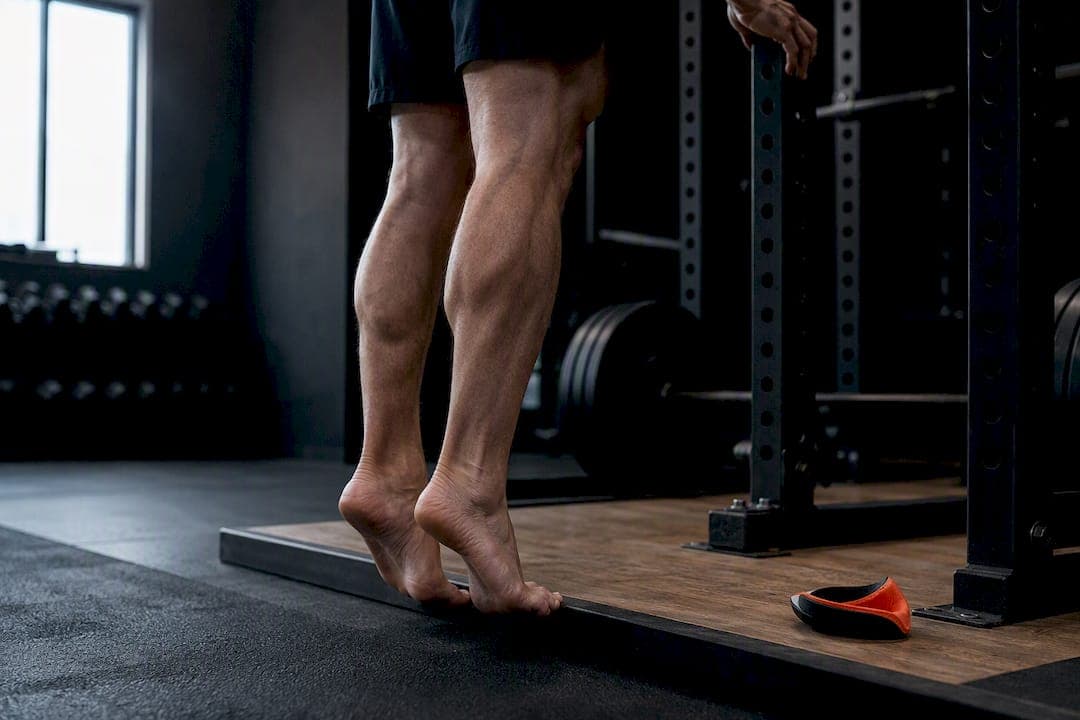
- Calf raises, bodyweight (2 sets of 15): wakes up the calf and Achilles without direct fascia stress.
- Ankle dorsiflexion mobilization against a wall or band (1 to 2 minutes each side): restores range that lifting demands.
- Foot doming or short-foot activation (2 sets of 10 holds): teaches the arch to engage before load hits it.
- Light unloaded walking or bike (3 to 5 minutes): raises tissue temperature before anything heavier.
For support, a prefabricated heel cup or a semi-rigid insole in your daily and gym shoes is a reasonable first step. Custom orthotics help some lifters, but they're not required to start, and the American Podiatric Medical Association treats them as one option among several conservative measures, not a mandatory one.
Athletic tape (a low-dye strapping pattern) can reduce arch strain during a single heavy session, but it's a short-term crutch, not a fix. Skip soft, worn-out training shoes on gym day. Ice for 10 to 15 minutes after training if the fascia feels hot or irritated.
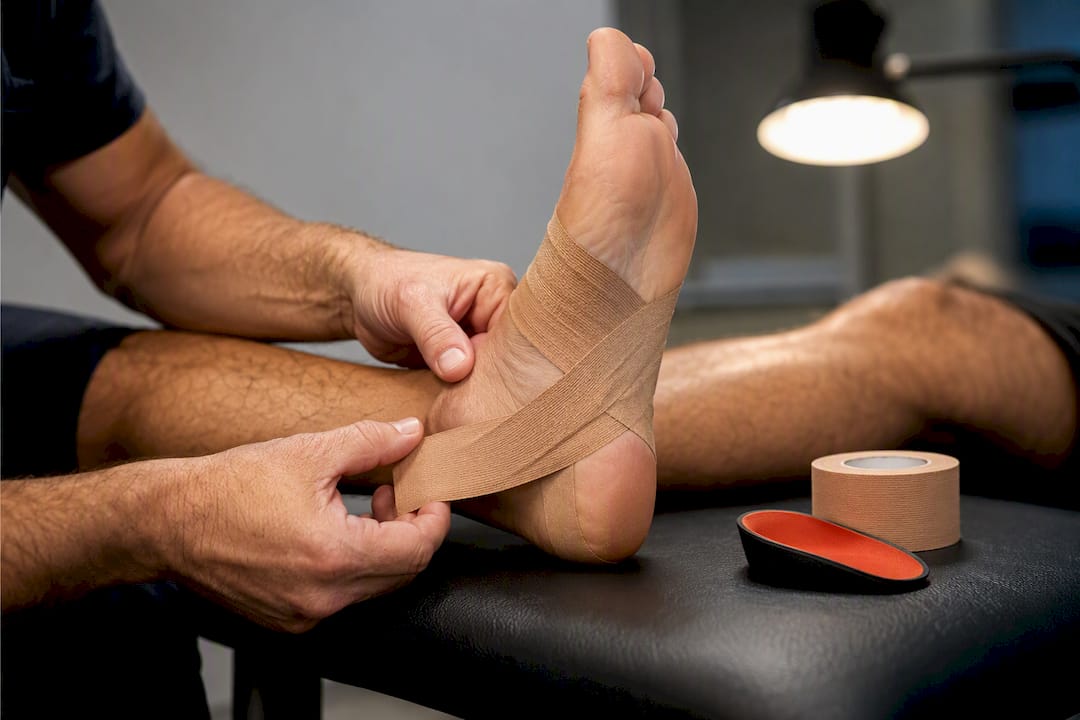
Pro Tip: Keep a heel cup in your gym bag permanently. The lifters who stall out are usually the ones who only remember support on the days it already hurts.
Which Exercises Are Safe, and What Should You Swap Out?
You don't need to abandon strength work. You need to shift where the load lands.
Keep these largely as-is:
- Bench press, seated row, lat pulldown, and machine shoulder press load almost no plantar tissue.
- Seated leg curl, seated calf raise (light to moderate), and leg extension work the lower body without standing impact.
- Core work: planks, cable rotations, and seated ab exercises.
Modify these:
- Swap back squats and lunges for a box-supported split squat or trap-bar squat, which reduce forefoot drive.
- Use partial-range or slow-tempo squats (a 3 to 4 second descent) instead of deep, bouncy reps.
- Push sled work at moderate load instead of sprinting or jumping.
Deadlifts need the most thought. A conventional pull with heels driving hard into the floor can aggravate the calcaneal insertion point. A trap-bar deadlift or sumo stance often feels better because the load path shifts away from the forefoot. Cue yourself to drive the heels down evenly rather than gripping through the toes, and skip max-effort singles until symptoms have settled for at least two consecutive weeks.
Once you're pain-free through a full range of motion for 10 to 14 days, start phasing explosive work back in gradually. Add one plyometric or sprint element per week rather than jumping back into a full program. This mirrors how progressive overload should work anyway: small, tracked increases instead of guessing.
Pro Tip: Don't test your foot with your heaviest lift of the week. Test it with your lightest warm-up set first, and let that tell you whether the heavy set is a good idea.
Does High-Load Strength Training Actually Fix Plantar Fasciitis?
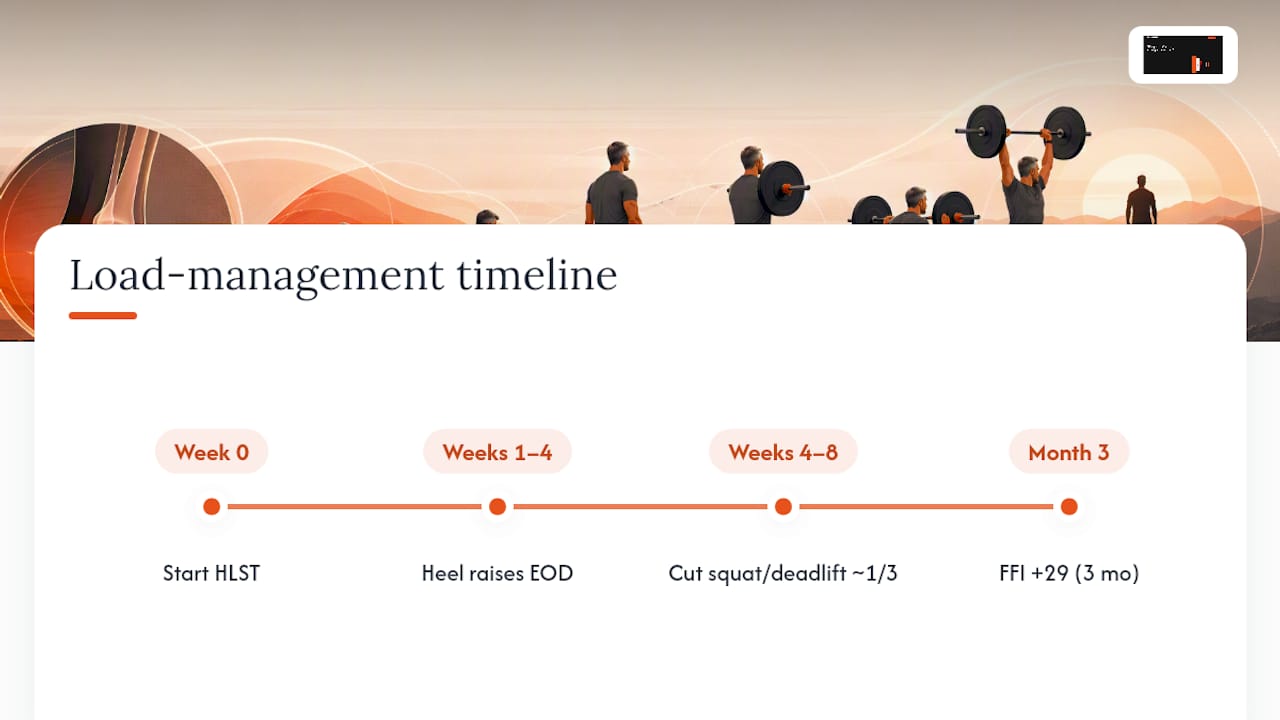
The strongest evidence for exercise-based rehab points to a specific protocol: unilateral heel raises loaded heavy enough to hit roughly 8 reps to near-failure (an 8RM), done every other day.
In the Rathleff et al. trial, patients doing high-load progressive strength training scored 29 points better on the Foot Function Index at 3 months than those doing daily stretching alone (95% CI: 6 to 52; p=0.016). Twelve-month follow-up held those gains.
The practical version: stand on one leg, add a weighted backpack or hold a dumbbell if bodyweight alone doesn't get you to failure by rep 8, and do 2 to 3 sets every other day with a full rest day between sessions. Bilateral calf raises rarely load hard enough to drive this kind of tissue adaptation on their own.
Slot heel-raise days on your lighter lower-body days or full rest days, not right after a heavy squat session, so you're not stacking plantar stress twice in 24 hours. Cut squat and deadlift volume by roughly a third during the first 4 to 8 weeks while HLST ramps up.
A 2023 randomized trial found adding a corticosteroid injection to exercise and a heel cup produced short-term pain relief but no clear long-term advantage over exercise and advice alone. Injections aren't a substitute for the loading protocol above. Talk to your doctor before adding any injection, medication, or supplement to your plan, and never stop a prescribed medication on your own.
Which Shoes Actually Help You Lift Without Flaring Your Heel?
Heel-elevated lifting shoes reduce tension at the Achilles and calcaneal insertion during squats, which can genuinely ease heel-focused pain for some lifters. For others, the same firm heel wedge shifts more pressure into the forefoot and arch, making things worse. There's no universal answer here, only a trial-and-error process worth running carefully.
A two-shoe approach solves most of the guesswork:
- Wear a supportive, cushioned trainer with your heel cup or insole for warming up, walking between stations, and your commute.
- Switch into your lifting shoe only for your heaviest working sets, then change back out.
- For deadlifts, favor a flatter sole or a trap-bar setup, and cue "heels down" rather than gripping through your toes.
- Trial a new shoe on a light day first. If pain shows up within the first two sessions, that shoe isn't the right one for you right now.
This isn't about buying the most expensive shoe on the shelf. It's about matching shoe geometry to what your foot is doing that day.
How Should You Manage Recovery Between Sessions?
Recovery days matter as much as training days when you're managing plantar fasciitis. Skipping them is how a manageable flare turns into a six-week setback.
Build these into your week:
- Daily calf and plantar-strength work, ideally the heel-raise protocol above, spaced every other day.
- Stretching, both calf (gastrocnemius and soleus) and plantar fascia specifically, held 30 seconds each, morning and post-training. A physical therapy resource on rehabilitation stretching covers solid technique cues if you want a refresher.
- Heel cups for most people, moving to custom orthotics only if a prefabricated option isn't cutting it after a few weeks.
- Night splints, if mornings are your worst time of day, since they keep the fascia in a lengthened position overnight.
- Load management, meaning total weekly training volume, not just gym volume. Long walks on hard pavement count against your recovery budget too.
Shockwave therapy shows modest short-term benefit in some studies, and injections behave the same way: useful for a flare, not a long-term plan. Exercise remains the part of your program doing the actual heavy lifting, so to speak.
When Should You Stop Training and See a Clinician?
Stop and get evaluated if you notice pain at rest that keeps getting worse, numbness or tingling in the foot, or an inability to bear weight normally. The same goes for zero improvement after 6 to 12 weeks of consistent exercise, insoles, and load management.
Start with a physical therapist or podiatrist. They may order an ultrasound to rule out a partial tear before discussing anything more invasive. When you describe symptoms, be specific: when pain started, what makes it worse, and what you've already tried. That detail is what lets a clinician skip straight to the right test instead of starting from zero.
An Editor's Take on Lifting Through Plantar Fasciitis
Most gym advice on this topic swings to one extreme or the other: "just rest" or "just push through." Neither respects what the evidence actually shows, which is that progressive, patient loading beats both. If you're over 40, the temptation to either baby an injury forever or ignore it out of stubbornness is real, and both cost you more training time than a boring, consistent heel-raise protocol done for eight straight weeks. Adjust the program. Don't abandon it. And when something doesn't improve on schedule, get it checked instead of guessing longer.
— Iron@40 Staff
How Ironatforty Can Help You Plan Around This
This site is built for lifters figuring out exactly this kind of problem: how to keep making progress when one part of the body needs a different plan than the rest of your program. Our 1RM and TDEE calculators help you recalculate working loads when you're cutting squat or deadlift volume during a flare, so your programming stays intentional instead of guesswork.
Our joints and recovery section covers load management for other common training injuries, and our training resources can help you rebuild a weekly split around the modifications in this guide. None of this replaces a physical therapist or podiatrist. Use it as a planning layer alongside professional care, not instead of it. Start by running your numbers through the 1RM calculator and mapping out which lifts need a lighter week.
This article is general information, not a substitute for advice from a qualified doctor. Consult a qualified healthcare professional about your own circumstances before acting on anything here.
FAQ
Is It Okay to Lift Weights With Plantar Fasciitis?
Yes, for most people. Modify plantar-loading exercises, warm up properly, and use foot support, and strength training can continue alongside recovery rather than being paused entirely.
What's the Worst Thing You Can Do for Plantar Fasciitis?
Ignoring escalating pain and training through sharp, worsening symptoms is the worst move. Complete rest with no exercise at all is also a mistake since trial evidence favors active, progressive loading over inactivity.
What Is Stage 4 Plantar Fasciitis?
There's no universally recognized "stage 4" classification in the clinical literature; plantar fasciitis is generally described by symptom severity and duration rather than a formal numbered staging system. If you've seen this term used, ask your clinician what specific criteria they're applying.
What Finally Cures Plantar Fasciitis?
No single treatment works for everyone, but the strongest evidence supports progressive, high-load calf and foot strengthening over months, not a quick fix. The Rathleff protocol showed durable improvement at 12 months when patients stuck with the loading program.
How Long Does Recovery Usually Take?
Most people notice real improvement within 6 to 12 weeks of consistent conservative care, though full resolution can take longer depending on how long symptoms went unaddressed before treatment started.