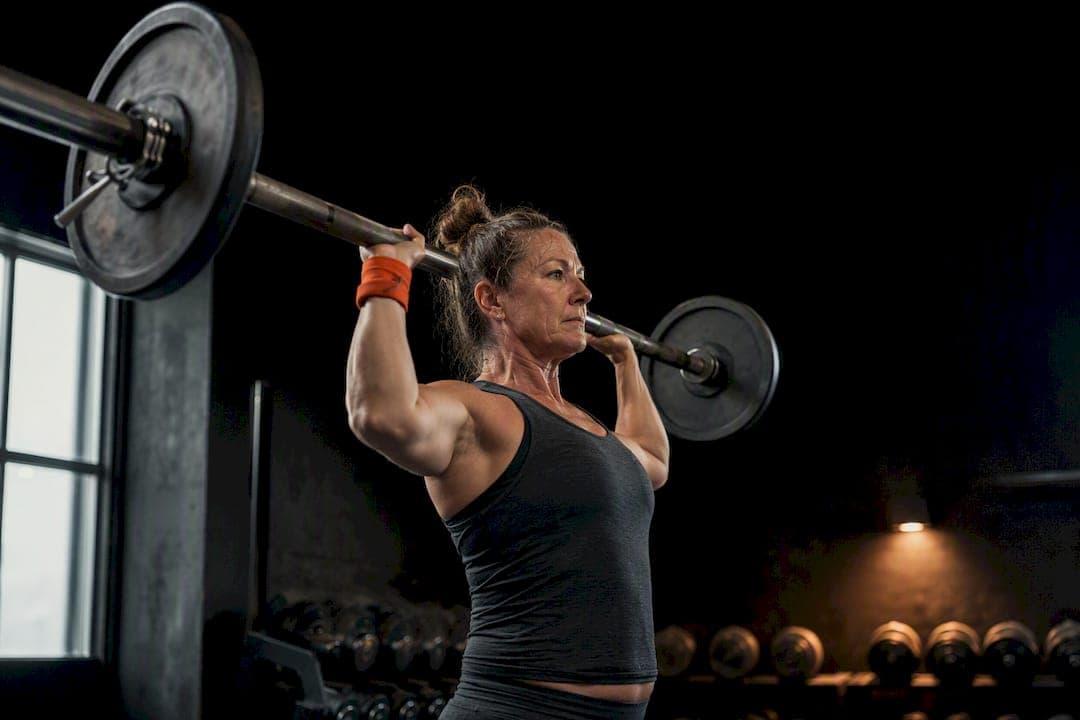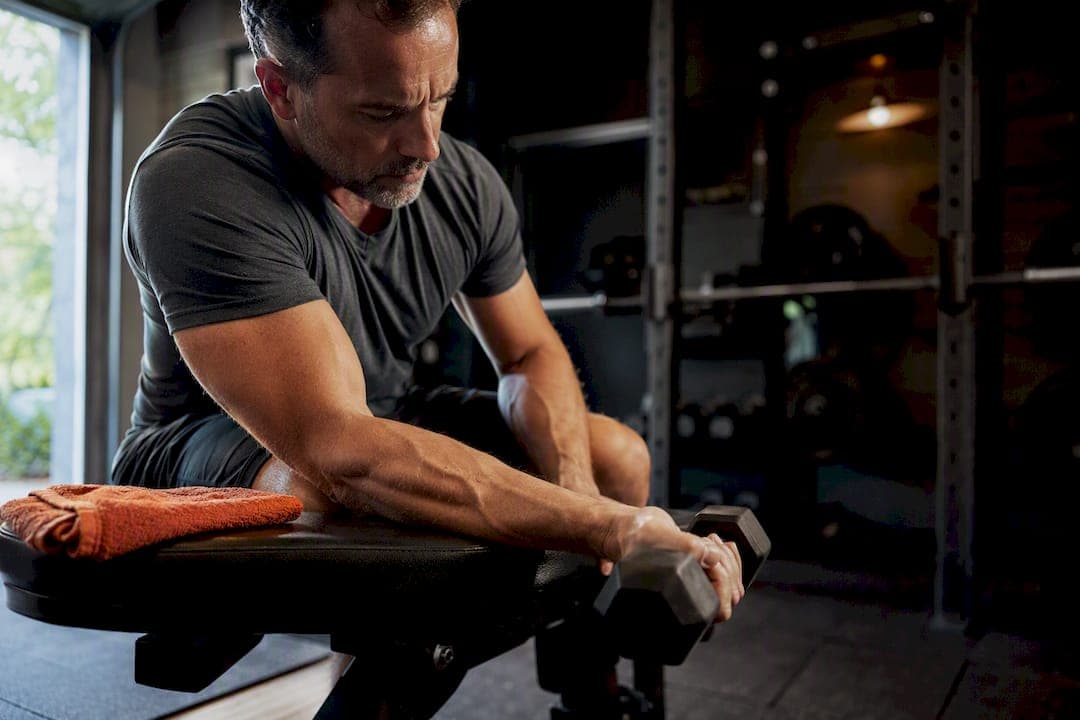
If you lift and want to protect your joints after 40, switch to spine-sparing main lifts, add unilateral accessory work, control your eccentrics, and leave 1 to 3 reps in reserve on most sets. Swap the back squat for a goblet or trap-bar variation, trade the barbell deadlift for a trap-bar pull, and replace the barbell overhead press with a landmine press. Train each pattern 2 to 3 times a week and progress by feel, not ego.
TL;DR:
- Using safer, spine-sparing main lifts like trap-bar deadlifts and goblet squats reduces spinal load and joint irritation after 40.
- Incorporating unilateral work weekly improves muscle balance and stabilizer strength, which helps prevent joint overload and injury.
- Slowing eccentric movements to a controlled 3 to 4 seconds and leaving 1 to 3 reps in reserve on most sets build tendon resilience and reduce joint strain.
- Prioritizing proper warm-up routines and gradual progress, including isometric holds for problematic joints, supports tendon health and joint comfort.
- Replacing risky barbell lifts with variations like landmine presses or band-assisted pulldowns prevents joint flare-ups without sacrificing overall strength gains.
Table of Contents
- Why Joint-Friendly Strength Training Matters After 40
- Core Principles of Joint-Friendly Strength Training
- Joint-Friendly Exercises By Movement Pattern
- How to Fit Joint-Friendly Moves Into Your Existing Routine
- Warm-Up and Tendon Prep Before Heavy Sets
- What to Do When a Joint Flares Mid-Session
- A Sample 4-Week Joint-Friendly Plan (3 Days a Week)
- Why We Push Joint-Friendly Training Over Ego Lifts
- Tools to Track Your Progress While You Protect Your Joints
- Sources
- FAQ
Why Joint-Friendly Strength Training Matters After 40
Your tendons don't fail because you got old. They fail because loading outpaced recovery, and recovery slows down whether you like it or not. Collagen turnover drags, synovial fluid production dips, and the margin between "productive stress" and "irritated joint" gets narrower every year past 40.
That doesn't mean lifting less. It means lifting smarter. A unilateral training program of several weeks produced gains in strength and jump power while shrinking side-to-side imbalances in weightlifters, and a systematic review of unilateral training found similar carryover to single-limb explosive output. Avoidance is the trap. Skip loading altogether and joints stiffen faster than they would under smart, progressive work. The lifters who keep making progress into their 50s are the ones who kept training through their joints, not around them.
Core Principles of Joint-Friendly Strength Training
You don't need a new philosophy. You need five rules you actually follow.
- Pick stable, spine-sparing main lifts. Goblet squats, trap-bar deadlifts, and belt squats (where you have access to the equipment) let you load hard without loading your spine into a compromised position.
- Make unilateral work a weekly habit, not an afterthought. A small number of single-limb movements each week correct the imbalances bilateral lifts tend to hide, and unilateral training forces stabilizer muscles to do real work instead of coasting.
- Slow the eccentric down. A controlled 3 to 4 second lowering phase cuts joint impulse and builds tendon resilience that fast, sloppy reps never will.
- Leave 1 to 3 reps in reserve on most working sets, microload where your gym allows it, and plan a deload every 4 to 8 weeks whether you feel like you need one or not.
- Extend your warm-up. What took you five minutes at 25 should take you closer to ten now, with more ramp sets before your first working set.
Pro Tip: Track your RIR (reps in reserve) in your training log, not just your load. A "heavy" set that leaves you with 0 reps in the tank at 45 is a different risk profile than the same weight at 25, even if the bar weight looks identical on paper.
Joint-Friendly Exercises By Movement Pattern
Every pattern you already train has a safer version that still builds strength. Here's the swap list.
Push:
- Neutral-grip dumbbell press instead of a flat barbell bench, which keeps the shoulder in a more forgiving path.
- Landmine press for overhead work, sparing the shoulder capsule the barbell overhead press often irritates.
- Incline dumbbell press with a slight neutral grip for upper chest volume without wrist strain.
Pull:
- Chest-supported row to strip lower-back involvement out of heavy rowing.
- Single-arm dumbbell row for unilateral pulling volume and core stability demand.
- Band-assisted pulldowns, face pulls, and external rotations as scapular and rotator cuff prehab, done before you ever touch a heavy pulling movement.
Hinge: Trap-bar deadlifts beat conventional pulls for most lifters over 40 because the load path sits closer to your center of mass, cutting spinal shear. Romanian deadlifts, elevated-platform deadlifts, and single-leg RDLs round out hinge work while building the posterior chain that protects your lower back.
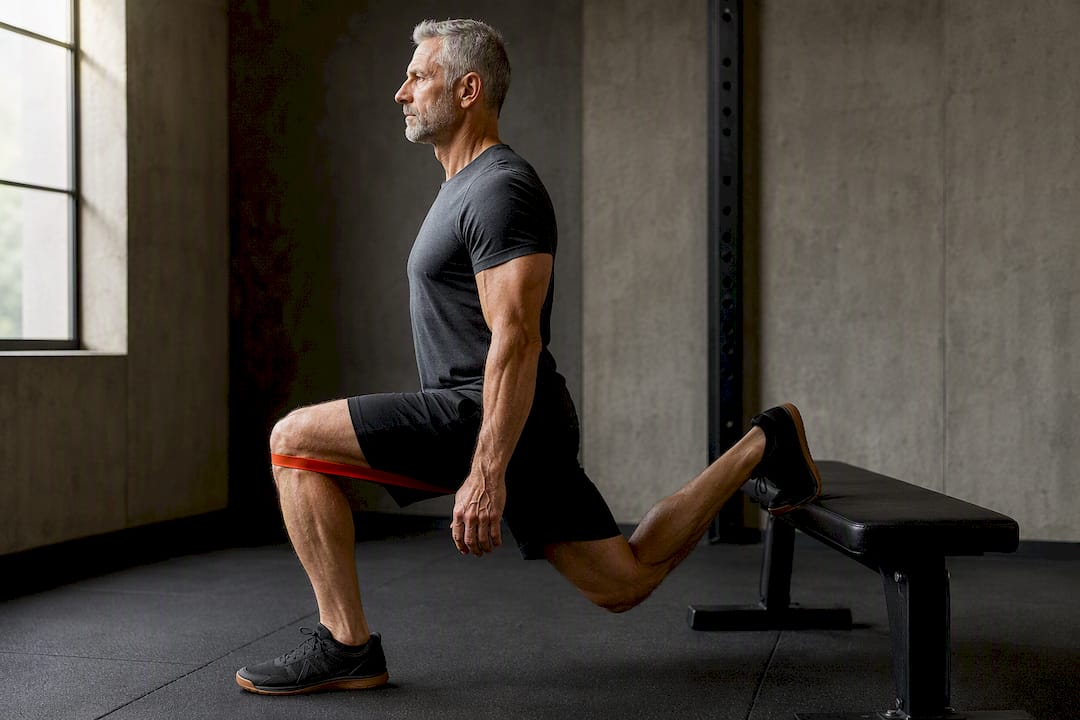
Squat and knee-specific: Goblet squats, box squats, split squats, and step-ups all let you load the quads and glutes without stacking heavy axial load on a cranky knee. Keep the knee tracking over the foot and avoid letting it cave inward under load.
Carries and core: Farmer carries and suitcase carries build grip, trunk stability, and shoulder integrity in one movement. Anti-rotation Pallof presses protect the low back by training it to resist rotation instead of produce it.
Accessory prehab: Glute bridges, banded clamshells, thoracic extensions, and ankle dorsiflexion drills round out a joint-protective accessory block. None of them are glamorous. All of them keep you lifting.
How to Fit Joint-Friendly Moves Into Your Existing Routine
You don't need to rebuild your program from scratch. You need to place these moves correctly.
- Sequence it right. Put light unilateral work in your warm-up as movement prep. Save heavier unilateral accessory work for after your main lift, once your joints are primed but not fatigued.
- Set your sets and reps. Safer main lifts (trap-bar deadlift, goblet squat) run 3 to 5 sets of 3 to 6 reps for strength. Unilateral accessories run 6 to 12 reps for 2 to 4 sets.
- Progress on RIR, not ego. Aim for 1 to 3 reps in reserve on compound work. Add 1 to 2.5 pounds when the bar moves fast, add a rep when it doesn't. Deload every 4 to 8 weeks.
- Apply the swap rule. If a main lift causes pain that persists across two or three consecutive sessions, that's not a "push through it" situation. Replace it with a safer variation until the joint settles.
Warm-Up and Tendon Prep Before Heavy Sets
A rushed warm-up is where most joint flare-ups start. Build yours in three stages: 3 to 5 minutes of low-intensity cardio to raise tissue temperature, 6 to 8 minutes of joint-specific mobility and activation work, then 2 to 4 ramp sets that build toward your working weight.
- Banded external rotations to wake up the rotator cuff before pressing.
- Glute bridge holds (10 to 15 seconds) to activate the posterior chain before hinging or squatting.
- Single-leg balance progressions to prime ankle and knee stability.
- Ankle dorsiflexion drills, especially before squat variations that demand knee travel over the toes.
Tendons respond well to slow, controlled loading. Adding 3 to 5 second eccentrics on select accessory lifts, plus short isometric holds, builds the kind of tendon tolerance that keeps nagging elbow and knee pain from becoming chronic tendinopathy.
Pro Tip: If a joint has been cranky for more than a week, add an isometric hold at the sticking point of that movement, 2 to 3 sets of 20 to 30 seconds, before your normal working sets. Isometrics load tendons without the added strain of a full range eccentric.
What to Do When a Joint Flares Mid-Session
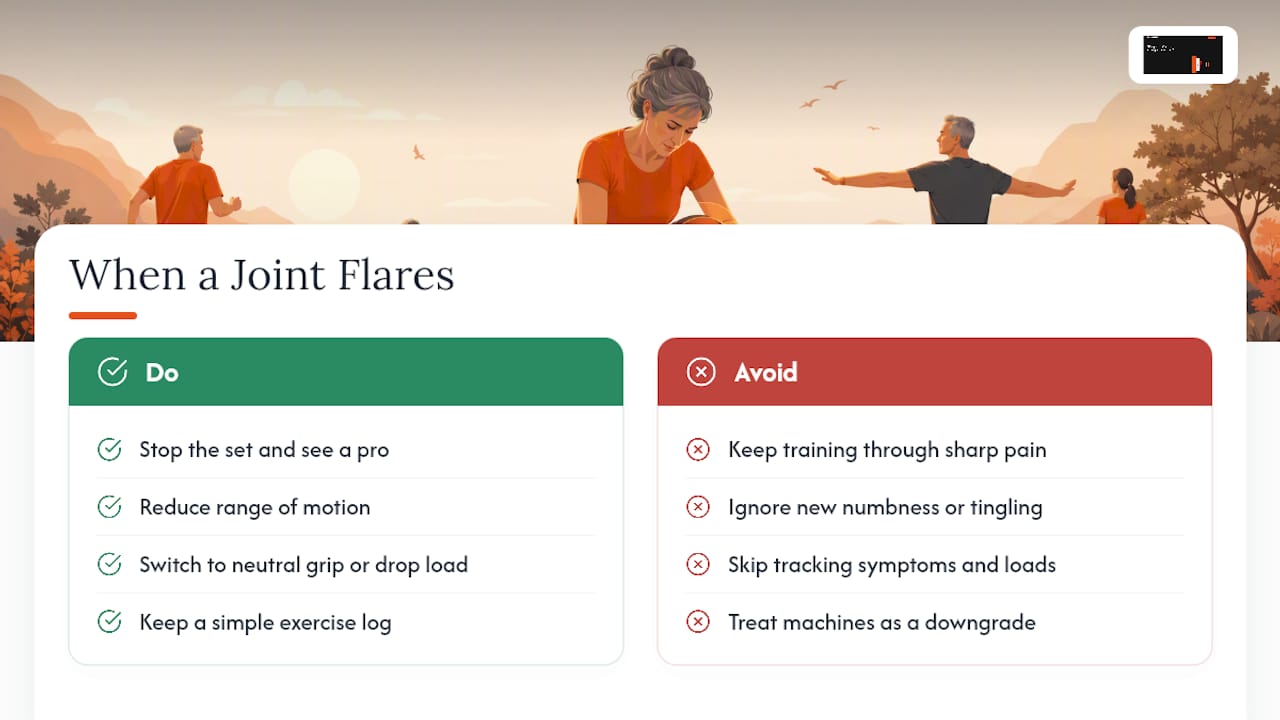
Sharp pain, new swelling, or any numbness or tingling means stop the set and see a professional. That's not a gray area.
Dull ache or stiffness is different. Reduce your range of motion, switch to a neutral grip, drop the load, or move to a single-arm or single-leg version of the same pattern. Machine or chest-supported options are a legitimate fallback, not a downgrade, when a joint needs a break from free-weight instability.
Keep a simple log: exercise, load, range of motion, and symptoms. Patterns show up fast once you're tracking them, and that log is exactly what a physical therapist needs to make sense of a recurring flare instead of guessing at it during a fifteen-minute appointment.
A Sample 4-Week Joint-Friendly Plan (3 Days a Week)
This is a template, not gospel. Adjust loads to your current strength level.
- Day A: Trap-bar deadlift (4 sets of 5), single-arm dumbbell row (3 sets of 10 per side), Pallof press (3 sets of 12 per side), banded external rotations and glute bridge holds as prehab.
- Day B: Goblet squat (4 sets of 6), landmine press (3 sets of 8), split squat (3 sets of 10 per side), ankle dorsiflexion drills and thoracic extensions as prehab.
- Day C: Chest-supported row (4 sets of 8), incline dumbbell press (3 sets of 10), farmer carries (3 sets of 40 yards), banded clamshells and single-leg balance work as prehab.
Add 1 to 2.5 pounds to your main lift each session if you finished with more than 1 rep in reserve. If not, add a rep instead. Cut volume by roughly 30 to 40% in week 4 as a planned deload. If any joint flares mid-cycle, reduce load on the affected lift moderately and keep your tempo and range of motion intact rather than skipping the movement entirely, which matches the practical guidance most coaches give lifters managing a cranky joint. For a longer-term template, see IronAtForty's training programs for adults over 40.
Why We Push Joint-Friendly Training Over Ego Lifts
Sustaining strength for another decade beats chasing a PR that costs you six months of rehab. The swaps in this guide aren't a downgrade. They're what lets a 45-year-old lifter keep adding plates while a 25-year-old peer nurses a shoulder they never learned to warm up properly. Track your numbers, run the calculators, and let the data tell you when to push and when to back off.
— Iron@40 Staff
Tools to Track Your Progress While You Protect Your Joints
Programming around joint protection only works if your recovery and calorie intake actually support it. There are free tools available that many lifters over 40 rarely use because gyms and coaches rarely mention them. Run your numbers through the TDEE Calculator before you cut calories mid-training block, since under-eating while managing a joint issue slows the exact tendon repair you're trying to protect.
Pair that with the 1RM Calculator to set training percentages without maxing out a joint that's still adapting. If you want to go deeper on the topics in this guide, the Joints category covers recovery protocols and specific injury patterns, while the Training section has full programs built around the same spine-sparing, progressive-overload approach. Start with the calculators today and build your next training block around real numbers instead of guesswork.
Sources
Key research includes the unilateral training strength study, the Frontiers systematic review, and Human Kinetics's practical strategies for older lifters.
- Systematic review: effects of unilateral training on explosive performance (2026)
FAQ
Can Lifters Over 40 Still Lift Heavy Safely?
Yes, as long as heavy sets sit on safer main lifts like the trap-bar deadlift or goblet squat and progression follows a reps-in-reserve rule instead of chasing a number on the bar.
How Often Should I Do Unilateral Exercises?
A couple of times a week is enough to correct imbalances and build the stability transfer research on unilateral training has shown, without turning every session into single-limb work.
What's the Best Joint-Friendly Exercise for Bad Knees?
Box squats, step-ups, and split squats let you load the quads and glutes while controlling knee travel far better than a deep, unguided barbell back squat.
When Should I Stop and See a Professional?
Stop immediately if you feel sharp pain, new swelling, or any numbness or tingling. Persistent dull pain across two to three sessions on the same lift also warrants a proper assessment rather than pushing through it.
Do I Need to Give Up Barbell Lifts Completely?
No. Many lifters over 40 use barbell variations selectively, often with partial ranges or elevated starts, while trap-bar and goblet squat work carries most of the heavy training load.