Testosterone replacement therapy (TRT) is an FDA-approved medical treatment for men with clinically confirmed low testosterone caused by specific medical conditions, not a general anti-aging fix or performance booster. The truth about TRT is that most men asking about it do not actually qualify for it under current clinical guidelines. Testosterone prescriptions rose 50% between 2019 and 2024 to 11 million annually, yet a significant portion of those prescriptions lack rigorous diagnostic backing. If you are over 40 and wondering whether TRT is right for you, the answer starts with understanding what the therapy actually does, and what it does not.
What are the proven TRT benefits, and who actually qualifies?
TRT delivers real, measurable benefits. But only for the right people. The clinical standard for diagnosis is a testosterone level below 300 ng/dL confirmed on more than one test, combined with symptoms. A single low reading is not enough.
The Testosterone Trials, one of the largest controlled studies on TRT in older men, produced the clearest picture of what the therapy actually delivers:
- Sexual function: A 40% increase in sexual activity frequency and a 35% improvement in erectile function were observed in men with confirmed hypogonadism.
- Libido: Significant improvement in sexual desire is one of the most consistent findings across TRT research.
- Bone density: TRT supports bone mineral density in men with hypogonadism, reducing fracture risk over time.
- Body composition: Modest reductions in fat mass and small gains in lean mass occur at replacement doses, though these are not dramatic.
Here is what the Testosterone Trials did not show: meaningful improvement in energy, mood, or cognitive function. Those are the benefits most men over 40 are actually chasing. Low energy and fatigue in older adults rarely result solely from low testosterone. Thyroid dysfunction, sleep apnea, insulin resistance, and depression all produce identical symptoms. A doctor who skips a full metabolic workup and jumps straight to TRT is not doing you any favors.
Pro Tip: Before your first TRT consultation, ask your doctor to test thyroid function, fasting glucose, and a full lipid panel alongside your testosterone levels. One number does not tell the whole story.
What are the real TRT side effects and risks?
The cardiovascular question around TRT has dominated medical debate for years. The TRAVERSE trial settled part of it. MACE incidence was 7.0% for TRT users versus 7.3% for placebo, meaning TRT did not significantly increase major cardiovascular events. That is reassuring. But the trial also found increased risks of atrial fibrillation and blood clots. Those findings matter.
Here is a clear breakdown of the known side effect profile:
| Side Effect | What It Means |
|---|---|
| Polycythemia | Elevated red blood cell count; increases clotting risk |
| Atrial fibrillation | Irregular heart rhythm; flagged in TRAVERSE trial |
| Prostate enlargement | Requires PSA monitoring; not confirmed to cause cancer |
| Acne and skin reactions | Topical forms affect up to 37% of users |
| Sleep apnea | TRT can worsen existing sleep-disordered breathing |
| Fertility suppression | Exogenous testosterone shuts down sperm production |
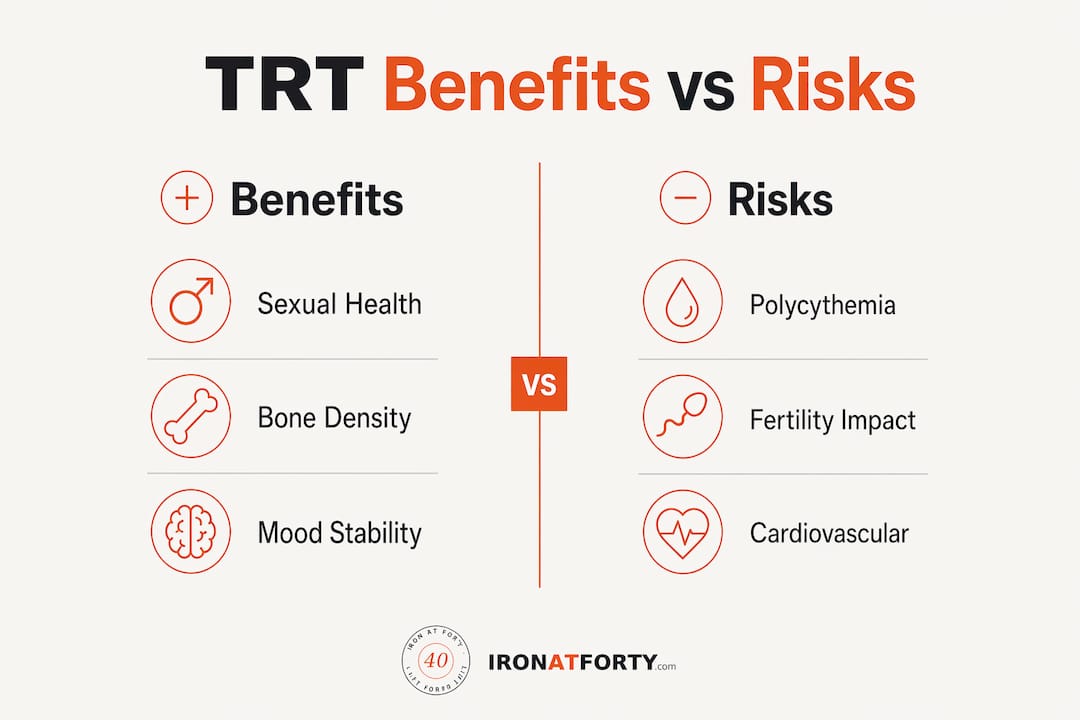
Fertility impact is the side effect most men under 50 underestimate. TRT suppresses the body's natural hormone signaling through the hypothalamic-pituitary-gonadal axis. Sperm production drops significantly, sometimes to zero. If you plan to have children, this is a critical conversation to have before starting.
Real-world long-term TRT safety remains less clear than controlled trials suggest. Controlled studies run for defined periods with selected patients. You are not a controlled study. Cautious patient selection and ongoing monitoring are non-negotiable.
Pro Tip: If you start TRT, schedule blood work every 3 months for the first year. Track hematocrit, PSA, lipids, and blood pressure. Do not wait for symptoms to appear.
Why doctors urge caution and what misconceptions get people in trouble
The biggest misconception about TRT is that it works like a supplement. It does not. TRT is not a supplement or performance enhancer. It is a carefully monitored medical treatment for a specific metabolic condition. Treating it like a wellness upgrade is how people end up in trouble.
Here are the most common misconceptions that lead men and women over 40 astray:
- "My symptoms are enough to start." Symptoms alone do not qualify you. Confirmed low labs plus symptoms are the standard.
- "I can stop whenever I want." Stopping TRT abruptly triggers a suppression crash where natural testosterone production can take 6 to 12 months to recover, often leaving you worse off temporarily.
- "Online clinics are just as good." Up to 25% of new patients start TRT through telehealth platforms without adequate diagnostic workup. Symptom checklists are not labs.
- "Higher doses mean better results." True TRT restores testosterone to the upper normal physiologic range. Optimization doses run 10 to 30 times higher than replacement doses and carry a completely different risk profile.
"Clinical decisions must weigh metabolic markers like bone density and lipid profiles, not just numeric testosterone levels alone, for safe TRT prescribing." — Urology Times
The online clinic problem is real and growing. Many telehealth platforms operate on volume. They use symptom questionnaires, offer quick turnaround, and skip the follow-up monitoring that makes TRT safe. If a clinic does not require repeat labs before prescribing, walk away.
How does TRT affect fitness and health for men and women over 40?
This is where the gym bro mythology collides with clinical reality. At replacement doses, TRT does not build muscle the way supraphysiologic doses do. You are restoring a deficiency, not adding fuel to a fire. The muscle gains you see in before-and-after TRT marketing photos are almost always from high-dose protocols, not standard replacement therapy.
What TRT does deliver for men with confirmed hypogonadism:
- Improved bone mineral density, which matters more after 40 than most people realize
- Modest improvements in lean mass and reduction in fat mass
- Better metabolic function, including improved insulin sensitivity in some cases
- Restored sexual function and libido, which directly affects quality of life
For women, the picture is different. Women produce testosterone in smaller amounts, and low levels can affect libido, mood, and muscle maintenance after menopause. Female TRT is less standardized, carries its own risk profile, and requires a specialist familiar with female hormone physiology. The impact of menopause on strength training is a related issue worth understanding before pursuing hormone therapy.
The most underrated truth about TRT for the over-40 crowd: fitness benefits at replacement doses are modest. A well-designed resistance training program and solid nutrition will move the needle more than TRT alone for most people. TRT is not a substitute for training. It is, at best, a foundation that makes training more effective when a genuine deficiency exists.
If you are experiencing fatigue, low drive, and stalled progress in the gym, rule out overtraining and recovery issues before assuming your testosterone is the problem. The symptoms overlap almost completely.
Key takeaways
TRT is a medically approved treatment for confirmed hypogonadism that delivers proven sexual health benefits but has limited impact on energy, mood, or muscle mass at standard replacement doses.
| Point | Details |
|---|---|
| Diagnosis requires confirmed labs | Testosterone below 300 ng/dL on multiple tests plus symptoms is the clinical standard. |
| Sexual function improves most | The Testosterone Trials showed 40% more sexual activity and 35% better erectile function. |
| Cardiovascular risk is nuanced | TRAVERSE found no increase in major cardiac events but flagged atrial fibrillation and clotting. |
| Stopping TRT carries real risk | Natural testosterone production can take 6 to 12 months to recover after stopping therapy. |
| Lifestyle changes come first | Resistance training and nutrition produce meaningful results without the risks of hormone therapy. |
Jeff's take: what I tell every person over 40 asking about TRT
I have watched the TRT conversation shift from a niche medical topic to a mainstream fitness trend, and that shift worries me. Not because TRT is bad. It is genuinely life-changing for men with true hypogonadism. I worry because most people asking about it have not been properly evaluated, and they are making decisions based on marketing, not medicine.
Here is what I have seen repeatedly: someone over 40 feels tired, their lifts have stalled, and their libido has dropped. They get a single testosterone test, find it is on the lower end of normal, and start TRT through an online clinic. Six months later, they feel better. But they also stopped drinking, started sleeping 8 hours, and hired a coach. Was it the TRT? Maybe. Maybe not.
The honest answer is that most people over 40 have not maxed out what training, nutrition, and sleep can do for their hormones. I am not saying TRT is wrong. I am saying it should be the last tool you reach for, not the first. Get your labs done properly. See an endocrinologist or urologist, not just a telehealth platform. And if you do start TRT, treat it like the medical therapy it is. Monitor everything. Do not skip blood work. Do not assume more is better.
The men and women who get the most out of TRT are the ones who go in with realistic expectations and a solid training and nutrition foundation already in place. TRT does not replace the work. It supports it.
— Jeff
What Ironatforty offers for men and women over 40
If you are over 40 and trying to figure out whether your symptoms come from hormones, training, or nutrition, the answer usually starts with the basics.
Ironatforty publishes science-backed guidance on nutrition after 40, including how to eat for metabolic health, muscle retention, and recovery without needing a personal coach. The site also offers free tools like the TDEE Calculator to help you understand your calorie needs, and training programs built specifically for the over-40 body. Before you commit to a medical protocol, make sure you have the fundamentals dialed in. That is where the real gains live.
FAQ
What testosterone level qualifies someone for TRT?
The clinical standard is a testosterone level below 300 ng/dL confirmed on more than one test, combined with symptoms of hypogonadism. A single low reading is not sufficient for diagnosis.
Does TRT actually build muscle?
At standard replacement doses, TRT produces only modest improvements in lean mass. Significant muscle building requires supraphysiologic doses that carry much greater health risks.
Is TRT safe for long-term use?
The TRAVERSE trial found no significant increase in major cardiovascular events, but flagged elevated risks of atrial fibrillation and blood clots. Long-term real-world safety data is still developing, so ongoing monitoring is required.
What happens if you stop TRT suddenly?
Stopping TRT abruptly causes a suppression crash where the body's natural testosterone production can take 6 to 12 months to recover, often producing worse symptoms temporarily than before treatment began.
Can women use TRT?
Women produce testosterone naturally, and low levels can affect libido and muscle mass, particularly after menopause. Female testosterone therapy is less standardized than male TRT and requires specialist oversight due to a different hormonal and risk profile.