If your hands ache and you still want stronger grip, the safest path is daily gentle mobility work paired with 2 to 3 low-resistance strengthening sessions a week using tools like therapy putty, a soft sponge ball, a rubber band, or an adjustable gripper. During flares, swap movement-based squeezes for isometric holds instead of stopping altogether. Trials on structured hand exercise programs have shown grip strength gains of roughly 25% after just three months, and Ironatforty builds its joint recommendations on that kind of evidence, not gym folklore.
Start today with two moves:
- Tendon glides: slide your fingers through hook, fist, and straight positions, 10 reps, once or twice daily.
- Gentle isometric "C" hold: curl fingers and thumb into a loose "C" shape and hold for 5 seconds, no squeezing motion, 5 to 8 reps.
Stop and call a clinician if pain climbs to 6 to 8 out of 10, swelling comes on fast, or a joint suddenly loses function.
Key Takeaways
Structured, low-resistance grip exercises performed 2 to 3 times weekly, alongside daily mobility work, reliably improve hand strength and function in people with joint pain.
| Point | Details |
|---|---|
| Daily mobility, limited resistance | Do tendon glides and wrist mobility daily; save putty, bands, and grippers for 2 to 3 sessions weekly. |
| Pain sets the ceiling | Keep discomfort at 2 to 3 out of 10 during exercise; stop entirely at 6 to 8 out of 10. |
| Isometrics during flares | Swap squeezing movements for static holds when a flare hits, rather than skipping training altogether. |
| Progress reps before resistance | Add reps first; only increase putty firmness or band tension once reps feel easy. |
| Expect gradual gains | Small function gains show up in 3 to 4 weeks; measurable strength gains take 8 to 12 weeks of consistency. |
Table of Contents
- Grip Strength Exercises for Joint Pain: Step-by-Step Moves
- Flare-Day Rules and When to Modify or Stop
- How Often to Train and What Progress Actually Looks Like
- Equipment That Actually Helps You Train Safely
- What the Research Actually Shows About Hand Exercise and Arthritis
- Build a Grip Routine That Fits Your Whole Training Plan
- Sources
- FAQ
Grip Strength Exercises for Joint Pain: Step-by-Step Moves
These are the exercises clinicians and hand therapists return to again and again, and each one has a specific job. Do them in a warm hand (run it under warm water first) and never push through sharp pain.
- Tendon glides. Trains full finger range without loading the joints. Move from a flat hand to a hook fist, to a full fist, to a straight fist, holding each shape 3 seconds. Common error: rushing through positions instead of holding each one. Do 10 reps, once or twice daily.
- Finger lifts. Builds finger extension strength. Rest your palm flat on a table and lift one finger at a time off the surface. Avoid arching your wrist to compensate. 10 reps per hand, daily.
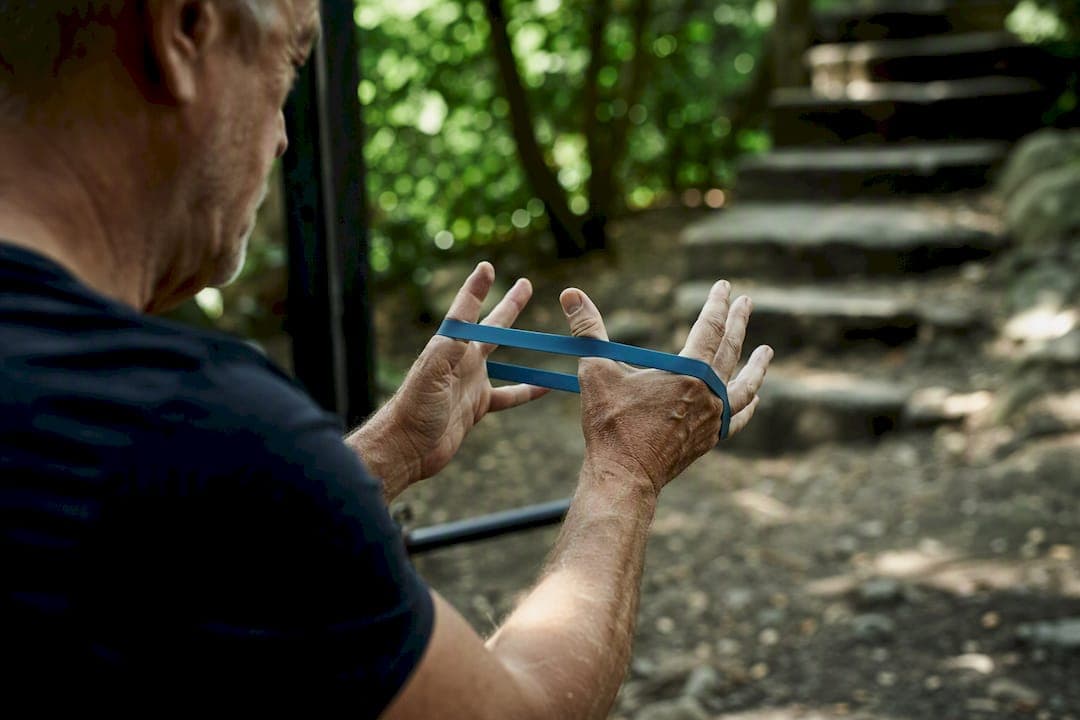
- Finger extension with a rubber band. Strengthens the extensor muscles that oppose gripping. Loop a light band around your fingers and thumb, then open your hand against the resistance. 10 to 15 reps, 3 times weekly.
- Fingertip pinch. Builds pinch strength for tasks like turning keys. Pinch a soft ball or folded cloth between thumb and each fingertip for 5 seconds. 8 reps per finger, 3 times weekly.
- Flat pinch. Trains the pad-to-pad grip used for holding cards or utensils. Press thumb pad against the side of your index finger with light resistance. 8 reps, 3 times weekly.
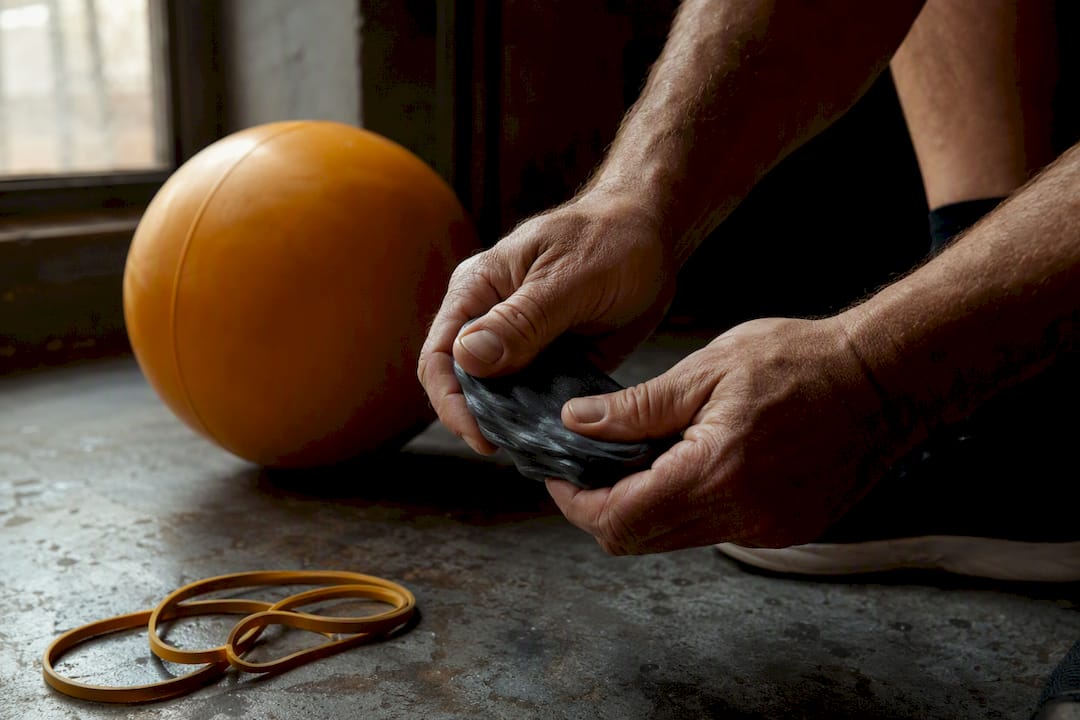
- Power grip with therapy putty. Builds functional grip strength progressively. Squeeze a ball of putty in your full palm, hold 3 to 5 seconds, release slowly. Common error: gripping in short, jerky bursts instead of a controlled squeeze. 10 reps, 3 times weekly.
- Squeeze-and-release with a soft ball. Improves grip endurance with low joint stress. Squeeze a sponge or stress ball gently, hold 3 seconds, release fully. 10 reps, daily on low-pain days, skip during active flares.
- Wrist flexion and extension. Supports grip by stabilizing the wrist that grip muscles rely on. Bend your wrist up and down slowly through a pain-free range, 10 reps each direction, daily.
- Towel wringing. Mimics real-world grip and rotation demand. Hold a small towel with both hands and twist gently in opposite directions. 5 to 8 reps, 3 times weekly, lighter twist during flares.
- Isometric thumb "C" hold. Builds thumb stability without joint movement, ideal during flares. Shape thumb and fingers into a "C" and hold without squeezing, 5 seconds, 8 reps daily.
Modifications: on low-pain days, add reps or move to firmer putty; on flare days, cut reps in half and replace any squeezing motion with a static isometric hold.
Pro Tip: Most people over-train the squeeze and ignore the open-hand motion. Pair every gripping exercise with a finger-extension move using a rubber band. It keeps the small muscles around your knuckles balanced, and unbalanced hands are exactly what feeds thumb and finger joint irritation over time.
Flare-Day Rules and When to Modify or Stop
Pain is your dial, not your enemy. If an exercise causes pain that lasts more than two hours after you stop, that is your signal to scale back next session. During the exercise itself, keep discomfort in the 2 to 3 out of 10 range. Anything above that, especially 6 to 8 out of 10, means stop immediately.
During an active flare, clinical guidance from Cleveland Clinic supports doing non-resistive mobility work daily while holding off on gripping movements that load the joint. Practical swaps that keep you moving without aggravating a flare:
- Replace ball squeezes with static isometric holds (no motion, just gentle tension).
- Switch to a softer putty or a lighter rubber band for a week.
- Cut your normal reps in half and add an extra rest day between sessions.
- Ice the joint for 10 to 15 minutes after sessions if swelling shows up.
See a clinician if pain worsens rapidly, swelling appears out of nowhere, you lose the ability to use the hand for normal tasks, or you notice redness and warmth that could signal infection. If 72 hours of rest and these modifications don't calm things down, that's past the point of self-management.
Pro Tip: Track your pain on a 0 to 10 scale in a note app before and two hours after each session. Patterns show up fast, and that log is more useful to a hand therapist than "my hands hurt sometimes."
How Often to Train and What Progress Actually Looks Like
A realistic weekly plan looks like this: daily tendon glides and wrist mobility (5 to 10 minutes), plus 2 to 3 resistance sessions a week using putty, a soft ball, or a band, capped at 10 to 15 minutes each. That mirrors the frequency used in a two-year strength-training study on hand osteoarthritis, where three resistance sessions weekly raised grip strength by about 1.94 kg and cut pain scores from 4.77 down to 2.62.
Progression follows a simple order:
- Increase reps before you increase resistance.
- Once reps feel easy, move to a firmer putty or a stronger band.
- Never turn resistance days into a daily habit. Heavy gripping every day is how flares get triggered.
Expect small functional gains, easier jar-opening, less morning stiffness, within 3 to 4 weeks. Measurable strength gains tend to show up between 8 and 12 weeks. Benefits fade if you stop, so this becomes a maintenance habit rather than a fixed course. Programs that pair exercise with strength work you already do elsewhere, including training routines built for adults over 40, tend to stick better than isolated hand routines that get forgotten.
Equipment That Actually Helps You Train Safely
You don't need a home gym for this, just a few low-cost tools used the right way.
- Therapy putty: the workhorse for power grip and pinch work. Start with the softest resistance level and only move up once reps feel easy.
- Resistance or rubber band: best for finger extension, the anti-grip work most people skip. Light bands are enough; you're training control, not force.
- Soft stress or sponge ball: ideal for squeeze-and-release reps and for flare days when firmer putty is too much.
- Adjustable hand gripper: useful once your baseline strength improves, but keep tension low and avoid it entirely during a flare.
- Everyday aids: jar openers, padded utensil handles, and thicker-barrel ergonomic pens cut daily joint stress outside of your training sessions.
- A hand therapist may recommend a splint or orthosis for specific joints, particularly the thumb, if daily tasks keep aggravating one spot.
What the Research Actually Shows About Hand Exercise and Arthritis
The clinical picture is consistent: structured programs work, but consistency beats intensity.
- A 3-month randomized controlled trial found a 25% increase in grip strength among participants doing structured hand exercises.
- A two-year follow-up study on resistance training three times weekly showed a 1.94 kg gain in isotonic grip strength alongside meaningfully lower pain scores.
- An 8-week trial combining exercise with functional consultation and assistive-device advice produced better grip strength and satisfaction than routine care alone.
- Shorter 2-month programs using staged exercises and therapy putty have also shown meaningful pain and strength improvements in postmenopausal women.
The practical takeaway: exercise alone helps, but exercise plus functional guidance, and sometimes an assistive device, tends to outperform exercise in isolation. Progression should stay individualized rather than following a rigid one-size formula.
Ironatforty's Take on Training Hands Like You Train Everything Else Over 40
Your hands respond to the same rule as every other joint after 40: gradual, boring consistency beats occasional heroics, as explained in this upper body strength starter plan. One aggressive gripper session a week does less for you than five minutes of putty work most days. Ironatforty covers joint training the way we cover everything else, backed by evidence, built for the long haul, and better when paired with real clinician input when pain doesn't budge.
Build a Grip Routine That Fits Your Whole Training Plan
Hand rehab doesn't happen in a vacuum. If your wrists and forearms are cranky, the rest of your training likely needs a look too. Ironatforty's joint training and recovery resources cover how to keep lifting and moving without flaring vulnerable joints, and our free training and nutrition tools can help you plan sessions that respect recovery windows instead of guessing at them. If you're rebuilding a full training routine around joint limits, our TDEE calculator is a solid place to start dialing in recovery-supportive nutrition alongside your hand work.
Sources
- Randomized controlled trials: structured hand exercise programs improve grip strength and function (PMC6513509)
- The effects of strength training among persons with hand osteoarthritis: a two-year follow-up study (PubMed 17658418)
- 16 hand and wrist exercises to help ease arthritis pain (Cleveland Clinic)
Consult a clinician or hand therapist for a plan tailored to your specific joints and diagnosis.
This article is general information, not a substitute for advice from a qualified doctor. Consult a qualified healthcare professional about your own circumstances before acting on anything here.
FAQ
How can you improve grip strength if you have arthritis?
Combine daily non-resistive mobility work, like tendon glides, with 2 to 3 weekly sessions of low-resistance strengthening using therapy putty, a soft ball, or a rubber band, and let pain guide how hard you push.
Can you do strength training with joint pain?
Yes, as long as you use lighter resistance, keep sessions to about 10 to 15 minutes, and stick to roughly three sessions a week rather than daily heavy loading.
Does grip strength training cause arthritis?
No.
What is the two-hour pain rule for arthritis?
If an exercise causes pain that lasts longer than two hours after you finish, it was too much for that joint that day, and you should reduce reps or resistance next session.
When should you see a doctor about hand joint pain?
See a clinician if pain rises to 6 to 8 out of 10, swelling appears suddenly, you lose normal hand function, or symptoms don't improve after 72 hours of rest and modified activity.