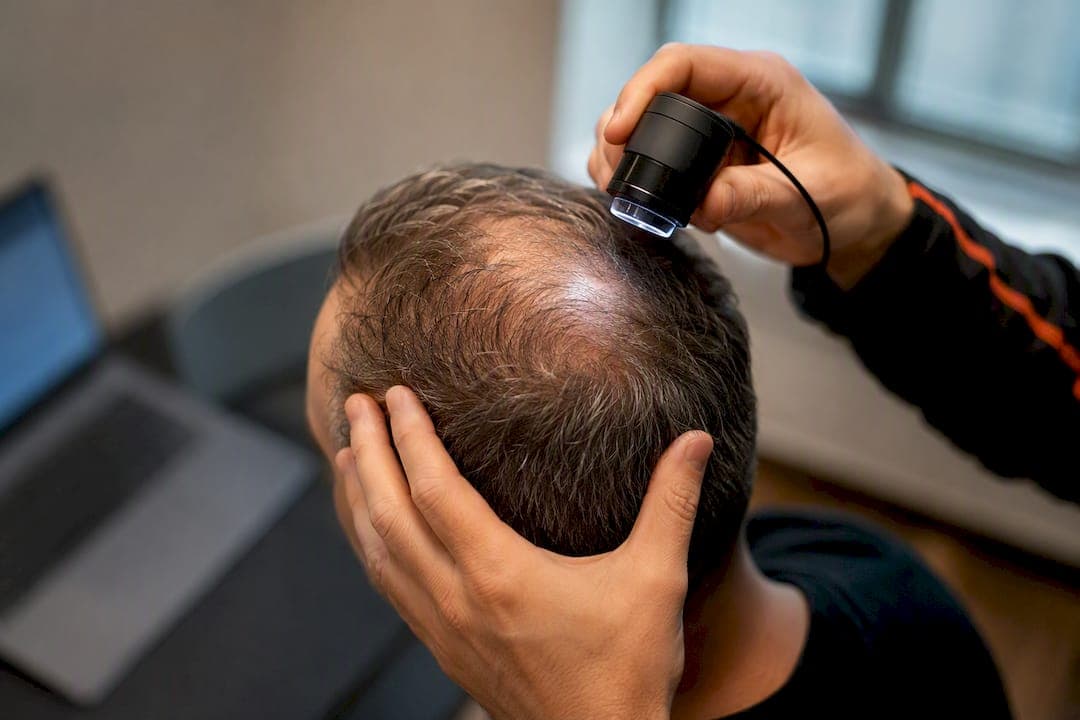
The best trial evidence available shows creatine does not cause hair loss in healthy adults. A 12-week randomized controlled trial found no significant changes in DHT, the DHT to testosterone ratio, or direct hair measurements between men taking a moderate daily dose of creatine and those on placebo. If you already have thinning hair or a strong family history of pattern baldness, it's worth discussing with your doctor, but this alone shouldn't deter you from considering creatine.
TL;DR:
- The 12-week randomized controlled trial found no significant changes in hair density, follicle count, or DHT levels in men taking a standard creatine dose.
- The 2009 study’s hormone increase was not linked to actual hair loss, as no scalp assessments or hair measurements were conducted.
- Genetic factors remain the primary cause of pattern baldness, unrelated to creatine supplementation, especially at typical maintenance doses.
- Long-term effects of creatine on hair are still being studied, with current evidence showing no short- or medium-term risk.
- Use certified creatine products at 3 to 5 grams daily, and consult a doctor if noticing hair thinning, especially with a family history of baldness.
Table of Contents
- Does Creatine Hair Loss Actually Show Up in the Research?
- How the 2009 Study and Gym Lore Created a Lasting Myth
- Who Is Actually at Risk for Hair Thinning?
- If You Notice Thinning While Taking Creatine, Do This
- Getting Dosing and Supplement Quality Right
- An Editorial Take on Creatine, Hair, and Lifters Over 40
- Tools and Resources to Help You Decide
- Sources
- FAQ
Does Creatine Hair Loss Actually Show Up in the Research?
The strongest data point we have is a randomized, double-blind, placebo-controlled trial published through PubMed Central. Researchers recruited 45 resistance-trained men, 38 of whom completed the full protocol, and split them into a creatine group (a moderate daily dose) and a placebo group for 12 weeks. This is the design that matters most for answering "does creatine cause hair loss": it measured hair directly, not just a hormone proxy.
Researchers tracked hair density, follicular unit count, and cumulative hair thickness alongside DHT and the DHT to testosterone ratio. After 12 weeks, there were no group by time interactions for either the hormone markers or the hair outcomes. In plain terms: the creatine group's hair looked no different from the placebo group's hair, and their hormone levels tracked together too.
That's a meaningfully different approach than the study most people cite when they worry about creatine and balding. The 2009 study on rugby players, covered in the next section, measured DHT and stopped there. It never looked at a single hair follicle.
A few limits are worth naming plainly:
- The trial ran 12 weeks, which tells you about short to medium-term effects, not what happens after two or three years of continuous use.
- Participants were resistance-trained males in a fairly narrow age range, so the data doesn't directly speak to women or to men well past 40.
- Longer studies are underway. Clinicaltrials is tracking androgens and hair outcomes over six months, which should sharpen the long-term picture.
12-week RCT snapshot: a standard daily creatine dose versus placebo, 38 completers, no significant difference in DHT, DHT-to-testosterone ratio, or direct hair measurements.
The same trial also reported no changes in creatinine or eGFR, the standard kidney function markers, over the 12-week period. That's a useful secondary finding for anyone who's heard the separate myth that creatine wrecks your kidneys at normal doses.
How the 2009 Study and Gym Lore Created a Lasting Myth
Nearly every article, forum post, or gym conversation about creatine and balding traces back to one small study on college-aged rugby players from 2009. The researchers used an aggressive loading protocol, roughly 25 grams a day for a week, then a lower maintenance dose, and found serum DHT rose over three weeks.
Here's the part that gets lost every time this study gets repeated as proof: it never measured hair loss. No scalp photos, no density counts, no follicle assessments. It measured a hormone and stopped.
DHT is the hormone implicated in androgenetic alopecia, so a DHT increase sounds alarming on its face. But a hormone shift on a blood panel is a much weaker piece of evidence than a direct measurement of your actual hair. It's the difference between someone telling you your risk went up and someone actually checking whether anything changed.
A few reasons this myth had such staying power:
- The loading dose used was five times higher than what most people actually take for maintenance.
- The finding has never been replicated in a follow-up study.
- Gym forums, short-form fitness videos, and secondhand advice repeated the DHT finding as if it equaled confirmed hair loss.
Sixteen years of anecdote can outrun one hormone data point pretty easily, especially when nobody circles back to the source study's actual methods.
Who Is Actually at Risk for Hair Thinning?
Genetics run the show here. Androgenetic alopecia, the technical term for male and female pattern hair loss, is driven primarily by family history and your individual sensitivity to androgens, not by what's in your protein shake. If your father and grandfather both thinned out by 50, that risk exists whether or not you ever touch a creatine tub.
Medical News Today's summary of the evidence lines up with the Cleveland Clinic's position: the data linking creatine to hair loss is thin and inconclusive, while genetics remain the dominant driver of pattern baldness in both men and women.
Other common contributors to thinning hair that have nothing to do with supplements include:
- Chronic stress or a recent illness, which can trigger temporary shedding called telogen effluvium.
- Nutritional gaps, particularly low iron or inadequate protein.
- Thyroid dysfunction, which can show up as diffuse thinning rather than a receding hairline.
- Certain medications, including some blood pressure drugs and antidepressants.
For lifters over 40, this list matters even more. Hormone shifts around this age are already happening for reasons that have nothing to do with your supplement stack.
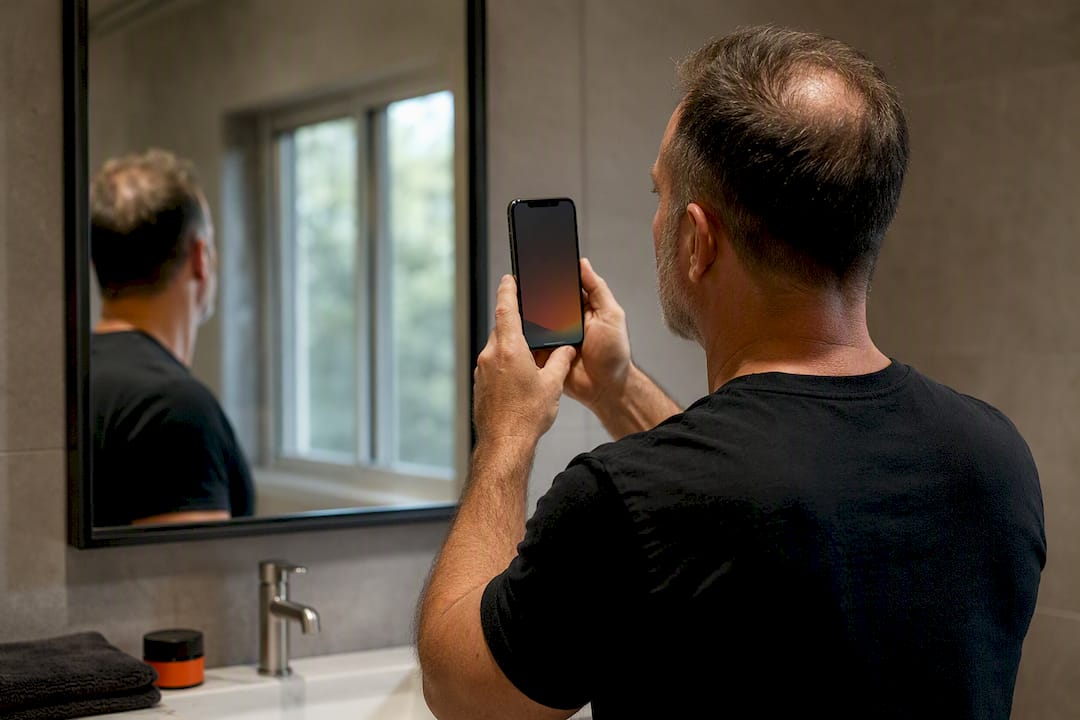
Pro Tip: Take a well-lit photo of your hairline and crown once a month, same lighting, same angle. Memory is unreliable for gradual change. A photo timeline is the fastest way to tell the difference between real thinning and normal seasonal shedding.
If You Notice Thinning While Taking Creatine, Do This
Don't panic and don't just quit cold on a hunch. Work through it methodically:
- Document what you're seeing. Compare recent photos against older ones. A gradual widening part or a receding hairline is different from sudden, patchy shedding.
- Talk to your doctor before you change anything. Cleveland Clinic specialists recommend consulting a physician, especially if you have a family history of pattern baldness or existing hormone concerns.
- Ask about bloodwork. A doctor may order a testosterone panel, thyroid function tests, or ferritin (iron storage) levels to rule out the more common, non-creatine causes.
- Get a referral if needed. If bloodwork points toward a hormone or thyroid issue, a dermatologist or endocrinologist can dig deeper and discuss options.
If pattern hair loss is confirmed, clinicians commonly discuss topical minoxidil or prescription oral medications as management options. Never stop a prescribed medication on your own to test whether it's causing hair changes. That's a conversation for your doctor, not a personal experiment.
Low-dose oral minoxidil requires medical supervision: it can cause fluid retention, a faster heart rate, and lowered blood pressure, so clinicians typically monitor blood pressure and ask about heart conditions before prescribing. It is not recommended during pregnancy or breastfeeding. Discuss these risks with a physician before starting.
Getting Dosing and Supplement Quality Right
Skip the loading phase drama entirely. Trial-proven maintenance dosing is 3 to 5 grams of creatine monohydrate per day, and that's the dose used in the 12-week RCT that found no hair or hormone effects. The high-dose loading protocols you'll see floating around, including the one used in the 2009 study, aren't necessary for most lifters and add cost without clear benefit.
Product quality matters more than most people realize. The FDA doesn't preapprove supplement contents before they hit shelves, so contamination or mislabeling is a more realistic risk than the creatine molecule itself. Look for products carrying NSF Certified for Sport or Informed Choice seals, which verify the label matches what's actually in the tub.
- Stick to 3 to 5 grams of stabilized creatine monohydrate daily.
- Choose a brand with third-party testing certification.
- Splitting your dose may help with stomach upset.
Pro Tip: If you're switching brands after years on one product, that timing overlap with any hair change is worth mentioning to your doctor, since it rules supplement quality in or out as a variable.
An Editorial Take on Creatine, Hair, and Lifters Over 40
Creatine remains one of the best-supported supplements for strength, muscle retention, and recovery as you age, and the hair loss fear doesn't hold up against the strongest trial we have. Our stance: keep taking it if it's working for you, but be conservative if you're anxious. Document your hairline, stick to 3 to 5 grams of a certified product, and loop in your doctor if your family tree includes early baldness. Pair that with a solid nutrition foundation and you're covering your bases.
— Iron@40 Staff
Tools and Resources to Help You Decide
You don't have to guess your way through this. If you're weighing creatine against hair concerns, a few Ironatforty resources can help you track the variables that actually matter.
Ironatforty exists because lifters over 40 deserve science-backed answers instead of recycled gym-bro warnings, and that's exactly what separates this from a generic supplement blog. Our nutrition hub breaks down protein targets and supplement basics without the hype, while the TDEE calculator helps you track body composition changes so you can rule out diet as a confounder if you notice any physical changes while supplementing. If you're managing joint recovery alongside your lifting, our joint health resources round out the picture. And if hair thinning runs in your family and you want to understand cosmetic options beyond supplements, Enhanced Scalp Micropigmentation's guide on receding hairlines covers non-surgical approaches worth knowing about. Start with the nutrition hub, run your numbers through the TDEE calculator, and talk to your doctor if you're still concerned.
This article is general information, not a substitute for advice from a qualified doctor. Consult a qualified healthcare professional about your own circumstances before acting on anything here.
Sources
- Does creatine cause hair loss? A 12‑week randomized controlled trial — PMC
- Does Creatine Cause Hair Loss? — Cleveland Clinic
- Three weeks of creatine monohydrate supplementation affects DHT:T ratio — ResearchGate (van der Merwe et al., 2009)
FAQ
Will My Hair Grow Back If I Stop Taking Creatine?
If creatine wasn't the actual cause of your thinning, stopping it won't reverse anything. The 12-week trial found no hair changes tied to creatine use, so hair loss in a creatine user is more likely explained by genetics, stress, or another medical factor your doctor can help identify.
Why Do Some Doctors Caution Against Creatine?
Most caution isn't about hair. It's usually about existing kidney disease, dehydration risk during heavy training, or interactions with other medications, which is why talking to your doctor before starting is worth doing regardless of hair concerns.
Is Creatine Good for Hair?
Creatine has no established benefit or harm for hair specifically. The evidence shows it's neutral on hair outcomes; its real value is in muscle strength, power output, and recovery.
What Happens After One Month of Creatine Use?
Most users notice improved strength and gym performance within the first few weeks as muscle creatine stores saturate, typically using 3 to a moderate daily dose. The 12-week RCT found no detectable hair or hormone changes at this dose, so one month is far too short a window to expect any hair-related shift either way.