
Tracking training progress effectively is the systematic recording and analysis of strength, volume, and body composition metrics to drive continuous improvement and prevent plateaus. After 40, your body responds differently to training stress. Recovery takes longer, hormonal output shifts, and the margin for wasted effort shrinks. You need data, not guesses. Consistently tracking workouts makes individuals 2.5 times more likely to meet long-term fitness goals. That number tells you tracking is not optional. It is the mechanism that separates lifters who keep progressing from those who spin their wheels for years.
How to track training progress effectively: the metrics that matter
The foundation of effective progress tracking is knowing which numbers to watch. Not every metric deserves daily attention. The right ones give you an early signal before your body visibly changes.
Volume load is your primary performance metric. Calculate it as sets multiplied by reps multiplied by weight. If you squatted 185 pounds for 3 sets of 8 last week and hit 3 sets of 9 this week, your volume load increased. That is measurable progress, even if the mirror shows nothing yet.

Estimated 1RM (e1RM) is the other number worth tracking every session. You calculate it from your working sets using formulas like Epley or Brzycki, available in tools like the Ironatforty 1RM Calculator. The advantage over actual max testing is safety. You never need to grind a true one-rep max to know your strength is climbing.
Here are the core metrics to monitor:
- Volume load per session and per week: Tracks total training stress and progressive overload
- Estimated 1RM on key lifts: Measures strength gains without risky max attempts
- Reps in Reserve (RIR): Logs how close to failure you trained, giving context to your numbers
- Body weight (weekly average): Use a 7-day rolling average, not daily readings
- Body fat percentage: DEXA every 8–12 weeks is the gold standard; tape measurements and progress photos fill the gaps between scans
- Subjective metrics: Energy level, sleep quality, and mood on a 1–10 scale each session
Strength PRs often show adaptation before physical changes appear in measurements or photos. This matters enormously after 40. Body composition shifts slowly. Performance shifts faster. If you wait for the mirror to confirm progress, you will quit before the data catches up.
Pro Tip: Log your subjective energy score at the start of every session. A pattern of scores below 5 for two or more consecutive weeks is a direct signal to reduce training load before performance tanks.
Which tools are best for consistent training data?
The best tracking tool is the one you will actually use every session. Complexity kills consistency. Start simple and add layers only when your current system stops giving you useful information.
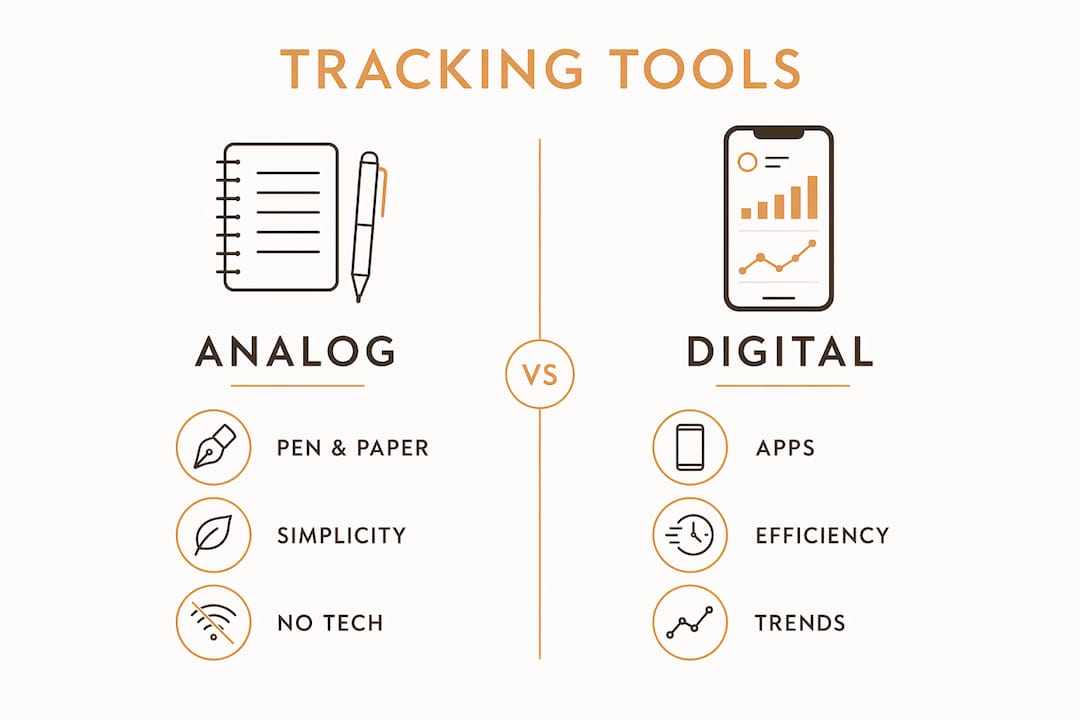
Here is a practical comparison of the main options:
| Tool | Best For | Limitations |
|---|---|---|
| Pen-and-paper log | Simplicity, zero tech friction | Hard to spot trends, no calculations |
| Spreadsheet (Google Sheets, Excel) | Custom tracking, easy trend charts | Requires manual setup and discipline |
| Apps (Setgraph, Strong, MuscleTechnics) | Automated volume load, e1RM tracking | Learning curve, subscription costs |
| Velocity-based training devices (GymAware, Push Band) | Sensitive strength detection without max testing | Expensive, overkill for most home lifters |
| DEXA scan | Precise body composition data | Costly, not available everywhere |
Velocity-based training deserves a specific mention for lifters over 40. Velocity-based metrics detect strength changes of 2–3% without the risk of maximal testing. That sensitivity matters when you are managing joint health alongside performance. You do not need a GymAware unit to benefit from this concept. Simply tracking bar speed perception (fast, moderate, slow) on a consistent load gives you a rough proxy.
For body composition at home, use a flexible tape measure at the waist, hips, and upper arm every two weeks. Combine that with front and side photos in consistent lighting. These are free, repeatable, and surprisingly reliable when you stay consistent with conditions.
Your review rhythm matters as much as your tools. Think in layers: log every session, review weekly trends, assess monthly patterns, and do a full program evaluation quarterly. Daily obsession over numbers creates noise. Weekly review creates signal.
Pro Tip: Start with a basic app or notebook for sets, reps, and weight. Add e1RM tracking after four weeks. Add body composition tracking after eight weeks. Stacking everything at once is how people quit tracking entirely.
How do you analyze data and break through plateaus?
Data without interpretation is just noise. The goal is to spot stagnation early and respond with the smallest effective adjustment, not a complete program overhaul.
The clearest plateau signal is an e1RM that stops climbing. If your e1RM stalls across three consecutive sessions, you have plateaued. That is the trigger to act, not the vague feeling that training feels hard.
When you hit a plateau, follow this adjustment hierarchy before changing anything major:
- Add weight. Even 2.5 pounds on the bar counts as progressive overload.
- Add reps. If you hit the top of your rep range, increase load next session.
- Add a set. Increase weekly volume by one working set on the stalled lift.
- Vary the exercise. Swap a barbell squat for a safety bar squat or a front squat to break the pattern.
- Take a deload. Cut intensity by 40–50% for one week to clear accumulated fatigue.
Deload weeks every 4–6 weeks prevent burnout and stagnation. After 40, fatigue accumulates faster and dissipates slower than it did at 25. Skipping deloads does not make you tougher. It makes your data worse because you are training fatigued and misreading the numbers.
Tracking is about managing fatigue and recovery as much as it is about measuring performance. If performance and energy decline for two or more consecutive weeks, reduce your training load before the plateau becomes an injury.
Your subjective metrics feed directly into this analysis. If your energy scores drop below 5 for two weeks straight and your e1RM is flat, that is a fatigue problem, not a programming problem. The fix is rest, not a new routine. This is where lifters over 40 gain a real edge if they track honestly. The data tells you what your ego will not.
What mistakes kill progress tracking after 40?
Most tracking failures come down to a handful of predictable errors. Knowing them in advance saves months of frustration.
- Obsessing over daily scale weight. Body weight fluctuates by 2–4 pounds daily based on water, food, and sleep. A rolling weekly average eliminates this noise and prevents premature program changes based on meaningless single-day readings.
- Guessing previous weights and reps. Without a training log, applying progressive overload is impossible. If you cannot remember what you lifted last Tuesday, you cannot beat it this Tuesday. Log everything, every time.
- Ignoring sleep and recovery data. Sleep quality is a direct input to performance. Tracking it alongside training data reveals patterns that pure performance metrics miss. Poor sleep for three nights explains a bad session better than any programming flaw.
- Changing programs too soon. Most lifters over 40 switch programs the moment progress slows, which is exactly the wrong time. Trend data over four or more weeks tells you whether a plateau is real or just short-term noise. Trust the trend, not the session.
- Tracking too many metrics at once. Overly complex tracking causes overwhelm and dropout. Pick three to five metrics, master them, and expand only when you have a specific question your current data cannot answer.
The goals need numbers principle applies here directly. Vague tracking produces vague results. Specific, consistent logs produce specific, actionable insights.
Pro Tip: Review your training log once a week, not after every session. Weekly review gives you enough data to spot real trends without the emotional reaction that comes from staring at a single bad workout.
Key takeaways
Tracking training progress effectively after 40 requires consistent logging of volume load and e1RM, weekly trend analysis, and fatigue-aware adjustments rather than reactive program changes.
| Point | Details |
|---|---|
| Volume load is your core metric | Track sets × reps × weight every session to measure progressive overload objectively. |
| e1RM signals plateaus early | Three consecutive stalled sessions is your trigger to adjust, not a vague feeling of stagnation. |
| Body composition lags performance | Strength PRs appear weeks before physical changes, so prioritize performance data first. |
| Deload every 4–6 weeks | Cutting intensity by 40–50% for one week clears fatigue and restores upward progress trends. |
| Rolling averages beat daily readings | Use a 7-day average for body weight and subjective scores to eliminate misleading noise. |
What 10 years under the bar taught me about tracking
I spent the first few years of lifting after 40 doing what most people do. I trained hard, felt like I was working, and had almost nothing to show for it in terms of measurable progress. The problem was not effort. The problem was that I had no data. I was guessing weights, skipping logs, and changing programs every six weeks when results felt slow.
The shift happened when I started treating my training log the way a business owner treats a spreadsheet. Every session logged. Every trend reviewed weekly. Every plateau addressed with a specific, small adjustment rather than a complete overhaul.
Here is the uncomfortable truth: progressive overload is the only mechanism that builds muscle after 40. And you cannot apply progressive overload without knowing what you lifted last time. Full stop. The log is not a nice-to-have. It is the whole game.
What surprised me most was the mental benefit. Seeing objective data showing that my squat e1RM climbed 15 pounds over 12 weeks, even when the mirror looked the same, kept me consistent through the slow periods. That is the part nobody talks about. Tracking gives you evidence against your own doubt.
If you are over 40 and training after 40 feels different, it is because it is different. Your recovery window is narrower. Your fatigue accumulates faster. Tracking is not just about chasing PRs. It is about knowing when to push and when to back off. That judgment call, made with data instead of ego, is what keeps you in the game for decades.
Start simple. Log the basics. Review weekly. Adjust based on trends. That is it.
— Jeff
Tools that make tracking easier at Ironatforty
Ironatforty builds free tools specifically for lifters over 40 who want data without complexity.
The 1RM Calculator estimates your max lift from any working set, so you can track e1RM trends without ever grinding a dangerous true max. The TDEE Calculator gives you a calorie baseline that supports body composition tracking alongside your strength data. Both tools are free, require no signup, and take under two minutes to use. Head to the Ironatforty free tools page to run your numbers and give your tracking system a concrete foundation to build on.
FAQ
How often should i review my training data?
Log every session, review weekly trends, and do a full program assessment monthly. Daily review creates emotional noise; weekly review creates useful signal.
What is the fastest way to detect a strength plateau?
Track your estimated 1RM each session. Three consecutive sessions with no improvement on the same lift confirms a plateau and signals time to adjust volume, intensity, or exercise selection.
Is body weight a reliable progress metric after 40?
Body weight alone is unreliable. Use a 7-day rolling average combined with tape measurements and progress photos every two weeks for a clearer picture of body composition changes.
Do i need an app to track training progress effectively?
No. A notebook with sets, reps, and weight logged every session outperforms any app you never open. Start with pen and paper, then upgrade to a digital tool like Setgraph or Strong once the habit is solid.
How do recovery metrics fit into progress tracking?
Sleep quality, energy level, and mood scored each session reveal fatigue patterns that raw performance numbers miss. Two or more weeks of declining scores alongside flat e1RM trends signal a need to reduce training load, not add more volume.